



A wine rack serves as more than mere storage; it transforms a collection of bottles into a carefully curated display that enhances any interior whilst protecting valuable investments. Whether you're designing a dedicated wine cellar, updating a restaurant's dining area, or simply looking to organise a modest collection at home, selecting the right wine storage solution requires careful consideration of materials, dimensions, functionality, and aesthetic appeal. This comprehensive guide explores everything you need to know about choosing and integrating wine storage into your space.
Understanding Wine Rack Fundamentals
Wine storage has evolved significantly from basic wooden structures to sophisticated modular systems that accommodate diverse bottle sizes and interior styles. The primary purpose remains unchanged: maintaining bottles in optimal horizontal positioning whilst allowing easy access and visual appeal.
The Science Behind Horizontal Storage
Storing wine bottles horizontally keeps corks moist and prevents oxidation, which can ruin even the finest vintages. This fundamental principle dictates the design of nearly all wine storage systems. When bottles rest on their sides, the wine maintains contact with the cork, ensuring a proper seal and preventing air from entering the bottle.
Key benefits of horizontal wine storage include:
- Prevention of cork deterioration and wine oxidation
- Space efficiency compared to vertical storage
- Enhanced visibility and accessibility of labels
- Temperature stability across stored bottles
The orientation also facilitates proper sediment settling in aged wines, allowing connoisseurs to identify which bottles require decanting before serving.
Materials That Define Quality and Longevity
The material selection for wine storage significantly impacts both durability and aesthetic appeal. Different materials offer varying benefits depending on your environment and design preferences.
Solid Wood: The Premium Choice
Wood remains the gold standard for wine storage construction, particularly for those seeking authenticity and timeless elegance. FSC-certified oak stands out as an exceptional choice, offering natural moisture regulation, structural strength, and beautiful grain patterns that mature gracefully over time.
Scandinavian-inspired designs often incorporate smoked oak, which adds depth and character whilst maintaining the wood's inherent durability. Pine variations, including burnt pine, offer lighter alternatives that suit contemporary minimalist interiors without compromising on quality.
| Material | Durability | Moisture Resistance | Aesthetic Appeal | Price Point |
|---|---|---|---|---|
| Oak | Excellent | High | Timeless elegance | Premium |
| Smoked Oak | Excellent | High | Modern character | Premium |
| Pine | Very Good | Moderate | Light, airy | Moderate |
| Metal | Excellent | Very High | Industrial chic | Varies |
Wood possesses natural properties that complement wine storage environments. Premium wood options regulate humidity whilst providing structural stability that metal alternatives cannot match in residential settings.
Alternative Materials for Specific Needs
Metal wine racks excel in commercial kitchens and modern commercial spaces where hygiene and durability take precedence. Stainless steel resists corrosion and simplifies cleaning, making it ideal for restaurants and hotels.
Acrylic and glass systems create dramatic visual displays in contemporary interiors, though they require more frequent maintenance and careful handling.
Dimensional Considerations for Perfect Fit
Understanding wine rack dimensions ensures your storage accommodates your collection whilst fitting seamlessly into available space. Standard wine bottles measure approximately 75mm in diameter and 300mm in height, but variations exist.
Standard Measurements and Spacing
The typical individual bottle compartment measures 95mm wide by 95mm deep, providing adequate space for standard Bordeaux and Burgundy bottles. Champagne and other larger format bottles require compartments measuring up to 110mm.
Critical spacing requirements:
- Minimum 95mm width per standard bottle
- 100-110mm depth for proper bottle stability
- 30-40mm spacing between rows for label visibility
- 150-200mm clearance above top row for bottle removal
Depth considerations extend beyond the bottle itself. Proper measurements should account for wall clearance, door swing radius, and ambient airflow requirements.
Design Styles and Configuration Options
Wine storage systems range from compact countertop units to expansive wall-mounted installations. Your choice depends on collection size, available space, and interior design objectives.
Modular Systems for Flexibility
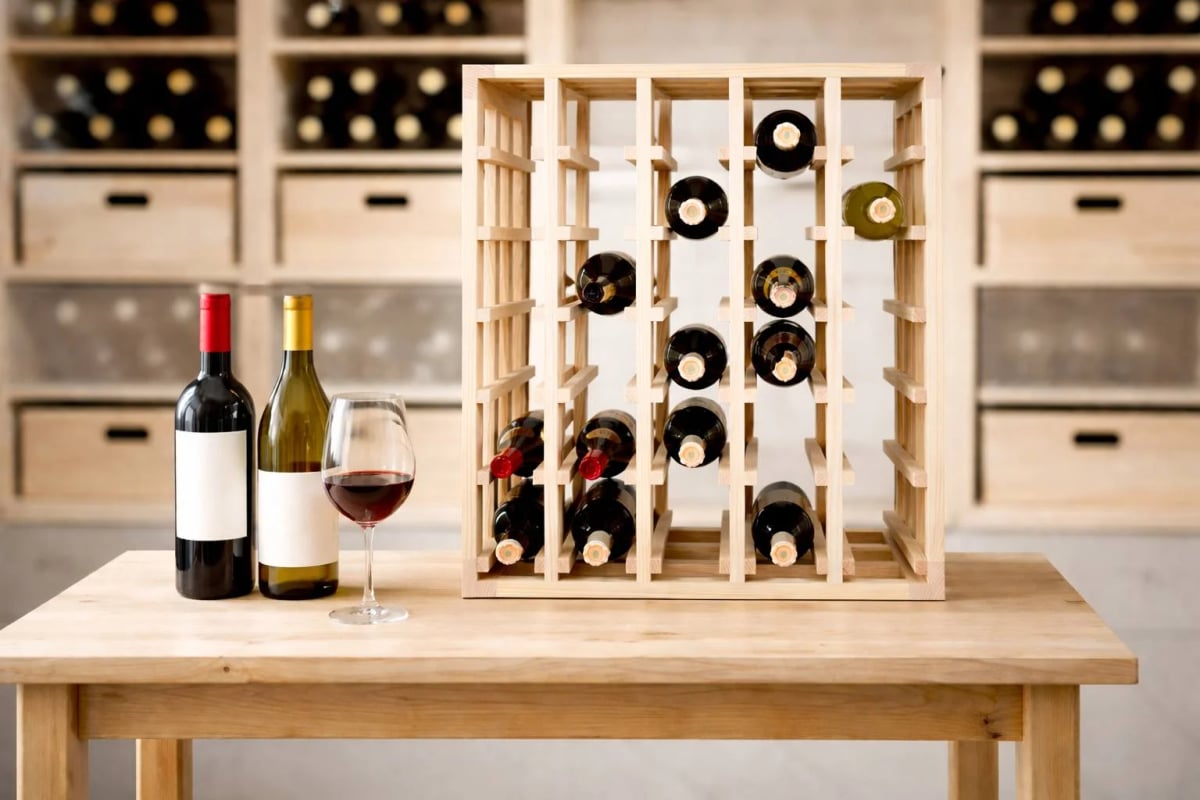
Modular configurations offer unparalleled adaptability, allowing you to start with a basic setup and expand as your collection grows. These systems typically feature interlocking components that maintain structural integrity whilst accommodating various spatial constraints.
The beauty of modular wine racks lies in their scalability. Begin with a 24-bottle module and seamlessly add units to create 72, 144, or even 216-bottle installations without requiring complete redesign.
For those seeking handcrafted solutions that combine Scandinavian design principles with sustainable materials, oak wine racks offer exceptional versatility through modular construction whilst maintaining aesthetic cohesion across your interior.
Freestanding Versus Wall-Mounted Solutions
Freestanding units provide portability and installation simplicity, making them ideal for renters or those who frequently reconfigure their spaces. These pieces function as furniture statements whilst serving practical purposes.
Wall-mounted wine racks maximise floor space utilisation, particularly valuable in compact urban dwellings or commercial establishments where every square metre counts. They create floating displays that draw the eye upward, adding visual interest to otherwise underutilised wall surfaces.
Capacity Planning for Current and Future Needs
Determining appropriate storage capacity requires honest assessment of your collection habits and growth trajectory. Casual enthusiasts typically maintain 12-24 bottles, whilst dedicated collectors may require 100+ bottle capacity.
Calculating Your Requirements
Consider these factors when determining capacity:
- Average monthly bottle acquisition rate
- Percentage of collection requiring aging versus immediate consumption
- Special occasion or investment bottles requiring long-term storage
- Entertaining frequency and typical bottle consumption
Professional sommeliers recommend purchasing 25-30% more capacity than your current collection to accommodate growth and prevent constant reorganisation.
Strategic Placement Within Your Interior
Location dramatically influences both wine preservation and visual impact. Temperature stability, humidity control, and light exposure must balance with accessibility and aesthetic contribution to your space.
Optimal Environmental Conditions
Wine thrives in cool, dark, humid environments with minimal temperature fluctuation. Ideal storage temperatures range between 10-15°C, with humidity levels around 60-70%. Whilst most homes cannot replicate cellar conditions perfectly, strategic placement minimises adverse effects.
Avoid these problematic locations:
- Direct sunlight exposure through windows
- Above heat-generating appliances
- Near heating vents or radiators
- High-traffic areas prone to vibration
- Extremely dry environments below 50% humidity
Ground-floor locations or basements naturally maintain more stable temperatures than upper floors. Interior walls buffer temperature swings better than exterior walls.
Customisation and Personalisation Options
Bespoke wine storage solutions address unique spatial challenges whilst reflecting personal style preferences. Custom dimensions, finishes, and configurations transform functional storage into signature design elements.
Tailoring Size and Shape
Standard units rarely fit perfectly into architectural alcoves, under staircases, or within renovated historical buildings. Custom-made options accommodate irregular dimensions whilst maintaining structural integrity and visual harmony.
| Customisation Type | Standard Option | Custom Benefit |
|---|---|---|
| Width | Fixed increments | Exact fit to space |
| Height | Predetermined | Maximises vertical capacity |
| Depth | Standard bottle size | Accommodates large formats |
| Finish | Limited selection | Matches existing décor |
| Configuration | Set layouts | Optimised bottle access |
Finish options extend beyond natural wood to include oils, waxes, and stains that enhance grain patterns whilst providing protection. Smoked finishes add contemporary sophistication, whilst natural oils preserve wood's authentic character.
Sustainability and Responsible Manufacturing
Environmental consciousness increasingly influences purchasing decisions, particularly for permanent home fixtures. Sustainable wine storage combines responsible sourcing with production methods that minimise environmental impact.
FSC Certification and Responsible Forestry
Forest Stewardship Council certification ensures wood originates from responsibly managed forests that maintain biodiversity and support local communities. This certification provides transparency throughout the supply chain, from tree harvesting to finished product.
Sustainable production characteristics include:
- Locally sourced timber reducing transportation emissions
- Water-based finishing products minimising VOC release
- Made-to-order manufacturing eliminating excess inventory waste
- Durable construction reducing replacement frequency
- Timeless design preventing premature obsolescence
Handcrafted furniture manufactured to order significantly reduces waste compared to mass production models. Each piece receives individual attention, ensuring quality whilst eliminating the environmental cost of unsold inventory.
Installation and Maintenance Considerations
Proper installation ensures structural safety and longevity, particularly for wall-mounted systems supporting considerable weight. A typical wine bottle weighs approximately 1.3kg; a 24-bottle unit may exceed 30kg when fully loaded.
Wall-Mounting Requirements
Installation planning must account for wall construction, stud location, and appropriate fastener selection. Plasterboard walls require spreading load across multiple studs or using specialist fixings rated for substantial weight.
Professional installation becomes advisable for large systems exceeding 50kg capacity. Improper mounting risks catastrophic failure, potentially damaging both wine collection and surrounding property.
Long-Term Care and Preservation
Solid wood wine storage requires minimal maintenance yet benefits from periodic attention. Dust accumulation should be removed using soft, dry cloths. Avoid harsh chemical cleaners that strip protective finishes.
Annual inspection checks for:
- Joint tightness and structural stability
- Finish condition and wear patterns
- Level accuracy and mounting security
- Environmental damage signs such as warping or splitting
Oiled finishes benefit from reapplication every 12-18 months, whilst waxed surfaces may require more frequent attention in dry environments.
Commercial Applications and Hospitality Solutions
Restaurants, hotels, and wine bars require wine storage that balances functional capacity with theatrical presentation. Commercial settings demand durability beyond residential requirements whilst creating memorable visual experiences for guests.
Restaurant and Hotel Integration
Display-focused wine storage transforms bottles into décor elements that communicate sophistication and selection quality. Strategic placement near dining areas allows servers to discuss options whilst guests observe the collection.
Temperature-controlled rooms featuring floor-to-ceiling installations create destination wine cellars that justify premium pricing whilst differentiating establishments from competitors. Glass-walled enclosures maintain climate control whilst providing visual access.
Retail and Tasting Room Display
Wine merchants and vineyards utilise storage systems as merchandising tools, grouping bottles by region, varietal, or price point. Accessibility becomes paramount, allowing staff to retrieve bottles efficiently during busy periods.
Modular commercial systems accommodate inventory fluctuations, expanding during harvest season and contracting during slower periods without requiring complete reconfiguration.
Investment Value and Cost Considerations
Wine storage represents a long-term investment protecting a valuable collection. Quality construction pays dividends through decades of reliable service, whilst inferior products require premature replacement.
Price Versus Value Analysis
Budget options starting around £50-150 suit casual collectors with modest requirements. Mid-range systems (£200-600) offer improved materials and construction suitable for serious enthusiasts. Premium handcrafted solutions (£600-2000+) provide heirloom quality with customisation options.
Factors justifying premium investment:
- FSC-certified sustainable hardwood construction
- Handcrafted joinery versus mass-produced assembly
- Customisation capabilities for unique spaces
- Superior finish quality and durability
- Made-to-order manufacturing eliminating compromise
Calculate cost per bottle capacity when comparing options. A £1200 system holding 120 bottles costs £10 per bottle versus £15 per bottle for an £180 system holding 12 bottles.
Integration with Broader Interior Design
Wine storage should complement rather than conflict with existing design elements. Scandinavian design principles emphasise clean lines, natural materials, and functional beauty that suits diverse interior styles.
Style Compatibility Across Design Movements
Minimalist interiors benefit from simple geometric storage that prioritises function without unnecessary ornamentation. Mid-century modern spaces appreciate warm wood tones and organic forms. Traditional settings embrace classical proportions and rich finishes.
Contemporary industrial aesthetics combine wood with metal accents, creating visual interest through material contrast. Transitional designs bridge traditional and modern, often featuring painted or stained wood in neutral tones.
The versatility of solid wood allows refinishing or modification as design preferences evolve, providing adaptability that metal or acrylic alternatives cannot match.
Selecting the perfect wine storage solution requires balancing aesthetic preferences, practical requirements, and environmental considerations to create a system that serves your needs for years to come. When you're ready to invest in handcrafted, sustainable wine storage that combines Scandinavian design principles with premium materials and customisable configurations, Museliving creates made-to-order solutions using FSC-certified wood delivered throughout Europe. Our modular systems adapt to any space whilst providing the durability and timeless elegance your collection deserves.