



Wine storage has evolved significantly beyond traditional cellars, with modern homeowners increasingly incorporating wine racks for kitchens as both functional storage and elegant design features. Whether you’re a casual wine enthusiast or a serious collector, choosing the right kitchen wine rack involves balancing aesthetics, space efficiency, and proper bottle preservation. The kitchen has emerged as a natural home for wine storage, offering convenient access during meal preparation and entertaining whilst adding a sophisticated focal point to your culinary space.
Why Wine Racks for Kitchens Have Become Essential
Modern kitchen design has embraced wine storage as a fundamental element rather than an afterthought. The shift towards open-plan living means kitchens serve multiple purposes-cooking, dining, and entertaining-making accessible wine storage increasingly valuable.
Space optimisation remains the primary driver behind incorporating wine racks into kitchen design. Unlike dedicated wine cellars, kitchen wine storage solutions must work within existing layouts whilst maintaining functionality. This constraint has sparked innovation, with manufacturers developing vertical systems, under-cabinet solutions, and integrated designs that maximise every centimetre.
The rise of culinary culture has transformed how people view wine at home. Cooking enthusiasts appreciate having their collection within arm’s reach, selecting the perfect pairing without interrupting meal preparation. This convenience factor has made wine racks for kitchens particularly popular amongst those who regularly entertain.
Material Selection and Sustainability Considerations
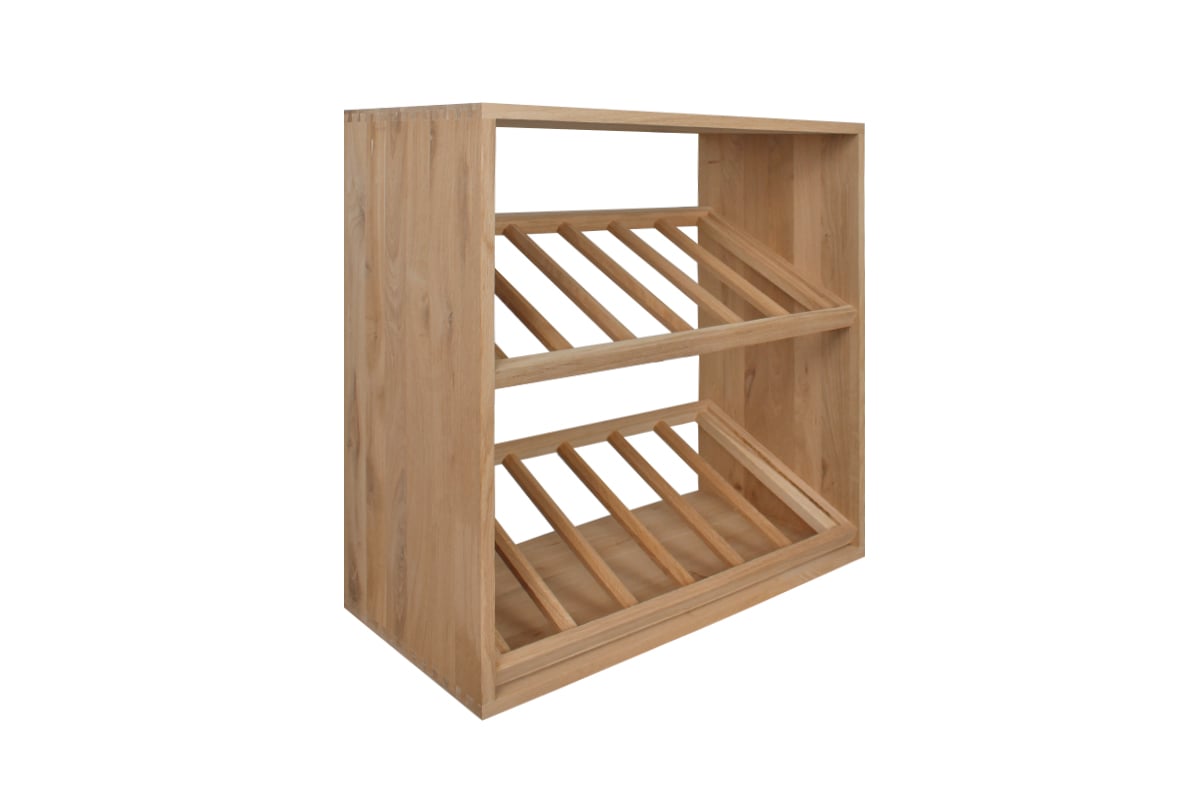
The materials used in kitchen wine racks significantly impact both longevity and environmental footprint. Solid wood options, particularly oak and pine, offer exceptional durability whilst aligning with sustainable design principles when sourced responsibly.
FSC-certified timber provides assurance that wood originates from responsibly managed forests, supporting biodiversity and community welfare. This certification has become increasingly important to environmentally conscious consumers who seek furniture that doesn’t compromise their values.
Material | Durability | Sustainability | Aesthetic Appeal | Maintenance |
|---|---|---|---|---|
Solid Oak | Excellent | High (FSC) | Classic, warm | Low |
Pine | Very Good | High (FSC) | Light, rustic | Low |
Metal | Excellent | Medium | Modern, industrial | Medium |
Acrylic | Good | Low | Contemporary | High |
The choice between materials often reflects broader kitchen design themes. Scandinavian-inspired spaces benefit from light woods that enhance the minimalist aesthetic, whilst traditional kitchens might feature darker, more ornate wooden designs. For those seeking premium handcrafted solutions, Museliving’s wine racks combine sustainable materials with modular flexibility, allowing customisation to match your specific kitchen dimensions and style preferences.
Placement Strategies for Maximum Impact
Strategic positioning of wine racks for kitchens determines both functionality and visual impact. Several zones within kitchen spaces offer distinct advantages depending on your collection size and usage patterns.
Under-cabinet installations represent the most space-efficient solution for compact kitchens. These systems utilise otherwise wasted vertical space beneath wall-mounted cabinets, keeping bottles secure whilst maintaining easy access. The under-cabinet wine storage systems available today integrate seamlessly with standard cabinetry dimensions.
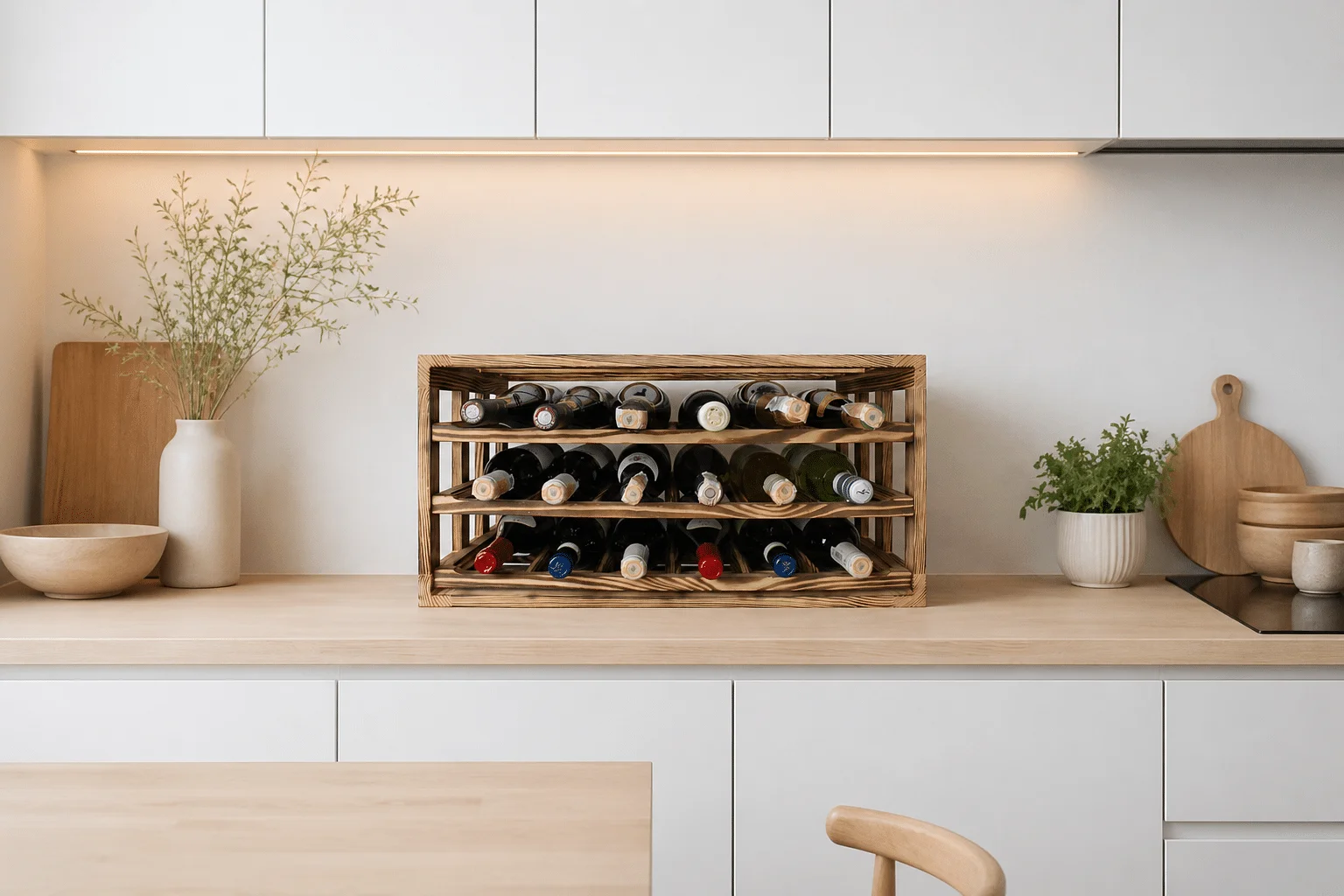
Island and peninsula placements create stunning focal points in open-plan kitchens. Positioning wine storage within kitchen islands allows visibility from multiple angles, transforming your collection into a design feature. This approach works particularly well for entertaining, as guests can admire your selection whilst you prepare drinks or appetisers.
Temperature and Light Considerations
Proper wine preservation requires attention to environmental factors, even for bottles intended for near-term consumption. Kitchen placement must balance convenience with storage conditions that protect wine quality.
Avoid direct sunlight: UV rays degrade wine over time, causing premature ageing
Maintain stable temperatures: Fluctuations between 10-15°C are acceptable for short-term storage
Consider humidity levels: Kitchen moisture helps prevent cork drying
Minimise vibration exposure: Position away from dishwashers and heavy appliances
Corner locations often provide optimal conditions, offering some protection from temperature fluctuations whilst maximising floor space efficiency.
Design Styles and Configuration Options
The aesthetic diversity of wine racks for kitchens enables seamless integration across interior design schemes. Understanding available styles helps identify solutions that enhance rather than conflict with existing décor.
Minimalist Scandinavian designs emphasise clean lines, natural wood grains, and functional simplicity. These racks typically feature horizontal bottle storage with minimal embellishment, allowing the wood’s inherent beauty to shine. The understated elegance suits contemporary kitchens where visual clutter must be minimised.
Rustic farmhouse styles incorporate distressed finishes, visible joinery, and chunky proportions. These wine rack designs create warmth and character, particularly in country-style or traditional kitchens. The robust construction often accommodates larger bottle quantities within freestanding floor units.
Modular Systems Versus Fixed Solutions
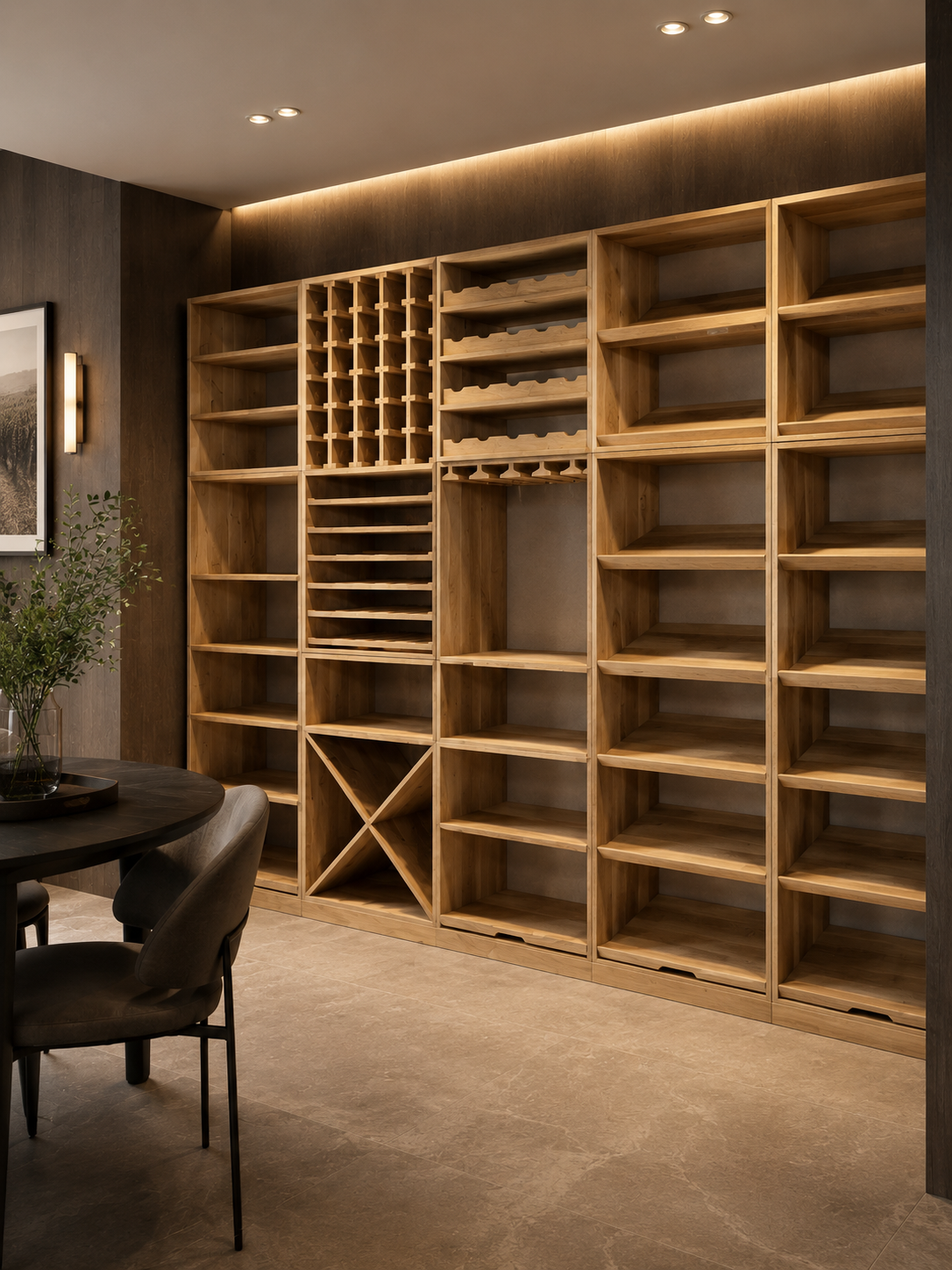
Adaptability has become crucial as wine collections evolve over time. Modular wine storage systems offer flexibility that fixed installations cannot match.
Modular advantages include:
Expandable capacity as collections grow
Reconfigurable layouts when moving house
Mixed bottle size accommodation
Easier transportation and installation
Customisable to irregular spaces
Fixed built-in systems provide superior stability and can be precisely fitted to challenging spaces. Custom installations might incorporate wine storage into existing cabinetry, creating a cohesive look that appears original to the kitchen design. This approach works especially well in renovation projects where seamless integration is paramount.
Capacity Planning and Bottle Management
Determining appropriate capacity prevents both overcrowding and wasted space. Wine racks for kitchens typically accommodate between six and sixty bottles, though modular systems can expand considerably beyond this range.
Casual wine drinkers (consuming 1-2 bottles weekly) generally require storage for 12-24 bottles, allowing a varied selection whilst ensuring regular rotation. This capacity suits most countertop wine rack options and compact wall-mounted systems.
Enthusiastic collectors or frequent entertainers might need storage for 36-60 bottles within kitchen spaces, supplemented by additional cellar storage for long-term ageing. Larger capacity installations often incorporate different zones for reds, whites, and sparkling wines, facilitating organisation and selection.
Bottle Orientation and Storage Methods
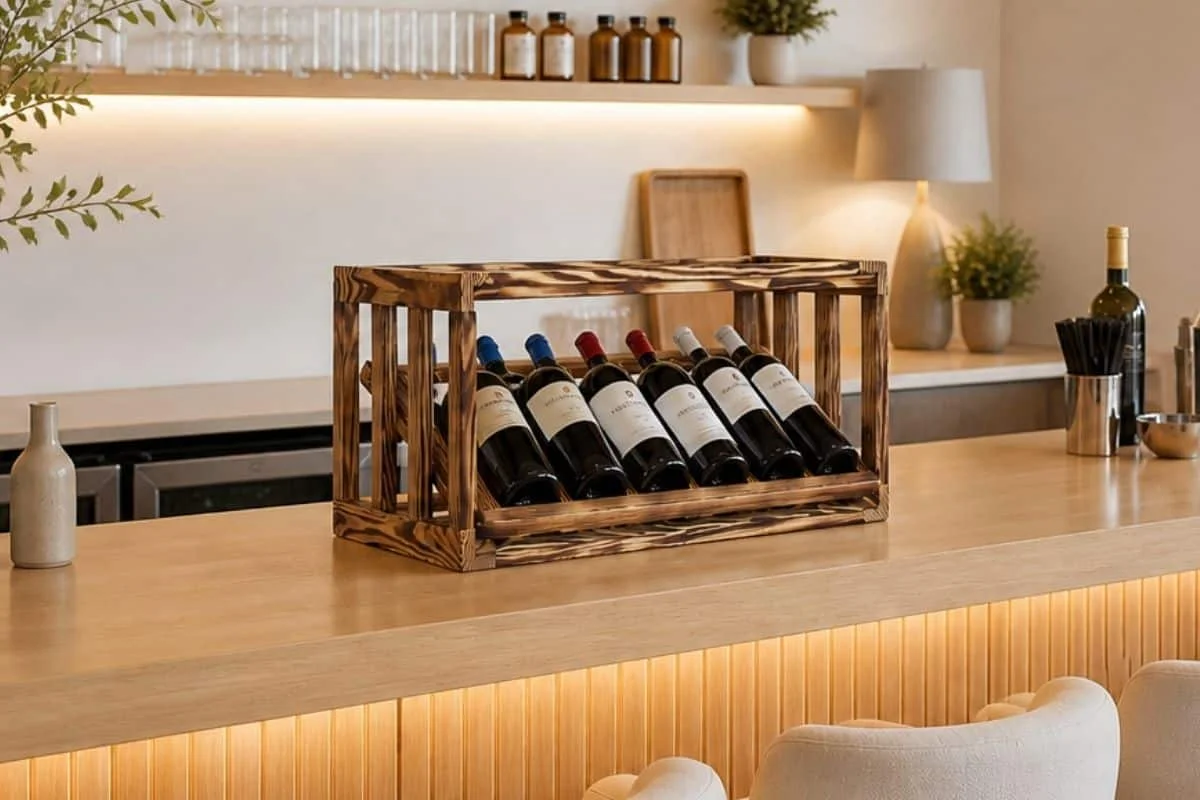
Horizontal storage remains the gold standard for corked bottles, keeping corks moist and maintaining proper seals. However, modern wine racks accommodate various closure types and bottle shapes.
Storage Method | Best For | Space Efficiency | Visual Impact |
|---|---|---|---|
Horizontal | Corked wines | High | Classic |
Tilted | Display purposes | Medium | Dramatic |
Vertical | Short-term, screw caps | Very High | Modern |
Lattice | Mixed collections | Medium | Traditional |
Many contemporary kitchen wine rack designs combine multiple orientations within single units, offering flexibility for different bottle types whilst creating visual interest through varied angles and depths.
Installation and Integration Techniques
Successful installation requires careful planning, particularly for wall-mounted systems bearing significant weight. Wine racks for kitchens filled with bottles can exceed 50 kilograms, demanding robust fixings and appropriate wall construction.
Professional assessment proves invaluable for substantial installations. Locating wall studs, assessing plasterboard thickness, and determining optimal fixing points prevents disasters and ensures longevity. Many homeowners discover limitations in their wall construction only after purchasing unsuitable systems.
Freestanding options eliminate installation complexity whilst offering repositioning flexibility. Floor-standing wine racks can be relocated seasonally or during kitchen renovations without damaging walls or leaving visible mounting holes. This versatility appeals to renters or those who frequently redesign their spaces.
Cabinet Integration Projects
Converting existing cabinets into wine storage maximises space efficiency in established kitchens. This approach requires precise measurements and often benefits from professional cabinet wine rack solutions that ensure proper fit and function.
Step-by-step cabinet conversion:
Remove existing shelving and measure interior dimensions
Calculate maximum bottle capacity based on available depth
Select rack systems designed for cabinet installation
Install mounting brackets at appropriate intervals
Test weight distribution before loading fully
Pull-out wine rack inserts work brilliantly in base cabinets, providing easy access to bottles at the back whilst maintaining kitchen workflow efficiency. These systems often incorporate soft-close mechanisms that protect bottles from jarring impacts during daily use.
Combining Wine Storage with Complementary Features
Sophisticated wine enthusiasts often integrate additional features that enhance both functionality and presentation. Wine racks for kitchens can incorporate elements that support proper serving and preservation beyond basic storage.
Glass holder attachments transform wine racks into complete beverage stations, suspending stemware inverted above bottle storage. This dual-purpose approach saves cabinet space whilst creating visually cohesive wine service zones.
Lighting integration adds drama whilst improving bottle selection visibility. LED strips positioned beneath shelves or within rack structures illuminate labels without generating heat that might affect wine quality. Warm colour temperatures complement wood finishes whilst creating ambient lighting for entertaining spaces.
Drawer Systems and Accessory Storage
Complete wine service stations incorporate drawer compartments for corkscrews, thermometers, aerators, and preservation systems. These integrated solutions centralise everything needed for wine service, eliminating searches through multiple kitchen drawers.
For those looking to complement their wine collection with stylish and functional storage, Museliving offers handcrafted wine racks inspired by Scandinavian design. Made from high-quality solid wood, our modular wine storage solutions combine timeless aesthetics, practical functionality, and sustainable craftsmanship for homes, restaurants, and wine cellars across Europe.
Maintenance and Long-term Care
Preserving the appearance and functionality of wine racks for kitchens requires minimal but consistent attention. Wood systems benefit from periodic conditioning that prevents drying and maintains finish integrity.
Quarterly maintenance routine:
Remove all bottles and vacuum dust from rack surfaces
Wipe wood with slightly damp microfibre cloth
Apply wood conditioner or oil according to finish type
Inspect mounting hardware for looseness or corrosion
Rotate bottle positions to prevent sediment settling
Powder-coated finishes should never be scrubbed with abrasive materials that might scratch protective layers.
Addressing Common Issues
Even well-maintained systems occasionally develop problems requiring intervention. Wobbling freestanding units often indicate uneven floor surfaces rather than structural defects-adjustable feet resolve this easily.
Discovering the right balance between storage capacity and kitchen aesthetics sometimes requires experimentation. Many homeowners start with modest systems, expanding through modular additions as their collections and confidence grow.
Choosing Wine Racks for Small Kitchen Spaces
Compact kitchens demand creative solutions that provide adequate wine storage without overwhelming limited square meterage. Vertical designs maximise wall space efficiency, storing multiple bottles within minimal footprint.
Space-saving strategies include:
Utilising awkward corners with purpose-designed angular racks
Installing slim profile systems in gaps between appliances
Mounting fold-down racks that collapse when not needed
Selecting stackable modular units that grow upward rather than outward
Understanding wine rack fundamentals helps identify compact solutions that don’t compromise bottle security or accessibility. Even kitchens measuring under 10 square metres can accommodate tasteful wine storage through thoughtful design.
The psychological impact of visible wine storage shouldn’t be underestimated. Displaying a curated collection creates conversational focal points whilst encouraging mindful consumption-you’re more likely to appreciate and properly serve wines when they’re beautifully presented rather than hidden in cupboards.
Commercial Applications and Hospitality Considerations
Wine racks for kitchens extend beyond residential applications into restaurants, hotels, and commercial catering environments. These professional settings demand enhanced durability, larger capacities, and often specific regulatory compliance.
Restaurant open kitchens benefit tremendously from attractive wine storage that doubles as décor. Guests appreciate seeing extensive selections whilst chefs value immediate access during service. Commercial-grade systems must withstand constant use whilst maintaining aesthetic appeal under harsh kitchen lighting.
Hospitality-specific requirements:
Fire safety compliance and material certifications
Easy cleaning to meet health inspection standards
Secure bottle retention during busy service periods
Capacity for rapid inventory turnover
Professional appearance from all viewing angles
Hotels increasingly incorporate wine racks into suite kitchenettes and VIP lounge areas, enhancing luxury perceptions. These installations often feature premium materials and custom configurations that reflect brand positioning.
Emerging Trends in Kitchen Wine Storage
The wine storage industry continues innovating, introducing technologies and designs that address evolving consumer preferences. Smart wine racks incorporating temperature sensors and inventory tracking applications represent the cutting edge, though widespread adoption remains limited by cost considerations.
Sustainable materials dominate current trends, with consumers increasingly scrutinising furniture origins and production methods. Reclaimed wood wine racks appeal to environmentally conscious buyers, offering unique character whilst diverting timber from landfills. The comprehensive wine storage guidance available online helps consumers make informed decisions aligned with their values.
Minimalist aesthetics continue gaining ground, particularly amongst younger wine enthusiasts who favour clean lines over ornate traditional designs. This shift reflects broader interior design movements toward Scandinavian simplicity and Japanese-inspired minimalism.
Customisation and Personalisation
Bespoke wine storage solutions allow homeowners to specify exact dimensions, finishes, and configurations matching their unique requirements. Custom installations accommodate irregular spaces, unusual bottle sizes, and specific aesthetic visions that mass-produced options cannot satisfy.
The investment in custom wine racks for kitchens typically exceeds ready-made alternatives by 40-80%, but delivers perfect integration and long-term satisfaction. Made-to-order production ensures premium materials and craftsmanship whilst supporting sustainable manufacturing practices that prioritise quality over quantity.
Balancing Function with Kitchen Workflow
Successful wine storage integration never compromises kitchen efficiency. Poorly positioned racks create bottlenecks during meal preparation or obstruct appliance access, diminishing rather than enhancing kitchen functionality.
Workflow considerations include:
Maintaining 90cm clearance for comfortable movement
Positioning racks outside primary work triangles
Ensuring bottle selection doesn’t require stepping away from cooking zones
Avoiding placements that create collision risks with cabinet doors
Planning for occasional access rather than constant interaction
The relationship between wine storage and entertaining patterns deserves careful thought. Open-plan kitchens where guests gather during parties benefit from prominent wine displays that facilitate self-service. Closed kitchens might prioritise compact solutions that maximise culinary workspace.
Wine racks for kitchens represent an intersection of practicality, preservation, and personal expression, transforming everyday storage into elegant design features whilst protecting your investment in quality bottles. Whether you’re redesigning your entire kitchen or simply seeking better wine organisation, thoughtful selection of materials, placement, and style ensures your storage solution enhances both function and aesthetics for years to come. Museliving specialises in handcrafted modular wine racks created from sustainably sourced solid wood, offering European homeowners customisable solutions that combine Scandinavian design principles with exceptional durability-explore our collection to discover wine storage that perfectly complements your kitchen whilst supporting responsible manufacturing practices.