


Champagne demands respect, not just in the glass but in how you store it. A dedicated wine rack for champagne solves unique storage challenges that standard wine racks often overlook. From the broader bottle base to the specific environmental needs of sparkling wines, choosing the right racking system protects your investment and showcases your collection with the elegance it deserves. Whether you're designing a home cellar, equipping a restaurant, or simply seeking a practical storage solution for special occasions, understanding what makes champagne storage different will help you make informed decisions.
Understanding Champagne Bottle Dimensions and Storage Requirements
Champagne bottles differ significantly from standard Bordeaux or Burgundy bottles. The base diameter measures approximately 89mm compared to the typical 73–76mm of still wine bottles, whilst the overall weight and pressure inside each bottle create unique racking demands.
Standard and Large Format Considerations
Most champagne comes in 750ml bottles, but serious collectors and commercial establishments often stock larger formats-magnums, jeroboams, and even methuselahs. A wine rack for champagne must accommodate these variations without compromise.
Key bottle sizes to consider:
- Standard (750ml): 89mm base, 307mm height
- Magnum (1.5L): 102mm base, 387mm height
- Jeroboam (3L): 127mm base, 480mm height
- Methuselah (6L): 152mm base, 560mm height
The Contemporary Wine Cellar specification guide provides detailed spacing recommendations that account for both neck diameter and the crucial base clearance required for stable storage. When planning your racking system, ensure each opening provides at least 95mm clearance for standard bottles and proportionally more for large formats.
Environmental Control and Placement
Temperature stability matters enormously for champagne. The Comité Champagne’s conservation guidance emphasizes maintaining consistent conditions between 10–12°C with minimal fluctuation, alongside controlled humidity levels of 70–80%. Light exposure accelerates degradation, particularly UV wavelengths that affect delicate aromatic compounds.
A wine rack for champagne positioned in a temperature-controlled environment protects against premature oxidation and maintains the wine's complexity. Avoid placement near windows, heating sources, or areas subject to vibration from household appliances or foot traffic.
Design Approaches for Champagne Racking Systems
Selecting the appropriate design depends on your space, collection size, and aesthetic preferences. Modular systems offer flexibility, whilst custom solutions provide tailored functionality.
Modular and Freestanding Solutions
Modular racking allows incremental expansion as your collection grows. Individual units stack vertically or arrange horizontally, creating configurations that adapt to available wall space or freestanding placement in cellars, pantries, or dining areas.
Advantages of modular champagne racks:
- Scalable capacity without reconstruction
- Portable between locations
- Customizable arrangements for mixed bottle sizes
- Easy access for inventory rotation
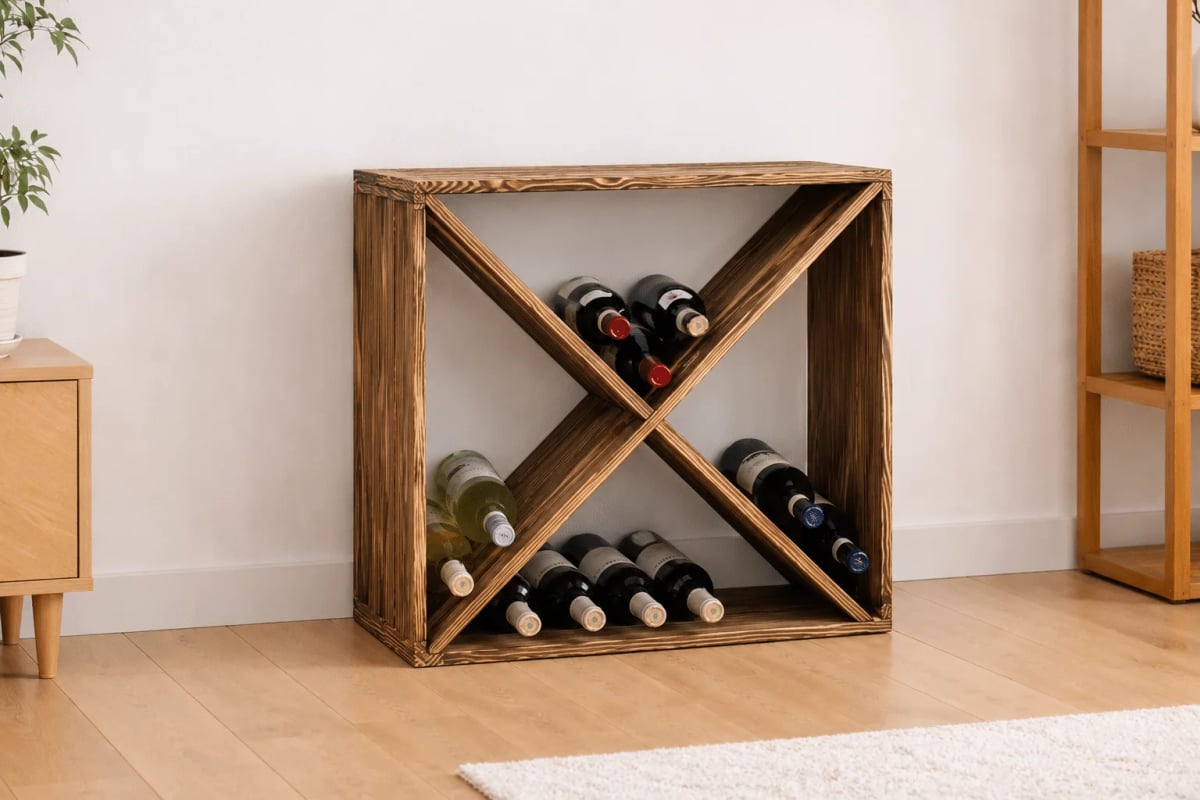
Freestanding designs suit rooms where wall mounting isn't practical or preferred. Scandinavian-inspired solid wood constructions bring warmth and natural elegance whilst providing robust support for heavy champagne bottles. Premium hardwoods like oak offer exceptional durability and develop attractive patina over years of use.
For those building comprehensive wine storage, integrating a dedicated section within a larger modular system proves efficient. Museliving wine racks combine sustainable FSC-certified materials with modular design, allowing you to configure storage for both champagne and still wines whilst maintaining visual cohesion throughout your cellar or entertaining space.
Wall-Mounted and Display Racking
Wall-mounted systems maximize floor space whilst creating striking visual displays. Metal peg systems, wooden dowel designs, and cable-ring configurations each offer distinct aesthetic and functional characteristics.
| Racking Style | Capacity Per Module | Visual Impact | Installation Complexity |
|---|---|---|---|
| Wooden cradle | 6–12 bottles | Traditional | Moderate |
| Metal peg | 8–16 bottles | Industrial-modern | Low |
| Cable-ring | 4–8 bottles | Contemporary | High |
| Cube compartment | 12–24 bottles | Architectural | Moderate |
Cable-ring systems suspend bottles by the neck, creating a floating appearance ideal for hospitality environments where presentation elevates the guest experience. However, these require precise spacing-neck rings must accommodate champagne's slightly wider punt and heavier weight compared to standard wine bottles.
Commercial and Hospitality Applications
Restaurants, hotels, and wine bars face additional considerations. Accessibility, visibility, and climate control become critical when staff require quick bottle retrieval during service. Professional establishments benefit from racking that displays labels clearly whilst maintaining proper storage angles.
The Court of Master Sommeliers standards outline best practices for sparkling wine presentation and service, emphasizing the importance of stable, accessible storage that prevents temperature shock before service. A wine rack for champagne in commercial settings should position bottles horizontally to keep corks moist, yet allow sommeliers to retrieve specific vintages without disturbing surrounding bottles.
Material Selection and Sustainability Considerations
Material choice affects longevity, maintenance, and environmental impact. Solid wood, metal, acrylic, and composite materials each bring distinct properties to champagne storage.
Natural Wood Solutions
Oak, pine, and other hardwoods provide thermal stability, moisture buffering, and timeless aesthetic appeal. Wood's natural insulating properties help moderate minor temperature fluctuations, whilst its hygroscopic nature absorbs excess humidity and releases moisture when air becomes dry.
Benefits of wooden champagne racks:
- Natural temperature and humidity buffering
- Structural strength supporting heavy formats
- Aesthetic warmth complementing traditional and contemporary interiors
- Sustainable when sourced from FSC-certified forests
- Repairable and refinishable for extended lifespan
Smoked oak and burnt pine finishes add character through darker tones that disguise wine stains and develop rich patina over time. Oil-finished oak offers tactile smoothness and enhances grain patterns whilst providing moisture resistance.
Metal and Contemporary Materials
Powder-coated steel and stainless steel deliver modern aesthetics with minimal maintenance requirements. Metal racks excel in humid environments where wood might require more frequent inspection, though they lack wood's thermal buffering properties.
Acrylic and composite materials suit contemporary installations where transparency or specific colour matching matters. However, these materials generally cost more, offer less environmental benefit, and may not support the weight of large-format bottles as reliably as wood or metal.
Storage Orientation and Cork Preservation
The debate over bottle orientation-horizontal versus upright-carries particular weight for champagne storage. Traditional wisdom advocates horizontal storage to keep corks moist, yet champagne's unique carbonation creates different conditions inside the bottle.
Horizontal Storage Advantages
Keeping champagne bottles horizontal ensures the wine contacts the cork, maintaining its moisture content and elasticity. Dry corks shrink, allowing oxygen ingress that degrades champagne rapidly. A wine rack for champagne designed with horizontal cradles or slots follows established cellar practice validated by centuries of experience.
Decanter’s storage guidance confirms that horizontal storage remains the safest approach for long-term aging, particularly for vintage champagnes and prestige cuvées intended for extended cellaring. The constant contact between wine and cork prevents the desiccation that compromises seal integrity.
Upright Storage Contexts
Short-term storage-weeks rather than months-tolerates upright positioning without significant risk. The humidity inside champagne bottles, combined with the pressure from carbonation, provides some protection against cork drying. Non-vintage champagnes intended for consumption within months work adequately in upright displays.
However, upright storage concentrates sediment at the bottle's base, potentially creating cloudiness when pouring. Professional establishments often store champagne horizontally in back-of-house areas, moving bottles upright to service refrigeration only hours before anticipated service.
Temperature-Controlled Integration
Combining racking with refrigeration systems creates optimal champagne storage, particularly in climates where ambient cellar conditions prove difficult to achieve naturally. Integrated solutions range from compact wine coolers with champagne-specific shelving to custom cellar rooms with dedicated cooling systems.
Wine Cooler Compatibility
Modern wine refrigerators increasingly offer adjustable shelving that accommodates champagne's wider base. Sub-Zero’s bottle size guidance details rack spacing requirements for various bottle types, noting that champagne shelves require approximately 15–20mm additional clearance compared to standard wine positions.
When integrating a wine rack for champagne within cooled cabinetry, verify that airflow patterns won't create temperature gradients across storage zones. Champagne positioned near cooling elements may experience excessive temperature cycling as compressors activate, whilst bottles near doors face warm air exposure during access.
Custom Cellar Cooling
Purpose-built wine cellars benefit from professional environmental control systems. The ASHRAE refrigeration handbook provides engineering specifications for cellar cooling, including insulation R-values, vapour barriers, and equipment sizing calculations that ensure stable conditions year-round.
A dedicated champagne section within a larger cellar might warrant separate climate zones. Champagne's ideal storage temperature sits slightly cooler than many still wines, making multi-zone control advantageous for serious collectors who maintain diverse inventories.
Planning Capacity and Future Expansion
Calculating storage needs requires honest assessment of current holdings and realistic growth projections. Under-building forces premature expansion, whilst excessive capacity wastes space and resources.
Inventory Assessment Methods
Begin by cataloguing your current champagne collection, noting bottle formats and estimated annual consumption. Add anticipated acquisitions based on purchasing patterns-regular buyers accumulating bottles for special occasions, collectors seeking vintage releases, or hospitality operations projecting sales growth.
| Collection Size | Recommended Rack Capacity | Growth Buffer |
|---|---|---|
| Casual (6–12 bottles) | 24 positions | 100% |
| Enthusiast (12–36 bottles) | 60 positions | 66% |
| Collector (36–100 bottles) | 150 positions | 50% |
| Commercial (100+ bottles) | Custom calculation | 30–40% |
Buffer capacity prevents overcrowding that restricts air circulation and makes bottle retrieval awkward. Modular systems allow phased expansion, adding units as collections grow rather than committing to maximum capacity immediately.
Mixed Storage Configurations
Few collectors stock exclusively champagne. Integrating champagne-specific sections within broader wine racking creates efficient use of space. Design layouts that position champagne near still whites requiring similar cool temperatures, separating both from red wines that benefit from slightly warmer storage.
Consider creating dedicated zones for:
- Vintage champagne requiring long-term aging at strict temperatures
- Non-vintage champagne for near-term consumption with more relaxed conditions
- Large formats needing reinforced support and additional clearance
- Rosé champagne benefiting from protection against light exposure
Aesthetic Integration and Interior Design
Storage functionality matters, yet champagne racks also contribute significantly to interior character. Matching racking style to surrounding décor creates cohesion, whilst deliberate contrast can establish focal points within rooms.
Scandinavian Minimalism
Clean lines, natural materials, and functional simplicity define Scandinavian design principles. A wine rack for champagne embracing this aesthetic uses unadorned solid wood, straightforward joinery, and modular geometry that scales gracefully across different room sizes.
Light-coloured woods like natural oak brighten spaces whilst showcasing champagne's elegant bottles against neutral backgrounds. Wall-mounted cube designs create floating visual interest, particularly effective in modern dining areas or open-plan living spaces where storage becomes architectural sculpture.
Traditional and Rustic Approaches
Cellars in period properties or homes emphasizing traditional character suit darker wood finishes and more ornate detailing. Smoked oak or walnut tones complement stone walls, terracotta flooring, and wrought iron elements common in classical wine storage spaces.
Freestanding racks with visible joinery-dovetails, mortise-and-tenon construction-add craftsmanship appreciation to functional storage. These details reward close inspection whilst providing structural integrity that supports heavy champagne collections reliably.
Contemporary and Industrial Styles
Metal frameworks, glass shelving, and suspended cable systems deliver contemporary aesthetic impact. Industrial spaces-loft apartments, converted warehouses, modern restaurants-pair well with exposed materials that celebrate structural honesty.
Combining materials creates visual interest: oak shelves within powder-coated steel frames, or metal pegs mounted on reclaimed wood backboards. These hybrid approaches balance warmth and edge, creating storage that feels current without becoming dated quickly.
Maintenance and Longevity Considerations
Proper maintenance extends racking lifespan whilst protecting stored champagne from contamination or damage. Different materials demand varying attention levels.
Wood Care Protocols
Solid wood racks benefit from periodic inspection for moisture damage, particularly in humid cellars. Wipe spills immediately to prevent staining, and check for mould growth in crevices where air circulation proves limited.
Recommended maintenance schedule:
- Monthly visual inspection for damage or instability
- Quarterly cleaning with damp cloth (no harsh chemicals)
- Bi-annual application of wood oil (if oiled finish)
- Annual structural assessment of joints and supports
Avoid placing wood racks directly against exterior walls where condensation might accumulate. Maintain slight clearance for air movement that prevents moisture concentration.
Metal and Composite Upkeep
Metal racks require minimal attention beyond occasional cleaning to remove dust and wine residue. Check welds and joints annually for signs of stress, particularly in commercial installations experiencing heavy use.
Powder-coated finishes resist chipping and corrosion, yet any damage exposing bare metal should receive touch-up paint promptly. Stainless steel resists corrosion naturally but shows fingerprints and smudges readily-plan more frequent cleaning in customer-facing areas.
Investment Value and Cost Considerations
Quality champagne racking represents a long-term investment protecting valuable wine collections. Balancing initial cost against durability, functionality, and aesthetic value requires careful evaluation.
Price Factors and Value Analysis
Materials, construction method, capacity, and customization options all influence pricing. Mass-produced racks cost less but offer limited sizing options and may use lower-grade materials. Custom or semi-custom solutions command premium prices yet deliver precise fit and specification.
| Factor | Budget Option | Premium Option | Value Consideration |
|---|---|---|---|
| Material | Pine, composite | FSC oak, walnut | Longevity, sustainability |
| Construction | Machine-cut, stapled | Handcrafted joinery | Structural integrity |
| Finish | Stain, lacquer | Natural oil, hand-rubbed | Maintenance, repairability |
| Modularity | Fixed configuration | Expandable system | Future flexibility |
Calculate cost per bottle position, then factor expected lifespan. A wine rack for champagne costing €600 holding 60 bottles equals €10 per position. If it serves reliably for 20 years, the annual cost becomes modest-especially compared to the value of champagne stored within.
Commercial Return on Investment
Hospitality businesses evaluate racking costs against operational benefits. Efficient storage reduces labour time locating specific bottles, whilst attractive displays support higher pricing through enhanced perceived value. The Vigilant wine cellar design guide includes capacity planning tools helping commercial operators calculate optimal storage investment based on turnover rates and inventory value.
Proper racking also reduces breakage losses. Secure positioning prevents bottles toppling during retrieval, whilst adequate spacing prevents contact between bottles that might chip labels or damage capsules.
Custom Solutions and Bespoke Design
Standard racking suits many applications, yet unusual spaces or specific requirements often demand custom approaches. Bespoke champagne storage maximizes awkward areas whilst delivering precisely tailored functionality.
Architectural Integration
Under-stair spaces, alcoves, and angled walls challenge standard furniture placement. Custom-built wine racks for champagne transform these areas into functional storage that appears architecturally intentional rather than afterthought. Tapered designs follow stair angles, whilst curved units soften corner installations.
Built-in solutions create seamless integration with surrounding cabinetry, millwork, or shelving. Matching materials and finishes across storage types-wine racks, bookshelves, display cabinets-unifies interiors whilst accommodating diverse storage needs within cohesive design.
Specification and Ordering Process
Working with manufacturers who offer made-to-order production ensures dimensions, finishes, and configurations match requirements exactly. Provide accurate measurements including ceiling heights, wall angles, and any architectural features affecting installation.
Specify:
- Overall dimensions and bottle capacity
- Wood species and finish preference
- Mounting method (freestanding, wall-mounted, built-in)
- Accessibility requirements (single-sided, double-sided)
- Integration needs (lighting, cooling, humidity control)
Lead times for custom work typically extend 4–8 weeks depending on complexity and manufacturer workload. Plan installations around renovation schedules, allowing buffer time for delivery and professional fitting where required.
Selecting a wine rack for champagne involves balancing practical storage requirements with aesthetic preferences and long-term value considerations. Proper dimensions, environmental control, quality materials, and thoughtful design protect your collection whilst enhancing interior spaces. Whether you need compact home storage or comprehensive commercial cellar systems, prioritizing craftsmanship and sustainability ensures your investment serves reliably for decades. Museliving creates handcrafted modular wine storage from FSC-certified solid wood, designed to accommodate champagne alongside still wines in configurations tailored to your exact specifications. Explore our range of sustainable, Scandinavian-inspired furniture manufactured to order and delivered across Europe.