


Creating a proper wine storage environment requires careful consideration of multiple factors, from temperature and humidity control to the physical infrastructure that cradles your collection. Wine cellar racks form the backbone of any serious storage system, whether you’re building a private collection in your home or outfitting a commercial space. The right racking solution protects your investment, maximises available space, and creates an elegant display that enhances your interior whilst preserving the quality of every bottle over time.
Understanding the Role of Wine Cellar Racks in Bottle Preservation
Wine cellar racks serve far more than a purely decorative function. They provide the structural foundation for long-term bottle storage, maintaining proper orientation to keep corks moist and preventing premature oxidation. According to research on bottle ageing and storage factors, the physical positioning of bottles directly influences how wine matures, with traditional horizontal storage keeping the liquid in contact with the closure.
Beyond orientation, quality racking systems contribute to air circulation throughout your cellar. Proper airflow prevents pockets of stagnant air that can harbour mould or create temperature variations within the space. This becomes particularly critical in climate-controlled environments where mechanical cooling systems depend on unobstructed air movement.
Material Selection and Structural Integrity
The materials used in wine cellar racks directly impact both longevity and cellar environment. Wood remains the most popular choice, offering natural insulation properties and aesthetic warmth that complements wine storage traditions.
Solid wood benefits include:
Natural humidity buffering that moderates moisture fluctuations
Thermal stability that resists temperature transfer to bottles
Durability that supports substantial weight over decades
Chemical neutrality that won’t introduce off-odours
Oak, pine, and other hardwoods provide exceptional strength-to-weight ratios. FSC-certified materials ensure responsible sourcing whilst delivering the structural performance required for racks holding hundreds of bottles. Premium manufacturers typically construct frames from solid timber rather than veneered composites, eliminating delamination risks in high-humidity environments.
Design Approaches for Different Cellar Configurations
Cellar architecture dictates racking strategy. The most effective layouts balance capacity, accessibility, and environmental performance whilst working within your available footprint.
Single-Bottle vs Bulk Storage Configurations
Individual bottle storage provides maximum flexibility and visibility. Each bottle occupies its own cubby, allowing collectors to retrieve specific vintages without disturbing neighbouring bottles. This approach suits serious enthusiasts who value presentation and frequently access their collection.
Bulk bin storage accommodates cases of the same wine, dramatically increasing capacity per square metre. Commercial operations and collectors purchasing wine by the case benefit from this efficiency, though it sacrifices the ability to display individual bottles.
Storage Type | Capacity per m² | Accessibility | Best Application |
|---|---|---|---|
Individual slots | 60-90 bottles | Excellent | Display cellars, varied collections |
Bulk bins | 180-240 bottles | Good | Case storage, commercial |
Hybrid systems | 100-150 bottles | Very good | Residential cellars, restaurants |
The hybrid approach combines individual display racks at eye level with bulk storage bins below, optimising both presentation and capacity. This configuration has become increasingly popular in residential wine rooms where visual appeal matters alongside practical storage.
Modular Systems and Custom Solutions
Modular wine cellar racks offer adaptability that fixed installations cannot match. These systems comprise standardised components that stack, interlock, or mount together, allowing configurations to evolve as collections grow. You can start with a foundational layout and add sections over time without structural modifications to the cellar itself.
Museliving specialises in modular wine storage crafted from solid oak, smoked oak, pine, and burnt pine. These Scandinavian-inspired systems combine minimalist design with functional flexibility, allowing homeowners and commercial operators to configure storage that suits their specific needs whilst maintaining the aesthetic coherence that defines premium interiors.
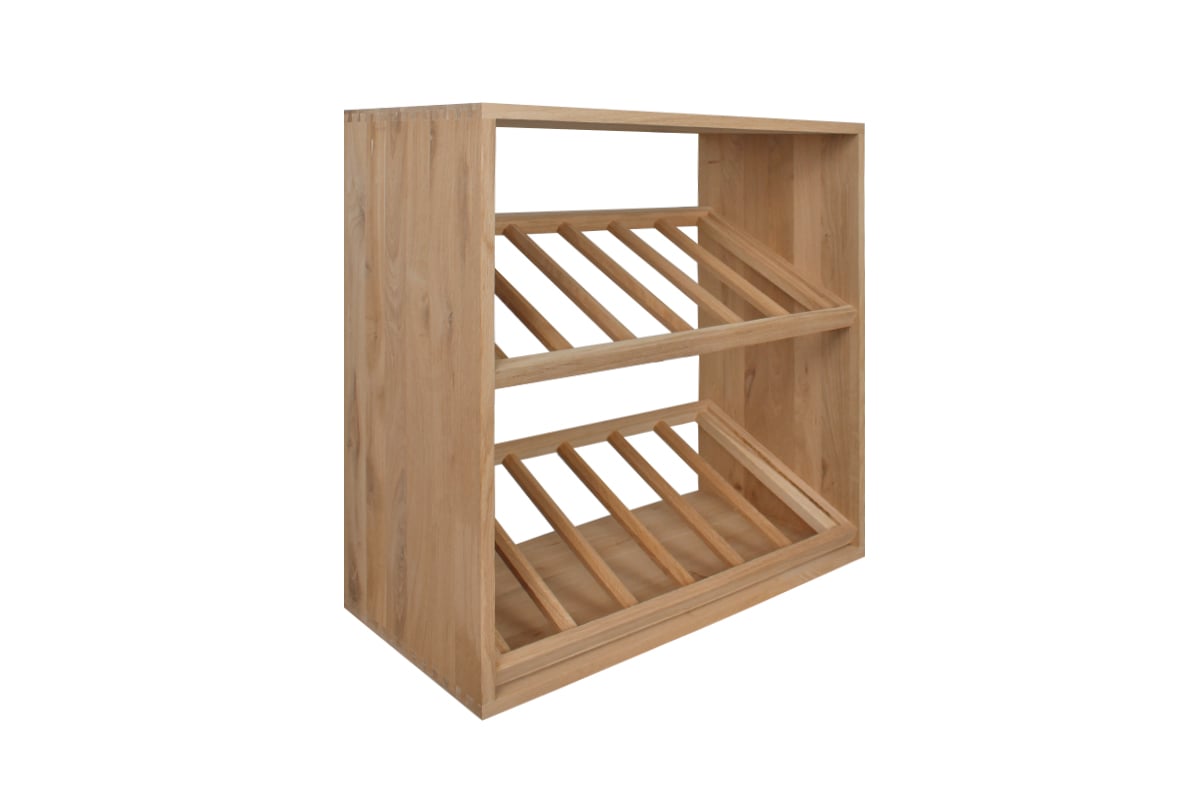
Custom-built racking addresses unique architectural challenges. Sloped ceilings, irregular floor plans, and under-stair spaces often require bespoke solutions that maximise every cubic metre. Working with manufacturers who offer made-to-order fabrication ensures your racks integrate seamlessly with existing architecture whilst meeting precise capacity requirements.
Climate Control Integration and Environmental Factors
Wine cellar racks must work in harmony with climate control systems to maintain optimal storage conditions. Temperature stability between 10-15°C and relative humidity of 60-70% represent the consensus targets for long-term cellaring, though specific requirements vary by wine type and intended ageing duration.
Airflow and Thermal Mass Considerations
Racking layout influences air circulation patterns throughout your cellar. Dense, floor-to-ceiling installations can create dead zones where conditioned air struggles to reach. The ASHRAE Handbook provides technical guidance on refrigerated facility design principles applicable to wine storage, emphasising the importance of unobstructed airflow paths.
Leaving gaps between rack modules and maintaining clearance from walls promotes circulation. In mechanically cooled cellars, position racks to avoid blocking return-air grilles or creating short-cycling paths where chilled air bypasses the bulk of your collection.
Key spacing considerations:
Maintain 5-8 cm clearance between racks and exterior walls
Position tallest racks perpendicular to cooling unit airflow
Create 10-15 cm aisles between parallel rack runs
Avoid solid backing on modular units to permit through-flow
Thermal mass within racking systems helps stabilise cellar temperatures. Solid wood possesses higher thermal mass than metal or composite materials, absorbing temperature fluctuations and releasing stored heat gradually. This natural dampening effect reduces the cycling frequency of cooling equipment, improving energy efficiency and extending mechanical system lifespan.
Capacity Planning and Space Optimisation
Determining appropriate cellar capacity requires honest assessment of your collecting habits and growth projections. Under-sizing forces premature expansion, whilst excessive capacity wastes conditioned space and construction investment.
Calculating True Storage Density
Nominal capacity ratings often assume standard 750 ml Bordeaux bottles arranged in ideal configurations. Reality introduces complications: varied bottle shapes, required accessibility, and practical aisle spacing all reduce effective capacity below theoretical maximums.
A useful planning metric allocates 25-30% overhead beyond current collection size to accommodate growth over the next five years. This buffer prevents the common scenario where cellars reach capacity within months of completion, triggering expensive retrofits or forcing collectors to store overflow in sub-optimal conditions.
Bottle shape considerations:
Burgundy and Pinot Noir bottles require larger diameter openings
Champagne and sparkling wine bottles need reinforced support
Half-bottles and magnums require dedicated specialty storage
Irregular artisan bottles may not fit standard racking at all
Premium rack systems incorporate adjustable depths and heights to accommodate this bottle diversity. Fixed-dimension racking forces awkward compromises, with oversized slots wasting space whilst undersized openings exclude certain bottles entirely.
Construction Details and Installation Requirements
Professional installation ensures wine cellar racks perform safely under load whilst maintaining structural integrity over decades of use. A fully loaded rack section can exceed 200 kg per linear metre, demanding robust anchoring to wall framing or floor systems.
Wall-Mounted vs Freestanding Architectures
Wall-mounted racks transfer loads directly to structural framing, maximising floor space efficiency. This approach suits smaller cellars where every square metre matters. However, it demands solid attachment points: mounting to drywall alone invites catastrophic failure. Locate wall studs or install blocking during cellar construction to provide secure anchor points rated for expected loads.
Freestanding racks offer installation flexibility and portability. Quality freestanding systems incorporate anti-tip features such as interlocking top sections or floor anchors that prevent toppling when bottles are added or removed from upper positions. Building codes in some jurisdictions mandate anti-tip devices for any furniture exceeding certain height-to-depth ratios.
Mounting Type | Load Capacity | Installation Complexity | Space Efficiency |
|---|---|---|---|
Wall-mounted | Very high | Moderate to high | Excellent |
Freestanding | High | Low to moderate | Good |
Floor-to-ceiling | Very high | High | Excellent |
The Building Science Corporation’s technical brief on wine cellars addresses moisture management and construction details essential for long-term cellar performance. Proper vapor barrier placement and insulation prevent condensation that can damage both racking and bottles, particularly in installations within conditioned living spaces.
Finish Options and Aesthetic Integration
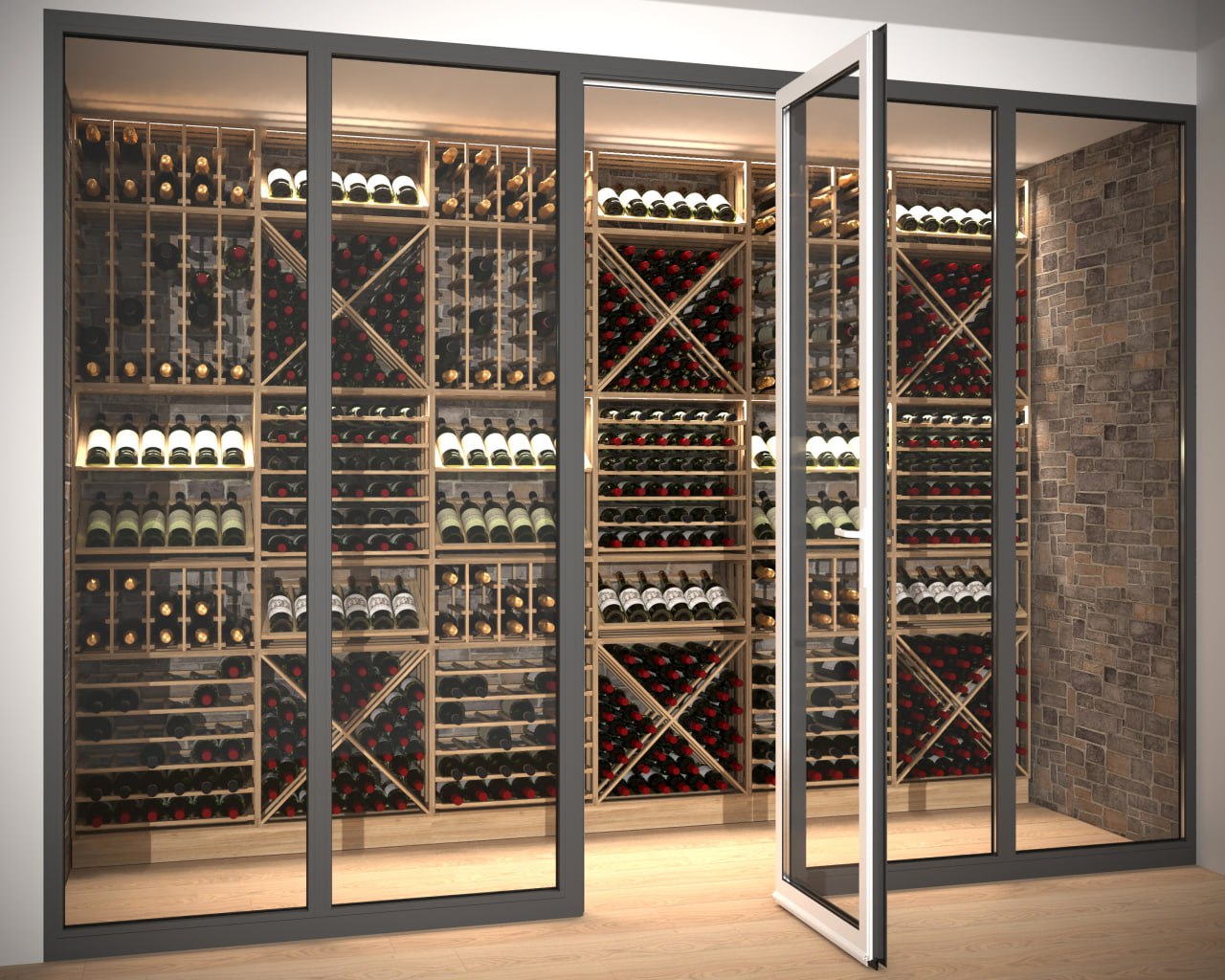
Wine cellar aesthetics extend beyond pure function into the realm of interior design. Your racking finish should complement surrounding architecture whilst respecting wine storage best practices.
Natural Wood Finishes and Surface Treatments
Unfinished or oil-finished wood allows the material to breathe, moderating humidity fluctuations naturally. Traditional European cellars have employed bare oak and chestnut for centuries, developing rich patinas over time. Modern clear oils enhance grain patterns whilst maintaining wood’s hygiene-positive properties and resistance to mould growth.
Stained finishes introduce colour variety but require careful product selection. Water-based stains minimise VOC emissions critical in sealed cellar environments, whilst solvent-based products may introduce odours that persist for months. Allow any finished racking to off-gas completely before introducing wine bottles.
Finish durability factors:
Humidity resistance determines long-term appearance retention
Surface hardness affects resistance to bottle contact wear
Colour stability under limited light exposure
Maintenance requirements for periodic cleaning
Smoked oak and burnt pine finishes deliver character through thermal treatment rather than chemical staining. These processes alter wood surface chemistry, creating distinctive colours whilst enhancing dimensional stability and natural preservative qualities. The result combines visual interest with practical performance benefits.
Display Lighting Considerations
Strategic lighting transforms wine cellar racks into architectural features, though illumination requires careful planning to avoid wine damage. UV radiation and excessive heat both degrade wine quality, particularly for bottles stored at eye level where lighting concentrates.
LED technology has revolutionised cellar lighting by virtually eliminating UV output and heat generation. Warm colour temperatures (2700-3000K) provide inviting ambiance whilst minimising blue-spectrum light that penetrates glass. Position fixtures to illuminate racks obliquely rather than directing light at bottles, and incorporate dimmers to reduce intensity when cellars are unoccupied.
The Australian Wine Research Institute’s packaging guidance emphasises light protection, noting that extended exposure degrades delicate aromatics even through tinted glass. Reserve accent lighting for display sections containing bottles intended for near-term consumption, whilst keeping long-term storage areas darker.
Commercial vs Residential Installation Differences
Wine cellar racks serving commercial hospitality or retail functions face distinct requirements compared to residential installations. Understanding these differences ensures appropriate system selection.
Restaurant and Hotel Applications
Commercial wine programmes demand frequent bottle access, often multiple times per service period. Racking must accommodate high-traffic retrieval patterns without compromising structural integrity or wine quality. Wider aisles facilitate staff movement, whilst label-forward display slots allow servers to locate specific bottles quickly during service.
Capacity planning for commercial applications considers turnover rates alongside absolute bottle count. A restaurant cellar holding 800 bottles might cycle through inventory monthly, whilst a private collector’s cellar of identical size might turn over annually. This usage intensity influences material selection, with commercial installations favouring highly durable hardwoods that withstand repeated handling.
Insurance and liability concerns also differentiate commercial cellars. Restaurants and hotels typically maintain substantial inventories representing significant financial value, necessitating robust racking that eliminates collapse risks. Many insurers require engineered mounting systems with documented load ratings rather than DIY installations.
Residential Cellar Priorities
Homeowners prioritise aesthetics and collection display alongside practical storage. The cellar often serves as entertainment space where guests admire collections, making visual presentation paramount. Residential wine cellar racks frequently incorporate decorative elements, varied bottle orientations, and integrated display areas for accessories.
Budget flexibility also differs between sectors. Residential projects may allocate premium materials and custom details that commercial operators cannot justify economically. Conversely, commercial operators demand rapid installation timelines that conflict with handcrafted construction methods preferred in luxury residential work.
For those seeking inspiration beyond wine storage, Architectural Digest’s overview of storage solutions demonstrates how built-in systems integrate into broader interior design schemes, applying principles relevant to both wine cellars and general display architecture.
Maintenance and Long-Term Care Requirements
Quality wine cellar racks require minimal maintenance when properly installed, though periodic attention ensures continued performance and appearance. Establishing routine care practices protects your investment in both racking and wine collection.
Cleaning Protocols and Inspection Schedules
Dust accumulates on horizontal surfaces regardless of cellar filtration quality. Schedule cleaning every six months using microfiber cloths slightly dampened with water. Avoid chemical cleaners that may leave residues or introduce odours, and never saturate wood surfaces. Wipe spills immediately to prevent staining or moisture absorption.
Annual structural inspections identify developing issues before they compromise safety. Check mounting hardware for loosening, examine wood for splitting or warping, and verify that freestanding units maintain plumb alignment. Address minor issues promptly to prevent escalation into major repairs requiring partial cellar emptying.
Inspection checklist:
Wall anchor tightness and integrity
Floor anchor or anti-tip device function
Wood surface condition and finish degradation
Joint tightness in modular assemblies
Label and bottle contact point wear patterns
Climate fluctuations stress wood more than stable conditions. If your cellar experiences seasonal humidity swings, monitor joints and connections for movement. Premium joinery techniques such as mortise-and-tenon or dowelled construction accommodate wood movement better than simple butt joints fastened with screws.
Sustainability Considerations in Rack Selection
Environmental consciousness increasingly influences purchasing decisions across all product categories. Wine cellar racks present opportunities to align storage infrastructure with sustainability values through thoughtful material selection and manufacturing transparency.
Certified Timber and Responsible Sourcing
FSC certification verifies wood originates from responsibly managed forests where harvesting balances ecosystem preservation with resource extraction. This third-party verification provides assurance that your wine cellar racks don’t contribute to deforestation or habitat destruction.
Beyond forestry practices, transportation distances affect environmental impact. European-manufactured racks serving European markets minimise shipping emissions compared to imports from distant continents. Regional manufacturing also supports local craftsmanship traditions and reduces supply chain complexity.
Longevity represents perhaps the most overlooked sustainability factor. Racks constructed to last generations through quality materials and robust engineering prevent repeated replacement cycles that consume resources and generate waste. Initial price premiums for premium construction typically prove economical when amortised across decades of service life.
Integration with Wine Collection Management Systems
Modern wine cellaring extends beyond physical storage into digital inventory management. Forward-thinking rack designs accommodate technologies that bridge physical and virtual collection oversight.
Inventory Tracking and Rack Organisation
Logical rack organisation simplifies both manual retrieval and digital cataloguing. Establish consistent labelling schemes that correlate physical locations to database entries, whether using simple grid references (A1, B3) or more complex regional and vintage groupings.
RFID tags embedded in premium bottle labels enable automated inventory tracking as bottles enter or leave designated rack sections. Though still emerging in residential applications, this technology has proven valuable for commercial operators managing extensive inventories across multiple storage locations.
For collectors maintaining detailed tasting notes and provenance records, rack placement strategies can reflect drinking windows and acquisition cohorts. Position younger vintages requiring extended ageing in less accessible upper sections, whilst reserving eye-level prime positions for bottles approaching maturity.
Advanced Racking Features and Specialty Functions
Beyond basic bottle storage, innovative wine cellar racks incorporate features addressing specific collecting needs and spatial constraints.
Pull-Out Shelving and Accessibility Aids
Shallow cellars with limited depth benefit from pull-out rack sections that bring bottles forward for easy access without requiring you to reach deep into fixed positions. These sliding assemblies mount on heavy-duty drawer glides rated for wine bottle loads, maintaining smooth operation under weight.
Pull-out functionality particularly benefits commercial applications where staff require rapid bottle location during service. The ability to view an entire rack section at a glance accelerates selection, reducing customer wait times and improving service efficiency.
Accessibility features worth considering:
Angled display rows tilting bottles for label visibility
Reinforced bottom sections supporting magnums and large formats
Integrated step platforms for safe access to upper storage
LED strip lighting within channels for discrete illumination
Corner racks exploit otherwise wasted space in L-shaped and U-shaped cellar layouts. Specialised corner modules maintain bottle accessibility whilst maximising storage density in confined footprints. These units typically employ angled or curved fronts that present bottles ergonomically despite perpendicular wall intersections.
Selecting and installing wine cellar racks demands attention to structural engineering, climate interaction, and aesthetic integration alongside practical storage requirements. Quality systems protect collections whilst enhancing interiors through thoughtful design and premium materials. Museliving creates handcrafted modular wine storage from FSC-certified solid wood, combining Scandinavian design principles with functional flexibility for homes, restaurants, hotels, and commercial spaces across Europe. Our made-to-order approach ensures every rack system meets your specific requirements for capacity, configuration, and finish whilst supporting sustainable manufacturing practices and exceptional craftsmanship that endures for generations.