


An oak bookshelf represents more than just storage-it embodies centuries of woodworking tradition, natural beauty, and sustainable design principles that align perfectly with contemporary living. As homeowners and designers increasingly seek furniture that combines aesthetics with environmental responsibility, solid oak shelving has emerged as a definitive choice for those who value craftsmanship, durability, and timeless appeal. Whether you’re furnishing a minimalist apartment, a traditional library, or a modern office space, understanding the nuances of oak construction, finish options, and design considerations will help you select pieces that serve your needs for decades to come.
Why Oak Remains the Premium Choice for Bookshelves
Oak has dominated furniture making for generations, and its continued popularity stems from exceptional material properties that few other timbers can match. The wood’s distinctive grain pattern creates visual interest without overwhelming interior schemes, whilst its inherent strength supports substantial weight loads-critical when shelving will hold collections of books, decorative objects, or archival materials.
Key advantages of oak construction include:
Superior density and hardness rating compared to softwoods
Natural resistance to moisture fluctuation and warping
Exceptional longevity spanning multiple generations
Compatibility with various finish techniques
Ability to accept both traditional and contemporary joinery methods
The cellular structure of oak contributes to its remarkable stability. Unlike softer species that compress under sustained loads, properly seasoned oak maintains its form even when supporting hundreds of volumes. This structural integrity makes it particularly suitable for tall, freestanding designs or wall-mounted configurations where shelf deflection would compromise both safety and aesthetics.
Design Variations: From Traditional to Contemporary
An oak bookshelf adapts seamlessly to diverse architectural contexts through thoughtful design choices. Traditional configurations often feature ornate mouldings, adjustable shelf supports concealed within dados, and substantial thickness that emphasises permanence and gravitas. These pieces complement period properties, legal offices, or any space where classical proportions reinforce professional credibility.
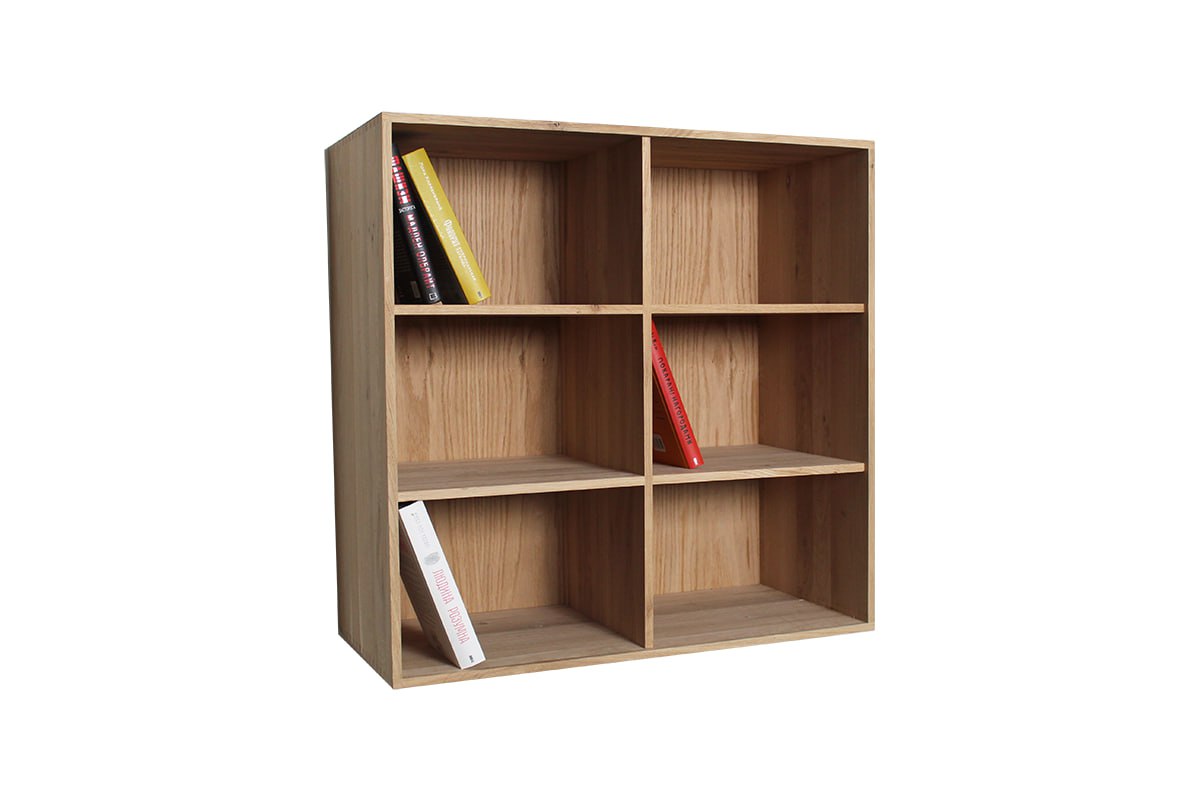
Scandinavian Minimalism in Oak Shelving
Contemporary interpretations embrace clean lines and functional simplicity. Scandinavian design philosophy particularly suits oak’s natural characteristics, allowing the timber’s inherent beauty to take precedence over decorative embellishment. Slender profiles, visible joinery as design features, and open configurations create visual lightness whilst maintaining structural integrity.
Modern production techniques enable modular systems where individual components interconnect to form customisable arrangements. This flexibility proves invaluable in evolving interiors-shelving expands alongside growing book collections or reconfigures when room layouts change.
Popular contemporary features include:
Floating shelf designs with concealed brackets
Mixed-material combinations pairing oak with metal or glass
Asymmetric layouts breaking from traditional symmetry
Integrated lighting highlighting displayed objects
Adjustable configurations adapting to changing needs
The natural warmth of oak balances the potential austerity of minimalist design. Even in pared-back interiors dominated by neutral palettes and geometric simplicity, solid wood introduces organic texture and tactile appeal that prevents spaces feeling sterile or institutional.
Finish Options: Enhancing Oak’s Natural Character
Surface treatment dramatically influences both appearance and longevity. Finishing techniques for oak require understanding the wood’s open grain structure and tendency toward blotching when stains are applied carelessly. Professional finishers typically seal the surface with wash coats before applying colour, ensuring even absorption and consistent tone.
Clear finishes remain most popular, preserving oak’s natural colour whilst providing protection against moisture and handling marks. Oil finishes penetrate the timber, enhancing grain figure and creating a matte appearance that feels natural to the touch. These treatments require periodic renewal but allow for localised repairs without complete refinishing.
Natural, Smoked, and Stained Variations
Heat treatment produces smoked oak through controlled exposure to ammonia fumes, which react with the wood’s tannins to create rich brown tones throughout the entire thickness. This process offers colour consistency impossible through surface staining-even deep scratches reveal the same warm hue rather than exposing lighter sapwood beneath.
Finish Type | Appearance | Maintenance | Durability |
|---|---|---|---|
Natural oil | Light honey tones, matte | Bi-annual reapplication | Moderate, repairable |
Lacquer | Clear gloss or satin sheen | Occasional dusting | High, scratch-resistant |
Smoked | Deep brown throughout | Standard cleaning | Excellent, colour permanent |
Wax | Traditional low lustre | Regular buffing | Low, marks easily |
Staining offers virtually unlimited colour possibilities but demands careful application to avoid obscuring oak’s distinctive grain pattern. Contemporary preferences lean toward subtle tones that shift the baseline colour slightly whilst maintaining wood recognition-grey washes, whitened finishes, or gentle amber enrichment rather than opaque coverage.
For those seeking ready-made solutions that combine expert craftsmanship with sustainable materials, Museliving bookshelves offer handmade designs in solid oak, smoked oak, and other premium finishes, manufactured to order across multiple configurations suitable for residential and commercial interiors.
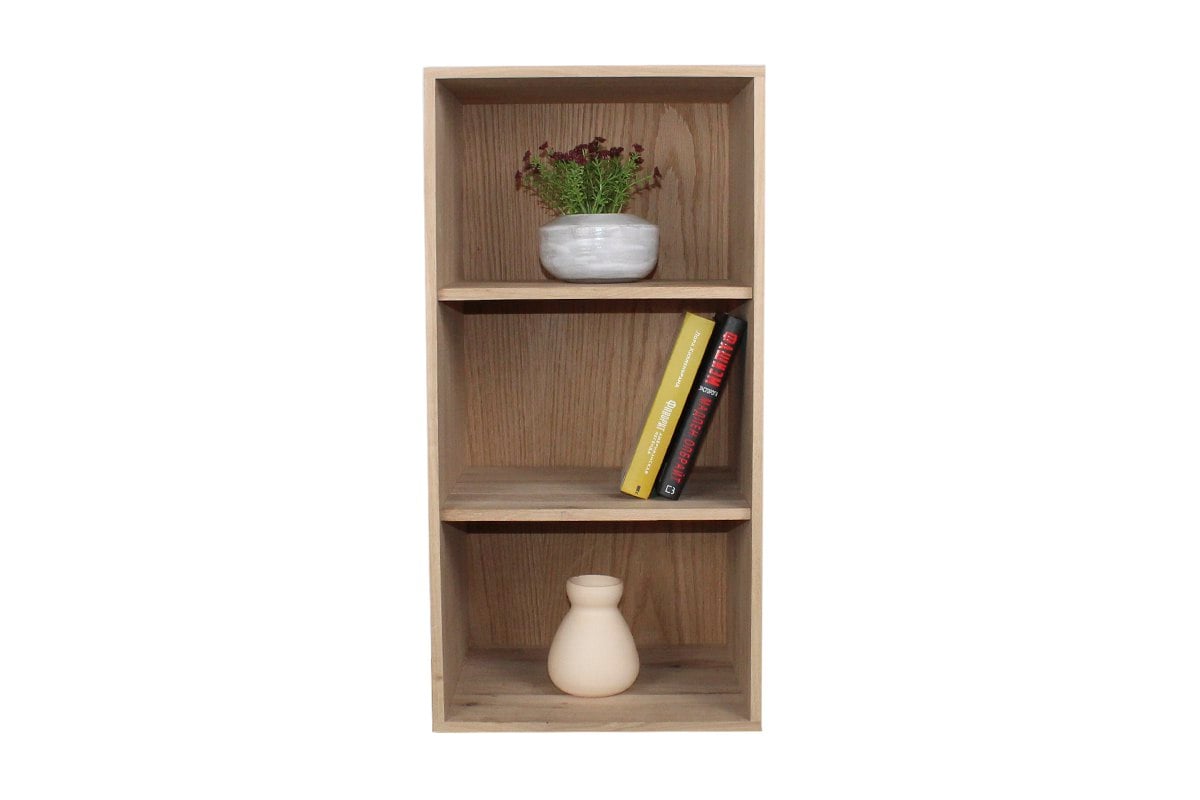
Shelf Thickness and Span Calculations
Engineering principles dictate appropriate shelf thickness relative to span and anticipated loads. A general guideline suggests 25mm thickness for spans up to 800mm when supporting standard book loads, increasing to 32mm for lengths approaching 1200mm. These recommendations assume solid oak construction; engineered substrates veneered in oak require different calculations based on core material properties.
Critical structural considerations include:
Load distribution across multiple shelf supports
Grain orientation parallel to shelf length for maximum strength
Edge banding to conceal end grain and prevent damage
Rear bracing or attachment to walls for tall units
Adjustable shelf systems allowing height customisation
Deflection under load appears inevitable over extended spans, but quality construction limits this movement to imperceptible levels. Professional makers typically pre-camber shelves-introducing a slight upward curve that flattens when loaded rather than sagging below horizontal.
Integrating Oak Shelving into Interior Schemes
An oak bookshelf functions as both practical storage and significant design element, influencing room character through scale, placement, and styling. Floor-to-ceiling installations create architectural presence, defining spaces and drawing eyes upward to emphasise ceiling height. Lower, horizontal configurations anchor seating arrangements and provide surfaces for display alongside book storage.
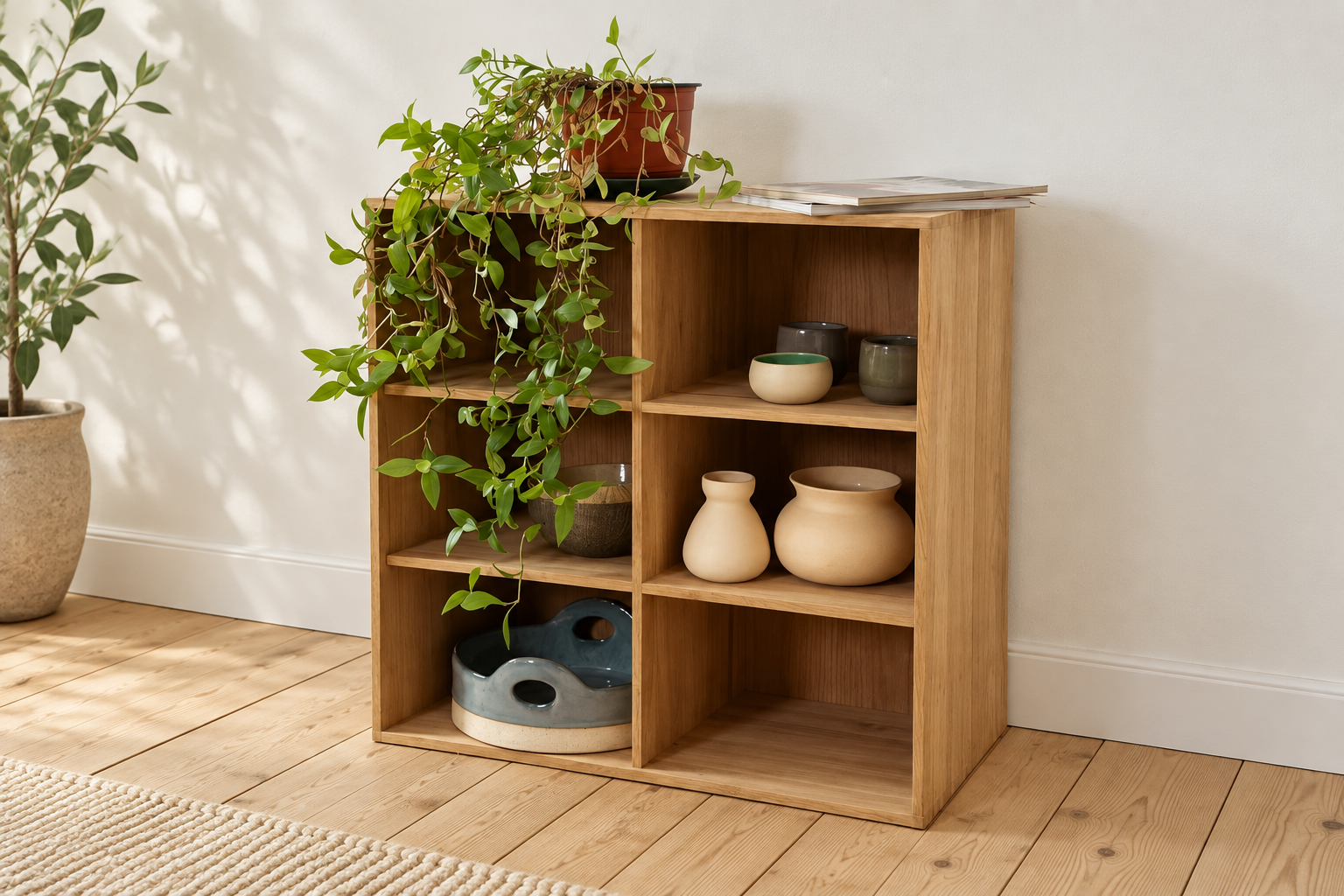
Colour coordination requires considering oak’s warm undertones when selecting adjacent finishes. Cool greys and blues create pleasing contrast, whilst coordinating with other wood tones demands careful attention to ensure harmony rather than clashing orange or red notes.
Balancing Function with Display
Effective bookshelf styling balances utility with visual appeal. Grouping books by size creates clean horizontal lines, whilst incorporating vertical stacks and decorative objects prevents monotonous uniformity. The Rule of Thirds suggests leaving approximately one-third of shelf space empty or devoted to non-book items-ceramics, plants, framed photographs-to avoid overwhelming density.
Lighting transforms shelving from simple storage into dramatic focal points. LED strip lighting concealed beneath each shelf illuminates displayed objects whilst reducing glare, and adjustable spotlights allow highlighting specific collections or artworks. These additions prove particularly effective in home libraries or commercial settings where ambience matters alongside functionality.
Sustainability and Environmental Considerations
Responsible oak bookshelf production begins with timber sourcing. Certified forests maintain biodiversity, protect water quality, and ensure regeneration exceeds harvest rates. Manufacturers committed to sustainability document their supply chains, providing transparency from forest to finished product.
Transportation represents another environmental factor. European manufacturers serving European markets significantly reduce carbon footprints compared to intercontinental shipping. Local production also supports regional economies and traditional woodworking skills that might otherwise disappear under pressure from mass-produced imports.
Sustainable practices in oak furniture include:
FSC or PEFC certified timber sourcing
Water-based or natural oil finishes reducing VOC emissions
Made-to-order production minimising waste
Modular designs extending product lifespan through reconfiguration
Repairable construction allowing component replacement
The inherent durability of solid oak contributes to sustainability by creating furniture that transcends trends and lasts generations. Unlike particleboard alternatives requiring replacement every decade, properly maintained oak shelving becomes an heirloom-passing from household to household rather than ending in landfills.
Long-Term Care and Maintenance
Preserving oak furniture requires minimal intervention when basic principles guide daily use. Museum-standard conservation practices recommend maintaining stable humidity between 40-60% to prevent excessive expansion or contraction that stresses joints. Avoid placing shelving against exterior walls where temperature fluctuations are greatest, and position units away from direct sunlight that can fade finishes unevenly.
Routine maintenance involves dusting with soft cloths and occasional treatment with appropriate products matched to the original finish. Oil-finished pieces benefit from annual conditioning that replenishes protective layers, whilst lacquered surfaces require only cleaning with slightly damp cloths to remove accumulated grime.
Maintenance Task | Frequency | Method |
|---|---|---|
Dusting | Weekly | Microfibre cloth, dry |
Oil treatment | Annually | Thin application, excess removed |
Structural inspection | Bi-annually | Check joints, tighten hardware |
Deep cleaning | As needed | Mild soap solution, immediate drying |
Custom Solutions for Unique Spaces
Standardised furniture rarely fits awkward alcoves, sloped ceilings, or irregular wall dimensions that characterise period properties and loft conversions. Custom oak bookshelves address these challenges whilst maximising storage potential in every available centimetre. Bespoke production allows specifying exact dimensions, shelf spacing tailored to your collection, and integrated features like cupboards concealing less attractive items.
The investment in custom work proves particularly worthwhile for challenging installations. Built-in shelving can incorporate architectural details like skirting boards and cornices, creating seamless integration that appears original to the building. This approach significantly enhances property value-prospective buyers recognise quality installations as permanent improvements rather than furniture requiring replacement.
Commercial Applications Beyond Residential Use
An oak bookshelf serves diverse commercial contexts where durability and professional appearance matter. Law firms display legal references and case files in traditional oak shelving that conveys authority and permanence. Boutique retail environments use oak fixtures to present merchandise in settings that align with premium brand positioning.
Hotels and restaurants incorporate oak shelving to define spaces, display books or decorative objects that reinforce design concepts, and provide functionality in lobbies or private dining areas. The timber’s warmth creates welcoming environments that encourage lingering-valuable in hospitality settings where atmosphere directly influences guest experience.
Educational institutions benefit from oak’s longevity in library settings subject to constant use. Properly constructed shelving withstands decades of service in demanding environments, making higher initial costs economically sensible when calculated across extended lifespans that outlast cheaper alternatives requiring frequent replacement.
Investment Value and Cost Considerations
Premium oak bookshelves command higher prices than alternatives manufactured from engineered materials or less expensive hardwoods. This cost differential reflects superior raw materials, skilled labour, and construction methods prioritising longevity. Evaluating value requires considering lifetime cost rather than purchase price alone.
A solid oak bookshelf purchased in 2026 will likely still serve its purpose in 2056 and beyond, potentially outlasting multiple generations of cheaper substitutes. Amortised across this extended period, premium furniture often proves more economical whilst avoiding the environmental impact of repeatedly manufacturing and disposing of short-lived products.
Factors influencing oak bookshelf pricing:
Timber grade and species selection
Joinery complexity and construction methods
Finish type and application technique
Customisation level and made-to-order production
Hardware quality for adjustable systems
Second-hand market values remain robust for well-maintained oak pieces. Unlike trendy designs that date quickly, classical proportions and timeless materials retain appeal across changing fashions. This residual value provides financial security-quality furniture can be sold to recover substantial portions of original investment if circumstances require.
Modular Systems and Scalable Storage
Contemporary living often involves changing circumstances-growing families, career relocations, or evolving interests that demand flexible furniture solutions. Modular oak bookshelf systems address this reality through component-based designs that expand, contract, or reconfigure as needs change.
Individual modules connect through standardised joinery, allowing unlimited combinations within manufacturer offerings. Start with a single unit and add sections over time, building comprehensive storage systems incrementally as budgets allow. This approach makes premium oak furniture accessible to broader audiences whilst maintaining investment-grade quality.
Vertical Growth and Space Efficiency
Urban living frequently involves premium floor space costs where vertical storage maximises efficiency. Tall oak bookshelves capitalise on often-wasted volume between standard furniture heights and ceilings. Properly anchored to wall structure, these installations safely accommodate extensive collections whilst occupying minimal footprints.
Corner configurations represent another space-efficient approach, transforming awkward angles into productive storage. Custom solutions can incorporate both straight and angled sections, wrapping continuously around rooms to maximise capacity without protruding into traffic patterns or dominating valuable floor area.
Technical Specifications for Specification Projects
Architects and interior designers specifying oak shelving for commercial or residential projects require detailed technical information ensuring products meet performance standards and installation requirements. Professional specifications typically address timber species and grade, joinery methods, finish systems, load ratings, and mounting hardware.
Research on hardwood grading provides technical background for understanding how lumber selection influences finished quality. Specifiers should request samples showing actual grain patterns, colour variation, and finish appearance rather than relying solely on catalogue photographs that may not accurately represent delivered products.
Load testing documentation becomes essential in commercial installations where building codes and insurance requirements demand verified performance data. Reputable manufacturers provide engineering calculations demonstrating shelf capacities under distributed and concentrated loads, certified by qualified professionals.
Key specification points include:
Timber species botanical name and origin
Moisture content at manufacture and installation
Joinery types with dimensional tolerances
Finish composition and VOC content
Hardware specifications and load ratings
Installation requirements and wall fixings
Cultural Significance and Design Heritage
Oak furniture carries deep cultural resonance across European civilisations where the timber symbolises strength, endurance, and nobility. Medieval halls featured oak furnishings built to last centuries, establishing associations between the material and permanence that persist in contemporary design consciousness.
This heritage influences modern choices-selecting an oak bookshelf connects to craftsmanship traditions stretching back generations whilst supporting artisans who maintain these skills. The decision becomes about more than acquiring storage; it represents participation in cultural continuity and rejection of disposable consumption patterns.
Scandinavian design movements particularly celebrate oak’s natural qualities through minimal intervention approaches. Rather than heavily processing or disguising the timber, northern European makers traditionally allowed wood characteristics to dominate, creating furniture that honours material honesty and functional simplicity. These principles resonate strongly in 2026 as consumers increasingly value authenticity and transparency in production methods.
Selecting an oak bookshelf represents an investment in quality, sustainability, and timeless design that will enhance your interior for decades to come. The considerations explored here-from timber grading and joinery techniques to finish selection and environmental responsibility-equip you to make informed decisions aligned with both practical requirements and aesthetic aspirations. Museliving combines Scandinavian design principles with premium craftsmanship, offering handmade solid oak furniture manufactured to order using FSC-certified materials, custom sizing, and exceptional attention to detail that ensures your shelving becomes a cherished element of your living or commercial space.