


The landscape of premium furniture production has evolved considerably over recent years, with designers, architects, hospitality professionals, and retailers increasingly recognising the value of strategic partnerships. When it comes to wine storage solutions, the complexity of marrying functional requirements with aesthetic excellence demands a sophisticated approach. Collaboration with wine rack manufacturers is no longer simply about placing orders; it represents a fundamental shift towards integrated design thinking, sustainable material choices, and precision engineering that meets the exacting standards of modern commercial and residential interiors.
Understanding the Value Proposition of Strategic Manufacturing Partnerships
Effective collaboration with wine rack manufacturers begins with recognising that these relationships extend far beyond transactional exchanges. Leading European producers invest heavily in research, development, and craft expertise that cannot be replicated through off-the-shelf purchasing. When design professionals and commercial buyers engage manufacturers early in the specification process, they gain access to technical knowledge about wood behaviour, joinery techniques, modular systems, and finishing processes that directly influence the longevity and performance of wine storage installations.
The most successful partnerships emerge when both parties acknowledge their complementary strengths. Designers bring spatial understanding, aesthetic vision, and client requirements, whilst manufacturers contribute material expertise, production capabilities, and practical insights gleaned from years of fabrication experience. This synergy is particularly valuable in wine rack design, where scientific understanding of storage conditions must inform every dimension, angle, and material choice to protect valuable collections from temperature fluctuation, vibration, and environmental degradation.
Defining Project Requirements and Technical Specifications
Any meaningful collaboration with wine rack manufacturers must commence with crystal-clear communication about project parameters. Commercial installations such as restaurant wine cellars, hotel storage displays, and residential collections each present distinct requirements that influence material selection, structural engineering, and finish specifications. Documentation should address capacity (bottle count and weight), dimensional constraints, environmental conditions, accessibility needs, and integration with existing architectural features.
Essential specification elements include:
- Precise measurements of the installation space, including ceiling height, wall angles, and obstacle locations
- Bottle capacity requirements with allowance for future expansion
- Weight-bearing calculations accounting for maximum bottle load plus structural safety margins
- Environmental factors such as humidity levels, temperature ranges, and exposure to natural light
- Access requirements for loading, maintenance, and eventual reconfiguration
- Aesthetic preferences regarding wood species, grain patterns, finish treatments, and hardware
- Budget parameters with clarity about what elements are fixed versus negotiable
Manufacturers who specialise in bespoke production typically provide technical drawings, three-dimensional visualisations, and material samples during the specification phase. This iterative process allows designers to refine their vision whilst manufacturers identify potential structural challenges or opportunities for innovation. Compliance with relevant ISO standards for furniture storage units ensures that strength, durability, and stability meet internationally recognised benchmarks.
Material Selection and Sustainable Sourcing Practices
One of the most critical aspects of collaboration with wine rack manufacturers involves material choices that balance aesthetic appeal, structural integrity, and environmental responsibility. Premium solid wood species such as oak, smoked oak, pine, and burnt pine each offer distinct characteristics in terms of grain pattern, density, moisture resistance, and ageing behaviour. Oak's durability and fine grain make it particularly suitable for wine cellars where consistent temperature and humidity are maintained, whilst treated pine varieties offer excellent dimensional stability and distinctive visual character.
Sustainability credentials have shifted from optional considerations to fundamental requirements for many commercial and residential projects. Forward-thinking manufacturers maintain FSC certification and implement transparent supply chains that document timber provenance from forest to finished product. When evaluating potential manufacturing partners, architects and designers should request detailed information about sourcing policies, certification documentation, and environmental management systems.
| Material Characteristic | Oak | Smoked Oak | Pine | Burnt Pine |
|---|---|---|---|---|
| Density | High | High | Medium | Medium |
| Moisture Stability | Excellent | Excellent | Good | Excellent |
| Visual Character | Classic grain | Deep, dramatic tones | Light, rustic | Rich, textured |
| Price Point | Premium | Premium | Accessible | Mid-range |
| Durability | Outstanding | Outstanding | Very good | Very good |
The finishing process represents another dimension where manufacturer expertise proves invaluable. Natural oils, hard-wax treatments, and specialised coatings each interact differently with wood species and affect maintenance requirements, tactile qualities, and visual aging. Manufacturers should provide guidance on REACH-compliant finishing materials that meet European chemical safety standards whilst delivering the desired aesthetic outcome.
Modular Design Systems and Scalability
Contemporary wine storage demands flexibility that accommodates changing collections and spatial requirements. Collaboration with wine rack manufacturers who specialise in modular systems enables designers to create installations that expand vertically, horizontally, or around corners without compromising structural integrity or aesthetic coherence. Modular approaches also simplify logistics, reduce installation complexity, and provide cost advantages through standardised component production.
Successful modular systems rely on precise engineering tolerances and standardised connection methods. Manufacturers with advanced CNC machinery and rigorous quality control protocols can produce components that interlock seamlessly, even when fabricated in separate production batches months or years apart. This consistency is essential for projects involving phased implementation or future expansion.
The design of modular wine storage should also consider the safe transit and handling protocols that ensure components arrive undamaged and ready for assembly. Packaging specifications, weight distribution, and protection materials all require careful consideration during the design phase to minimise risk during European distribution.
Customisation Capabilities and Made-to-Order Production
One distinguishing feature of collaboration with wine rack manufacturers who operate on a made-to-order basis is the ability to tailor every dimension, configuration, and detail to specific project requirements. Unlike mass-produced alternatives, bespoke production allows designers to specify non-standard heights that maximise ceiling clearance, create corner solutions that navigate architectural obstacles, or integrate lighting, signage, and branding elements seamlessly into the structural design.
Customisation extends beyond dimensional adjustments to encompass functional enhancements tailored to particular wine collections. Champagne bottles, magnums, and vintage Bordeaux formats each require different cavity dimensions and support structures. Restaurants and hotels may require display-oriented designs that showcase labels whilst maintaining optimal storage conditions, whereas private cellars might prioritise maximum density and climate protection.
Key customisation considerations include:
- Bottle orientation: horizontal versus angled presentation for sediment management and label visibility
- Cavity depth: accommodating varying bottle lengths from standard 750ml to oversized formats
- Visual accessibility: balancing display requirements with UV protection and temperature control
- Integration: incorporating refrigeration units, humidity control systems, or security features
- Branding: embedding logos, signage, or decorative elements that reflect corporate or personal identity
Premium manufacturers maintain extensive libraries of previous projects that demonstrate their customisation capabilities whilst inspiring new applications. During the collaboration process, reviewing case studies helps designers understand what is technically feasible and commercially viable within their project parameters and timeline.
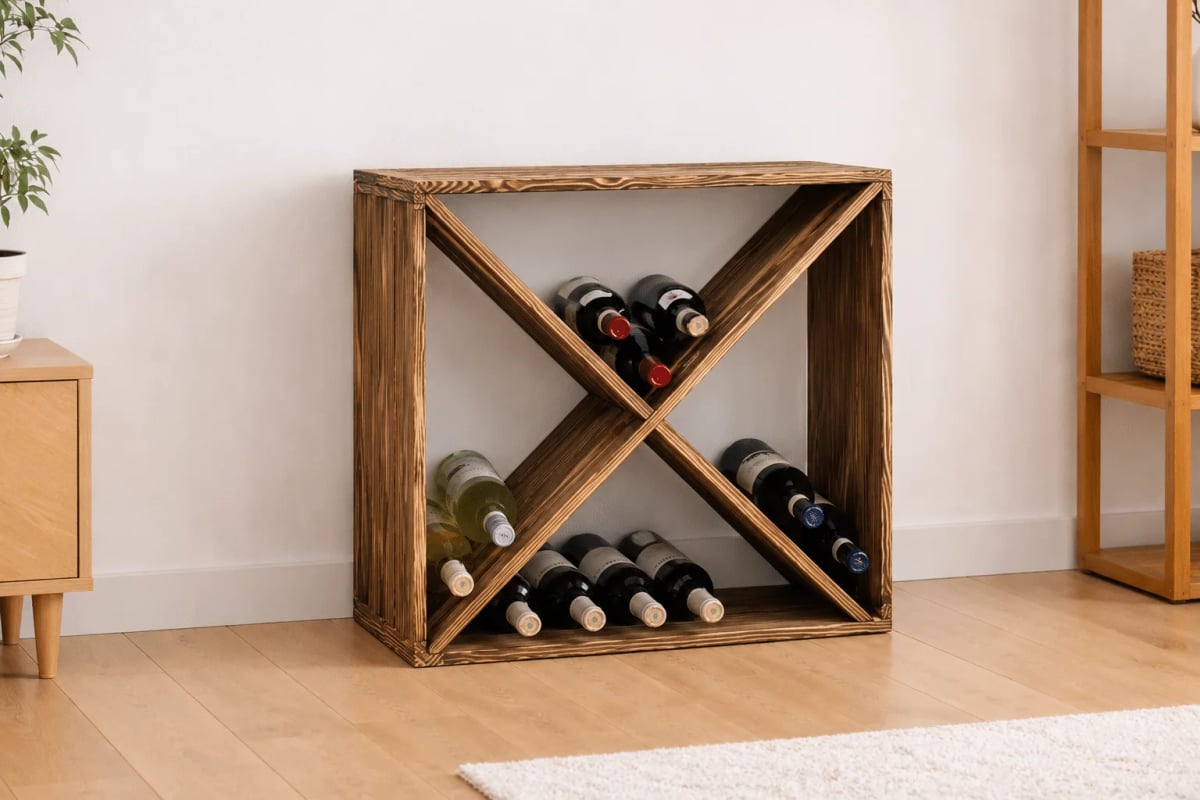
For buyers seeking ready-made solutions that exemplify Scandinavian design principles and premium craftsmanship, exploring options such as modular wine racks in solid oak and pine provides insight into the possibilities that emerge when form, function, and sustainable materials converge.
Quality Assurance and Manufacturing Standards
Rigorous quality control distinguishes exceptional collaboration with wine rack manufacturers from merely competent production relationships. Every phase of fabrication, from initial timber selection through final finishing and packaging, should follow documented procedures that ensure consistency, identify defects, and validate compliance with specifications. Manufacturers should welcome site visits, provide production updates with photographic documentation, and implement transparent communication protocols throughout the manufacturing cycle.
Wood furniture production involves natural materials that exhibit inherent variation in grain pattern, colour, and density. Skilled manufacturers understand how to select and match timber to minimise visual inconsistency whilst celebrating the organic character that makes solid wood distinctive. Quality assurance protocols should address acceptable tolerances for colour variation, grain matching, joinery precision, and finish uniformity.
Testing procedures verify structural performance under load, assess joint strength, and validate dimensional accuracy. Leading manufacturers conduct destructive testing on representative samples to ensure production units meet or exceed design specifications. Documentation of these testing procedures provides designers and end clients with confidence that installations will perform reliably throughout their intended service life.
Project Management and Delivery Coordination
Successful collaboration with wine rack manufacturers requires sophisticated project management that coordinates design development, production scheduling, logistics planning, and on-site installation. Clear milestone definitions, realistic lead times, and contingency planning for potential delays or complications all contribute to smooth project execution. Manufacturers with experience serving commercial clients across Europe understand the importance of coordinating deliveries with construction schedules, access constraints, and other trades working on-site.
Lead times for made-to-order furniture typically range from four to twelve weeks depending on complexity, material availability, and production queue. Rush orders may be accommodated with premium pricing, whilst projects with flexible timelines can sometimes benefit from advantageous scheduling. Transparent communication about production capacity and current workload helps designers set appropriate client expectations and avoid costly delays.
Packaging and logistics represent critical yet often overlooked aspects of the manufacturing relationship. Guidelines for wine storage and distribution emphasise the importance of protecting bottles from vibration, temperature extremes, and physical shock during transit. These same principles apply to the furniture designed to store wine, with robust packaging essential to prevent damage during European distribution. Collaboration should address packaging specifications, carrier selection, delivery scheduling, and installation support.
Innovation and Design Development Partnerships
Forward-thinking collaboration with wine rack manufacturers extends beyond individual projects to encompass ongoing design development and innovation initiatives. Manufacturers who invest in prototyping capabilities, material research, and finishing experimentation can serve as valuable partners in developing new product concepts that push aesthetic and functional boundaries. These relationships often yield proprietary designs that differentiate designers in competitive markets whilst expanding manufacturers' portfolios with proven commercial applications.
Joint development initiatives might explore emerging wood species, experimental joinery techniques, integrated technology solutions, or novel finishing treatments that enhance performance or visual impact. The circular economy principles increasingly influence furniture design, with manufacturers and designers collaborating on modular systems designed for disassembly, refurbishment, and eventual material recovery.
Innovation partnerships also address market trends such as space optimisation in urban environments, multi-functional furniture that serves dual purposes, or smart storage systems that integrate inventory management and environmental monitoring. Manufacturers with in-house design capabilities can contribute technical feasibility assessments and production-oriented refinements that transform conceptual sketches into commercially viable products.
| Innovation Area | Designer Contribution | Manufacturer Contribution | Collaborative Output |
|---|---|---|---|
| Material experimentation | Aesthetic vision, market insight | Technical knowledge, testing facilities | New finishes, species applications |
| Modular systems | Spatial concepts, user requirements | Engineering, connection systems | Scalable, flexible platforms |
| Sustainability | Environmental targets, certification goals | Supply chain management, process optimisation | Verified eco-credentials |
| Technology integration | User experience, functionality | Technical implementation, electrical safety | Smart furniture solutions |
Commercial Relationships and Pricing Structures
Understanding the financial dimensions of collaboration with wine rack manufacturers enables designers and buyers to structure relationships that deliver value whilst supporting sustainable business models. Pricing for bespoke furniture typically reflects material costs, labour hours, overhead allocation, and profit margin, with variations based on complexity, order volume, and delivery requirements. Transparent pricing structures that itemise major cost components facilitate value engineering discussions and help identify opportunities for optimisation without compromising quality.
Volume commitments often unlock preferential pricing, priority scheduling, and enhanced service levels. Designers who specify a manufacturer's products consistently across multiple projects can negotiate framework agreements that establish pricing, lead times, and terms for an extended period. These arrangements benefit both parties by reducing administrative burden, ensuring production continuity, and building institutional knowledge that improves efficiency with each successive project.
Pricing considerations include:
- Material specifications: premium species, grain selection, and dimensional requirements
- Complexity factors: custom joinery, non-standard configurations, integrated features
- Finish treatments: number of coats, specialised products, colour matching requirements
- Order volume: economies of scale in material purchasing and production efficiency
- Delivery parameters: packaging requirements, shipping distances, installation support
- Payment terms: deposit schedules, milestone payments, retention provisions
Manufacturers with robust supply chain management capabilities can provide accurate quotations quickly and maintain pricing stability even during periods of material cost volatility. Collaborative relationships built on mutual respect and transparent communication weather market fluctuations more successfully than purely transactional arrangements.
Cross-Functional Collaboration and Communication Protocols
Effective collaboration with wine rack manufacturers involves multiple stakeholders beyond the primary designer and production manager. Architects require structural integration details, interior designers need finish coordination information, contractors demand installation specifications, and end clients expect regular progress updates. Establishing clear communication protocols that define responsibilities, reporting frequencies, and escalation procedures prevents misunderstandings and ensures all parties remain informed throughout the project lifecycle.
Digital collaboration tools such as shared project portals, three-dimensional modelling platforms, and real-time production tracking systems enhance transparency and enable stakeholders to monitor progress regardless of geographic location. Cloud-based documentation repositories ensure that specifications, drawings, and correspondence remain accessible to authorised parties whilst maintaining version control and audit trails.
Regular progress meetings, whether conducted virtually or in-person, provide opportunities to address emerging issues, validate design decisions, and maintain project momentum. Manufacturers should designate dedicated project contacts who understand both technical and commercial aspects of the collaboration, ensuring that questions receive informed, timely responses.
Installation Support and After-Sales Service
The manufacturing relationship extends beyond delivery to encompass installation guidance, adjustment services, and long-term maintenance support. Complex modular installations benefit enormously from manufacturer-provided installation expertise, whether through detailed assembly instructions, video tutorials, or on-site technical assistance. This support ensures that carefully crafted components are assembled correctly, avoiding damage and achieving the intended aesthetic and functional outcomes.
Warranty provisions and after-sales service commitments differentiate premium manufacturers from budget-oriented competitors. Comprehensive warranties covering materials, workmanship, and structural performance for extended periods demonstrate manufacturer confidence in product quality whilst providing clients with peace of mind. Clear documentation of warranty terms, exclusions, and claim procedures prevents disputes and facilitates efficient resolution of any issues that arise.
Maintenance guidance helps clients preserve the beauty and functionality of solid wood wine racks throughout their service life. Manufacturers should provide specific recommendations for cleaning products, humidity management, seasonal adjustments, and periodic refinishing to address normal wear and aging. This ongoing support transforms one-time transactions into lasting relationships that generate referrals, repeat business, and portfolio-building opportunities.
European Market Considerations and Distribution Networks
Collaboration with wine rack manufacturers serving European markets requires awareness of regional preferences, regulatory requirements, and logistical considerations. Scandinavian design aesthetics emphasising minimalism, natural materials, and functional elegance resonate strongly across Northern and Western Europe, whilst Mediterranean markets may favour warmer tones and more decorative elements. Understanding these nuances enables manufacturers and designers to tailor offerings appropriately whilst maintaining brand consistency.
Regulatory compliance varies across European jurisdictions, with particular attention required for commercial installations in hospitality and retail environments. Fire safety regulations, accessibility standards, and building codes all influence permissible materials, configurations, and installation methods. Manufacturers with European-wide distribution experience navigate these requirements efficiently, providing compliant solutions and appropriate documentation.
Logistics networks that ensure reliable delivery across Europe require established relationships with specialised furniture carriers, customs expertise for non-EU countries, and packaging solutions that protect products during extended transit. Collaboration with manufacturers who maintain distribution capabilities throughout Europe simplifies project coordination and reduces the risk of delays or damage.
The growing emphasis on localised production and reduced carbon footprints favours European manufacturers who can demonstrate shorter supply chains, regional material sourcing, and efficient distribution networks. Designers and buyers increasingly value partners who can document environmental impact through lifecycle assessments, carbon accounting, and transparent reporting.
Strategic collaboration with wine rack manufacturers represents a sophisticated approach to creating premium storage solutions that marry functionality, aesthetics, and sustainability. By engaging manufacturers as partners rather than vendors, designers unlock technical expertise, customisation capabilities, and quality assurance that elevate projects beyond commodity products. Whether you're specifying wine storage for hospitality environments, commercial spaces, or discerning residential clients, Museliving combines Scandinavian design excellence with sustainable craftsmanship to deliver modular wine racks and bespoke furniture solutions across Europe. Our made-to-order approach ensures every piece reflects your vision whilst meeting the exacting standards that premium projects demand.