


The commercial wine storage sector has evolved considerably, with businesses across hospitality, retail, and distribution channels seeking reliable partners for high-quality racking solutions. Business-to-business procurement in this niche demands more than simply ordering shelving units; it requires strategic partnerships with manufacturers who understand scale, customisation, and sustainability. As global wine market dynamics continue to shift towards premiumisation and diverse distribution channels, the b2b for the supply of wine racks has become a critical consideration for wine merchants, restaurant groups, hotels, and wholesale distributors seeking to showcase their collections whilst maintaining operational efficiency.
Understanding the B2B Wine Rack Market Landscape
The b2b for the supply of wine racks operates within a complex ecosystem where procurement decisions affect inventory management, brand presentation, and long-term operational costs. Unlike consumer purchases, commercial buyers evaluate suppliers based on manufacturing capacity, lead times, material certifications, and the ability to deliver consistent quality across multiple locations.
Commercial wine storage requirements differ substantially from residential needs. Restaurants may require modular systems that adapt to changing wine lists, whilst hotels need cohesive designs that align with interior branding across multiple properties. Wholesale distributors and wine merchants prioritise density and accessibility, seeking racking solutions that maximise storage per square metre whilst facilitating efficient stock rotation.
Key Commercial Buyer Categories
The market encompasses several distinct buyer segments, each with unique requirements:
- Hospitality operators (restaurants, wine bars, hotels) requiring display-focused solutions that enhance guest experience
- Wine retailers and specialist merchants needing flexible, high-capacity systems for both storage and showroom presentation
- Distribution centres and warehouses prioritising density, accessibility, and compliance with safety standards
- Corporate offices and commercial spaces seeking statement pieces that combine functionality with design aesthetics
- Wine cellar designers and interior architects sourcing customisable systems for bespoke client projects
Understanding these segments enables suppliers to tailor offerings, pricing structures, and service models accordingly. NielsenIQ’s analysis of wine industry macro impacts highlights how channel diversification drives demand for versatile storage solutions across both on-trade and off-trade environments.
Material Selection and Sustainability in B2B Supply
Material choice profoundly influences durability, aesthetics, maintenance requirements, and environmental credentials. In the b2b for the supply of wine racks, sustainability has transitioned from optional differentiator to baseline expectation, particularly among European buyers bound by evolving corporate responsibility frameworks.
Solid wood racking manufactured from FSC-certified timber offers superior longevity compared to composite alternatives. Oak, smoked oak, pine, and burnt pine each present distinct aesthetic and functional characteristics. Oak provides exceptional strength and natural elegance, making it ideal for high-traffic hospitality environments where visual impact matters. Pine offers a lighter alternative with excellent workability for custom configurations, whilst burnt pine introduces unique textural depth through traditional thermal treatment processes.
Sustainability Credentials That Matter
Commercial buyers increasingly scrutinise supply chain transparency and environmental impact. The Sustainable Furnishings Council provides industry scorecards and purchasing guidance that many procurement managers now reference when evaluating suppliers.
| Sustainability Factor | Business Impact | Verification Method |
|---|---|---|
| FSC-certified timber | Meets corporate ESG targets, appeals to conscious consumers | Chain-of-custody documentation |
| Local manufacturing | Reduced transport emissions, supports regional economy | Geographic transparency |
| Made-to-order production | Eliminates overproduction waste | Production process disclosure |
| Reparability & longevity | Lower lifetime cost, circular economy alignment | Warranty terms, spare parts availability |
Building circular supply chains, as outlined in the Ellen MacArthur Foundation’s guidance, requires manufacturers to consider product lifecycle beyond initial sale. For wine racks supplied to commercial clients, this means designing for disassembly, offering take-back schemes, and ensuring modularity that allows reconfiguration rather than replacement when business needs evolve.
Modular Design Systems for Commercial Flexibility
Modular architecture represents a critical advantage in b2b for the supply of wine racks, enabling businesses to scale storage incrementally and adapt to changing inventory profiles. Fixed-size systems create operational constraints; modular solutions provide strategic agility.
Premium modular wine storage allows restaurateurs to start with a foundational configuration and expand as wine programmes develop. A wine bar might initially install a freestanding unit showcasing 100 bottles, then seamlessly integrate additional modules as the collection grows. This approach aligns capital expenditure with revenue growth whilst maintaining design coherence across the entire installation.
Configuration Options That Drive B2B Value
Successful modular systems accommodate three critical variables: capacity, spatial constraints, and aesthetic integration. Commercial spaces rarely offer ideal conditions; awkward corners, limited floor space, and existing architectural features demand adaptable solutions.
- Freestanding modules that create visual focal points without wall mounting requirements
- Corner configurations that utilise otherwise wasted space in L-shaped cellars or dining areas
- Wall-mounted systems that preserve floor space in compact urban establishments
- Custom-height options that maximise ceiling clearance in historic buildings or modern commercial developments
- Hybrid designs combining open display with enclosed storage for reserve inventory
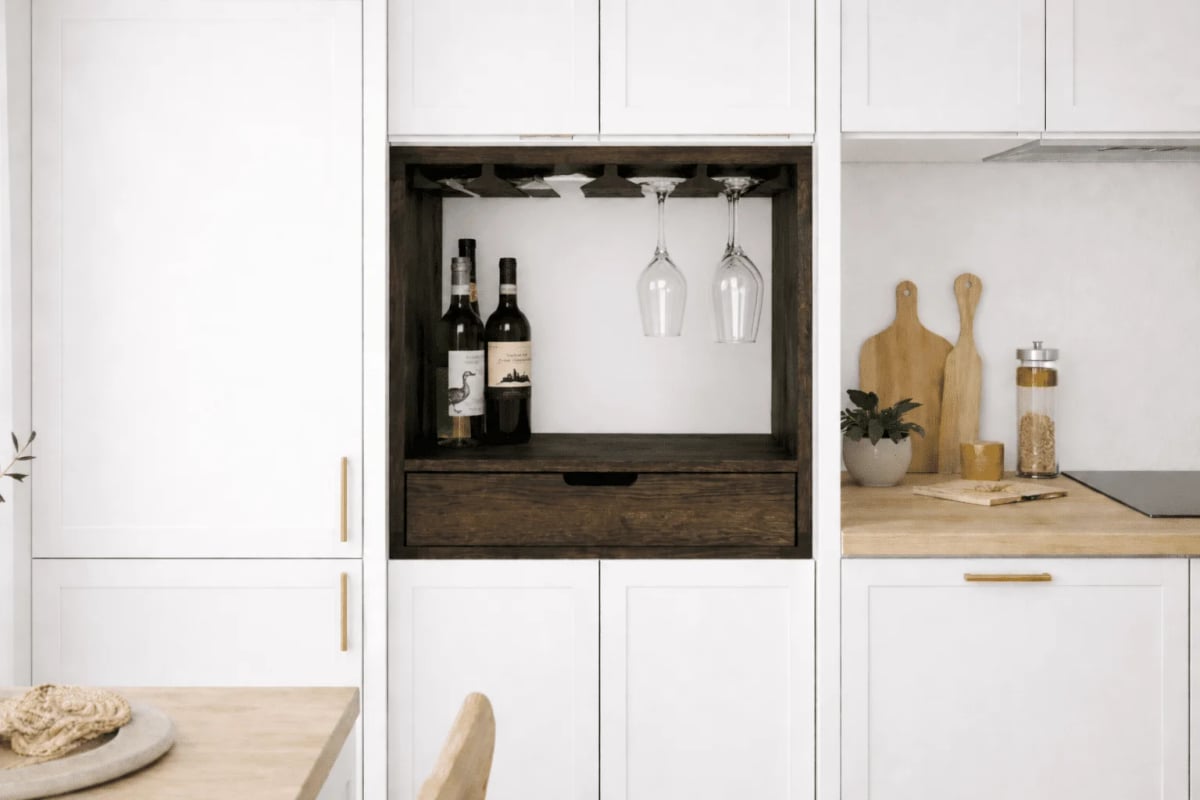
For businesses seeking premium solid wood storage solutions, modular wine racks offer the flexibility to specify exact dimensions, wood species, and finishes that complement existing interior design whilst accommodating operational requirements. This level of customisation proves particularly valuable for hotel groups maintaining consistent brand aesthetics across multiple properties or restaurant chains requiring scalable but standardised solutions.
Technical Specifications and Safety Compliance
The b2b for the supply of wine racks involves technical considerations that residential buyers rarely encounter. Commercial installations must meet building codes, health and safety regulations, and industry-specific standards, particularly in licensed premises and warehouse environments.
Load-bearing capacity calculations extend beyond simple bottle counts. A standard 750ml wine bottle weighs approximately 1.2 to 1.5 kilograms when full; a rack holding 200 bottles supports 240 to 300 kilograms of wine alone, excluding the structure's weight. Wall-mounted systems require appropriate fixings rated for distributed loads, whilst freestanding units need sufficient base width to prevent tipping under maximum capacity.
Safety Standards and Installation Requirements
The Rack Manufacturers Institute provides essential safety guidance applicable to wine racking installations, particularly in commercial warehouse settings. Although primarily focused on industrial pallet racking, the principles of load distribution, anchoring, and inspection protocols apply equally to high-capacity wine storage systems.
Proper installation documentation matters in B2B contexts. Commercial buyers require:
- Structural load calculations confirming compatibility with building specifications
- Installation drawings showing fixing positions and floor loading points
- Maintenance schedules outlining inspection intervals and care requirements
- Material certifications verifying timber quality and finish compliance with fire safety regulations
- Assembly instructions enabling facilities teams to reconfigure systems as needed
WorkSafe guidance on rack operation and maintenance underscores the importance of regular inspection regimes, particularly in hospitality environments where staff turnover may affect proper usage. Suppliers supporting long-term commercial relationships provide training resources ensuring wine racks remain safe, functional, and visually appealing throughout their service life.
Customisation Capabilities and Lead Times
Customisation distinguishes premium b2b for the supply of wine racks from commodity offerings. Commercial clients frequently require specific dimensions to fit existing spaces, particular finishes to match interior schemes, or unique configurations to solve operational challenges.
Made-to-order manufacturing enables precise specification but introduces lead-time considerations. Businesses planning new openings, refurbishments, or seasonal capacity expansions must factor production and delivery schedules into project timelines. European manufacturers typically operate with 4 to 8-week production windows for bespoke solid wood furniture, though standard configurations may ship faster.
Custom Specification Parameters
| Parameter | Standard Options | Custom Possibilities | Business Impact |
|---|---|---|---|
| Dimensions | Fixed module sizes | Any height/width/depth | Perfect spatial fit, eliminates wasted space |
| Wood species | Oak, pine | Smoked oak, burnt pine, walnut | Brand alignment, design differentiation |
| Finish | Natural, oiled | Custom stains, wax treatments | Interior coherence across properties |
| Bottle capacity | 50, 100, 200 | Any increment | Precise inventory matching |
| Configuration | Freestanding, wall | Corner, hybrid, integrated | Architectural adaptation |
The ability to specify custom sizes proves particularly valuable for furniture installations in listed buildings, converted spaces, or architecturally distinctive properties where standardised dimensions create awkward gaps or underutilised areas. A Michelin-starred restaurant in a historic European building might require a wine rack precisely 2.3 metres tall to fit beneath an ornate ceiling feature whilst maximising vertical storage.
Pricing Structures and Volume Considerations
B2B pricing for wine rack supply differs fundamentally from retail models. Commercial buyers negotiate based on order volume, multi-location deployments, and ongoing relationships rather than single-unit purchases. Understanding pricing structures enables more effective budget allocation and supplier evaluation.
Volume discounts typically activate at order quantities reflecting genuine commercial scale. A hotel group furnishing ten properties simultaneously achieves pricing advantages unavailable to individual location operators. However, manufacturers balancing bespoke production against economies of scale may structure pricing around complexity rather than purely quantity.
Cost Components in Commercial Procurement
Beyond unit price, commercial buyers evaluate total acquisition cost including delivery, installation, potential downtime during fitting, and lifecycle expenses. A seemingly expensive premium solid wood system may prove more economical over a 15-year lifespan than cheaper alternatives requiring replacement after five years.
- Material costs (FSC-certified hardwoods command premiums over softwoods or composites)
- Manufacturing complexity (bespoke dimensions, unusual finishes, or intricate joinery increase labour)
- Delivery logistics (multi-drop shipments, access restrictions, or international transport)
- Installation services (professional fitting, wall reinforcement, or integration with existing systems)
- Warranty coverage (extended guarantees reflecting commercial use intensity)
- Maintenance support (refinishing services, spare components, or reconfiguration assistance)
Forward-thinking suppliers offer flexible commercial terms recognising that hospitality and retail sectors often operate with seasonal cash flow patterns. Staged delivery matching phased refurbishments, or leasing arrangements aligned with equipment finance programmes, can differentiate suppliers in competitive tender processes.
Supply Chain Reliability and Logistics
The b2b for the supply of wine racks depends critically on supply chain performance. Commercial operations cannot tolerate delayed openings or extended downtime due to supplier failures. Restaurant groups scheduling grand openings, hotels coordinating refurbishments, or retailers planning seasonal displays require absolute confidence in delivery commitments.
European manufacturing offers logistical advantages for buyers across the continent. Shorter transport distances reduce both environmental impact and delivery risk compared to intercontinental shipping. Established road freight networks enable efficient multi-drop deliveries when furnishing chain locations, whilst proximity facilitates site visits, template verification, and rapid resolution of any installation challenges.
Quality Assurance in Commercial Supply
Commercial buyers expect consistency across multiple units. When a restaurant chain orders identical wine rack configurations for 20 locations, each installation must match precisely in dimensions, finish quality, and assembly specifications. Handcrafted manufacturing requires rigorous quality protocols ensuring artisanal character doesn't compromise standardisation where uniformity matters.
Inspection protocols should verify:
- Dimensional accuracy against specifications (tolerances appropriate to solid wood's natural movement)
- Finish consistency across all components within an order
- Structural integrity through load testing representative samples
- Packaging adequacy for transport distance and handling conditions
- Complete accessory provision (fixings, assembly instructions, care guidelines)
Documentation supporting commercial installations includes material certificates, finishing specifications, and photographic records of pre-dispatch inspections. This paper trail proves essential when coordinating with interior designers, fit-out contractors, and building control authorities.
Long-term Partnership Value and Support
Successful b2b for the supply of wine racks transcends transactional exchanges, developing into strategic partnerships where manufacturers understand evolving business needs and provide ongoing value beyond initial sale. Commercial buyers replacing wine racks every decade represent significant lifetime value; cultivating these relationships benefits both parties.
Post-installation support distinguishes partnership-oriented suppliers from order-takers. As wine market trends influence collection profiles, businesses may need to reconfigure storage. A restaurant transitioning from predominantly Bordeaux bottles to diverse formats including magnums and half-bottles requires adaptable racking. Suppliers offering reconfiguration services, additional modules seamlessly integrating with original installations, or refinishing to refresh appearance protect the customer's capital investment whilst generating recurring revenue.
Service Elements That Build Commercial Relationships
Premium suppliers demonstrate partnership commitment through comprehensive service offerings addressing the complete ownership lifecycle. These services prove particularly valuable for multi-site operators managing dispersed property portfolios.
- Design consultation translating operational requirements into optimised specifications
- Site surveys verifying dimensions, structural capacity, and access logistics before manufacture
- Installation coordination managing fitting alongside other trades in complex refurbishment projects
- Staff training ensuring proper wine rack usage, loading practices, and maintenance procedures
- Refinishing programmes restoring appearance cost-effectively rather than replacing prematurely
- Reconfiguration support adapting systems as business needs evolve without starting from scratch
- Spare parts availability enabling minor repairs extending useful life
Businesses exploring complete interior furnishing solutions benefit when wine rack suppliers offer complementary products. Coordinating furniture across dining areas, reception spaces, and private rooms with a single manufacturer simplifies procurement whilst ensuring design coherence through consistent materials, finishes, and construction quality.
Sustainability Reporting and Corporate Responsibility
Environmental, social, and governance (ESG) considerations increasingly influence b2b for the supply of wine racks as corporate buyers face stakeholder pressure for sustainable procurement. Public companies, institutional hospitality groups, and government-contract suppliers must demonstrate supply chain responsibility through transparent reporting.
Furniture procurement presents significant sustainability impacts through material sourcing, manufacturing energy, transport emissions, and end-of-life disposal. Wine racks manufactured from FSC-certified solid wood, produced locally using renewable energy, and designed for decades of service score favourably across multiple ESG metrics. Suppliers providing detailed environmental product declarations (EPDs) or lifecycle assessments (LCAs) enable corporate buyers to meet reporting obligations whilst supporting genuinely sustainable choices rather than greenwashing.
Circular Economy Integration
Forward-looking commercial relationships embrace circular economy principles, recognising that today's wine rack becomes tomorrow's resource rather than waste. Manufacturers designing for disassembly enable cost-effective reconfiguration, whilst take-back schemes ensure retired units enter reuse or responsible recycling streams rather than landfill.
Solid wood construction offers inherent circularity advantages over composite materials. Oak and pine components can be refinished multiple times, extending useful life beyond conventional replacement cycles. When eventual retirement occurs, solid timber enters high-value recycling streams for remanufacturing into new products, whilst composites typically face downcycling or disposal.
Commercial buyers incorporating circular procurement practices ask suppliers:
- Can components be repaired rather than replaced when damaged?
- Are spare parts available throughout expected product lifetime?
- Can systems be reconfigured as operational needs change?
- What happens to racks when businesses close or relocate?
- Does the manufacturer operate take-back or trade-in schemes?
Manufacturers demonstrating circular commitment differentiate themselves in tenders increasingly weighted toward sustainability criteria alongside traditional price and quality metrics.
Evaluating Suppliers and Making Strategic Choices
Selecting partners for b2b for the supply of wine racks requires systematic evaluation against criteria balancing immediate requirements with long-term strategic fit. Commercial procurement mistakes prove costly; wine racks influence customer experience, operational efficiency, and capital tied up in furnishing assets for years following installation.
Effective supplier evaluation extends beyond catalogue review and pricing comparison. Site visits to manufacturing facilities reveal production capabilities, quality standards, and capacity to deliver on promises. Observing craftspeople working with solid wood, examining finished inventory awaiting dispatch, and discussing customisation possibilities with production managers provides insights no brochure can convey.
Supplier Assessment Framework
| Evaluation Criterion | Key Questions | Evidence Sources |
|---|---|---|
| Manufacturing capability | Can they deliver quantity and customisation needed? | Factory visit, capacity data, current order book |
| Design expertise | Do they understand commercial wine storage requirements? | Portfolio review, client references, consultation quality |
| Material sustainability | Are timber sources certified and transparently documented? | FSC certificates, supply chain disclosure |
| Financial stability | Will they remain in business throughout product lifetime? | Company accounts, market reputation, longevity |
| After-sales support | What happens after delivery and installation? | Service terms, spare parts policy, customer testimonials |
| Quality consistency | Can they maintain standards across volume orders? | Sample inspection, previous client installations |
Reference checking proves invaluable in B2B contexts. Speaking with existing commercial customers about delivery reliability, installation quality, problem resolution, and ongoing support provides unvarnished insights into supplier performance under real operational conditions.
The b2b for the supply of wine racks represents a strategic procurement decision affecting commercial operations for years following installation. Successful partnerships balance immediate requirements like capacity and aesthetics with long-term considerations including sustainability, adaptability, and supplier reliability. By systematically evaluating manufacturing capabilities, material credentials, and service commitment, commercial buyers identify partners capable of supporting evolving business needs whilst delivering exceptional quality and environmental responsibility. Museliving specialises in premium handcrafted wine storage solutions manufactured from FSC-certified solid wood across Europe, combining Scandinavian design principles with modular flexibility and made-to-order customisation to meet the exacting standards of hospitality, retail, and commercial clients seeking sustainable, long-lasting wine rack systems.