


Creating a small home wine cellar transforms how you store, age, and enjoy your wine collection. Whether you're converting a basement corner, repurposing a cupboard beneath the stairs, or dedicating a spare room, thoughtful planning ensures your bottles mature gracefully whilst enhancing your home's aesthetic appeal. This guide explores everything from site selection and climate control to sustainable materials and modular storage, helping you build a functional cellar that protects your investment and complements your living space.
Choosing the Right Location for Your Cellar
Location fundamentally determines your cellar's success. The ideal spot maintains naturally cool temperatures year-round with minimal fluctuations and shields bottles from vibration and direct sunlight.
Basements remain the classic choice for a small home wine cellar because they sit below ground level, buffered by earth's natural insulation. Underground spaces typically stay between 10°C and 15°C without mechanical cooling, close to the optimal wine storage range of 11°C to 14°C. However, basements present moisture challenges that require careful moisture control and building-envelope planning to prevent mold whilst maintaining adequate humidity for corks.
Alternative locations include:
- Interior cupboards on ground floors, away from exterior walls
- Converted coat closets with minimal foot traffic
- Under-stair spaces offering natural insulation and darkness
- Dedicated pantry conversions in cool sections of the kitchen
- Insulated garage corners with proper climate control
Avoid placing your cellar near boilers, radiators, washing machines, or any heat source. Vibration from appliances disturbs sediment in ageing wines, whilst temperature swings accelerate oxidation and spoil delicate bottles. North-facing rooms in European homes typically stay cooler throughout summer months.
Evaluating Space Requirements
A small home wine cellar needn't occupy enormous square footage. Even a two-square-metre footprint accommodates 200 to 300 bottles when vertical storage solutions maximise every centimetre. Calculate your current collection size, then add 50% capacity for future acquisitions and special purchases.
Consider these spatial factors:
- Ceiling height for stacking modular racks or installing floor-to-ceiling systems
- Door swing clearance for accessing bottles without disturbing adjacent storage
- Walkway width allowing comfortable movement when retrieving bottles
- Ventilation access for passive airflow or mechanical cooling equipment
- Electrical access if installing climate control or lighting
Sketch your layout before purchasing storage systems. Account for bottle orientation-horizontal storage keeps corks moist and prevents oxidation, but requires greater depth than upright storage.
Climate Control Fundamentals
Proper climate control separates mediocre storage from true cellaring. Wine requires stable temperature, controlled humidity, darkness, and stillness to mature correctly. Fluctuations stress the liquid, pushing it past corks and causing premature ageing.
Temperature stability matters more than hitting a precise number. Aim for 11°C to 14°C with minimal daily or seasonal variation. Each 3°C increase above 15°C roughly doubles the ageing rate, whilst temperatures below 7°C slow development and may cause tartrate crystals in white wines. Building-science best practices for wine cellars emphasise continuous insulation and vapor barriers to maintain steady conditions.
Humidity should hover between 60% and 70% to keep corks supple without encouraging mold growth. Professional guidance on wine storage humidity confirms this range prevents cork shrinkage whilst minimizing label damage and mildew. Excessively dry air desiccates corks, allowing oxygen ingress and spoilage. Conversely, humidity above 75% promotes mold on labels, wooden racks, and ceiling surfaces.
Passive vs Active Cooling
Passive cooling relies on natural insulation, earth contact, and careful site selection. Basements often maintain suitable temperatures without mechanical intervention, particularly in northern European climates. Insulate walls with minimum R-19 values, seal all penetrations, and install a vapor barrier on the warm side of the insulation. Passive strategies reduce energy consumption and align with sustainable building principles explored in recent winery efficiency research.
Active cooling becomes necessary in warmer climates or above-ground locations. Purpose-built wine cellar cooling units maintain precise temperature and humidity, though they consume electricity year-round. Through-wall units, ducted systems, and split systems each offer advantages depending on your cellar's size and location. ASHRAE guidance on indoor humidity controls provides engineering standards for HVAC systems in conditioned storage spaces.
| Cooling Method | Best For | Temperature Stability | Humidity Control | Approx. Cost |
|---|---|---|---|---|
| Passive (insulation only) | Basements, cool climates | Good (seasonal variation) | Limited | £200–£800 |
| Through-wall unit | Small cellars (150–500 bottles) | Excellent | Integrated | £800–£2,000 |
| Ducted split system | Larger spaces (500+ bottles) | Excellent | Separate dehumidifier | £1,500–£4,000 |
| Wine fridge | Very small collections (50–100 bottles) | Excellent | Built-in | £300–£1,500 |
Active systems require professional installation to ensure proper drainage, electrical supply, and exhaust routing. Budget for annual servicing to maintain efficiency and prevent compressor failures.
Storage Solutions and Racking Design
Storage systems form the visible core of a small home wine cellar, combining functionality with aesthetic appeal. Modular wooden racks offer flexibility, sustainability, and timeless elegance that complements wine's artisanal nature.
Solid wood racking provides natural beauty, durability, and adaptability. Oak, pine, and smoked timber variations suit Scandinavian-inspired interiors whilst supporting bottle weight indefinitely without sagging or warping. Premium modular wine storage systems allow configuration changes as your collection evolves, letting you start small and expand capacity without replacing entire installations.
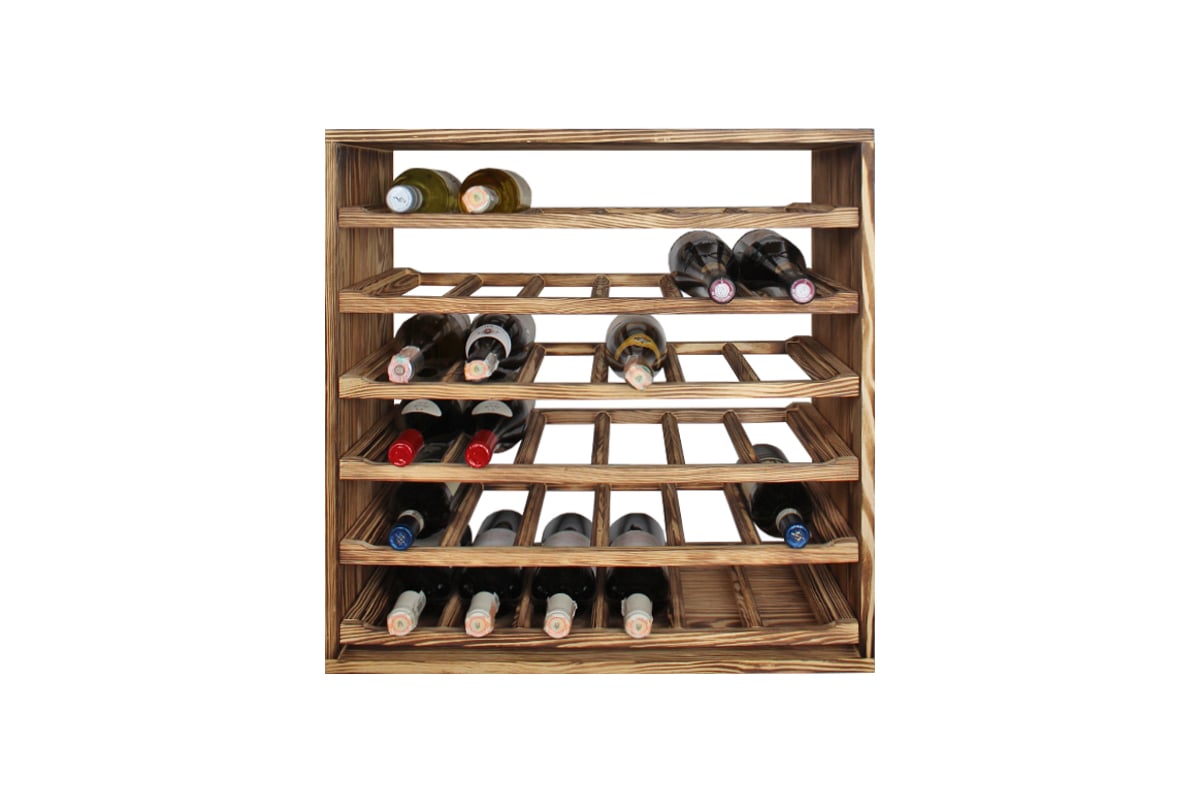
Racking Configurations
Different storage styles serve different needs:
- Individual bottle slots: Standard diamond-shaped cubbies hold single bottles horizontally, ideal for mixed collections requiring easy access to specific vintages
- Bulk storage bins: Open compartments stack cases of identical wines awaiting maturation, maximizing density whilst reducing cost per bottle
- Display rows: Single-bottle-deep shelving showcases special bottles and rare finds, perfect for cellars visible from living areas
- Magnum and large-format storage: Oversized openings accommodate 1.5L, 3L, and larger bottles without forcing horizontal placement
Configure your racking to match drinking patterns. Position everyday wines within easy reach at waist height, store long-term cellaring candidates in less accessible upper or lower sections, and dedicate eye-level positions to special bottles you enjoy discussing with guests.
Freestanding racks suit rental properties and evolving spaces since they relocate easily without wall damage. Built-in systems maximize capacity in permanent installations, particularly when custom-fit to irregular spaces like alcoves or angled walls beneath stairs.
Construction and Insulation Strategies
Proper construction underpins every successful cellar. Even the most sophisticated climate control fails without adequate insulation and moisture barriers protecting your space from ambient conditions.
Converting a basement into a wine cellar requires careful attention to walls, ceiling, floor, and entry points. Begin by addressing moisture intrusion-seal foundation cracks, redirect gutters away from the foundation, and confirm no active water penetration before proceeding.
Insulation Best Practices
Install continuous insulation on all six surfaces surrounding your cellar:
- Walls: Rigid foam boards (minimum R-19) or closed-cell spray foam eliminates thermal bridges whilst resisting moisture
- Ceiling: Higher R-values (R-30+) combat heat rising from living spaces above
- Floor: Insulated subfloor or rigid foam beneath finish flooring prevents ground moisture and chill
- Door: Solid-core or insulated exterior-grade door with weatherstripping and threshold seal
- Vapour barrier: Continuous 6-mil polyethylene sheeting on warm side of insulation prevents condensation
- Air sealing: Caulk and foam all penetrations for electrical, plumbing, and HVAC
Pay particular attention to the door, which represents the largest thermal vulnerability in most cellars. Install a proper threshold, add weatherstripping on all four sides, and consider a magnetic seal similar to refrigerator doors for superior airtightness.
Interior finishes should tolerate humidity without degrading. Avoid standard gypsum board in favor of moisture-resistant variants, or finish with tongue-and-groove paneling that handles humidity fluctuations gracefully whilst adding warmth and character.
Lighting and Electrical Considerations
Light, particularly ultraviolet wavelengths, degrades wine over time by breaking down organic compounds and causing premature ageing. Design your lighting thoughtfully to balance functionality with wine protection.
LED fixtures represent the optimal choice for cellar illumination. They emit minimal heat, consume little electricity, generate virtually no UV radiation, and last for decades without replacement. Install dimmable LEDs on motion sensors or manual switches located outside the cellar, preventing lights from being inadvertently left on for extended periods.
Avoid these lighting mistakes:
- Incandescent bulbs generating excessive heat
- Fluorescent tubes emitting UV wavelengths
- Windows or skylights admitting natural sunlight
- Always-on accent lighting unnecessarily exposing bottles
- Poorly placed fixtures creating glare on bottle labels
Position lighting to illuminate labels and walkways without directly striking bottles. Recessed ceiling fixtures with adjustable trims, under-rack LED strips, and wall sconces create layered lighting that enhances cellar ambience whilst preserving wine quality.
Regulatory and Safety Considerations
Whilst home wine cellars face fewer regulations than commercial facilities, understanding basic safety and legal frameworks ensures compliant construction.
Building regulations typically classify wine cellars as habitable storage spaces requiring proper egress, ventilation, and electrical safety. Consult local building control before undertaking major conversions, particularly when altering load-bearing walls, adding electrical circuits, or installing mechanical cooling systems exceeding 5 kW capacity.
Federal regulatory guidance from the TTB primarily addresses commercial and bonded storage, though homeowners should understand basic record-keeping expectations when storing valuable collections. Insurance policies may require documentation of collection value, secure entry doors, and fire-protection measures for cellars exceeding certain monetary thresholds.
Safety considerations include:
- Fire protection: Smoke detectors, fire-resistant construction materials, and clear egress paths
- Electrical safety: GFCI protection for outlets in potentially damp environments, proper grounding
- Structural load: Verify floor joists support weight (wine approaches 1.2 kg per bottle, plus racking)
- Child safety: Locks or latches preventing accidental cellar access by young children
Maintain basic inventory records noting acquisition dates, prices paid, and estimated values. Photograph your collection periodically for insurance purposes and store documentation separately from the physical cellar.
Sustainable Design Principles
Sustainability extends beyond environmental consciousness to encompass long-term economic value and resource efficiency. A well-designed small home wine cellar embodies these principles through material selection, energy efficiency, and adaptable design.
Material selection fundamentally impacts sustainability. Solid wood racking manufactured from FSC-certified timber supports responsible forestry whilst providing decades of service without degradation. Oak, pine, and smoked variants offer natural beauty that improves with age, unlike synthetic alternatives requiring replacement every decade. Sustainable hardwoods also sequester carbon throughout their service life, contributing to household carbon reduction goals.
Energy efficiency reduces operational costs and environmental impact. Prioritize passive strategies-optimal site selection, continuous insulation, air sealing, and earth contact-before specifying mechanical cooling. When active cooling proves necessary, select appropriately sized equipment avoiding short-cycling and inefficiency from oversizing. Energy-efficient models certified to European standards minimize consumption whilst maintaining precise climate control.
Long-Term Value and Adaptability
Design for flexibility rather than rigid optimization around today's collection. Modular storage systems reconfigure as your preferences evolve from predominantly red wines requiring longer cellaring to more varied collections including whites, rosés, and sparkling bottles with different storage needs.
Consider these adaptable features:
- Modular racking accepting additional units without reconstruction
- Removable bin inserts converting bulk storage to individual slots
- Adjustable shelving accommodating various bottle formats
- Expandable cooling capacity supporting future collection growth
- Neutral aesthetic complementing evolving interior design trends
High-quality materials and construction techniques ensure your cellar remains functional and attractive for decades. Well-crafted wooden racks, proper insulation, and durable finishes eliminate the need for premature replacement, reducing waste whilst protecting your wine investment.
Managing Your Collection
Successful cellaring extends beyond proper storage conditions to include organization, inventory management, and strategic acquisition planning. Even a small home wine cellar benefits from systematic approaches to collection management.
Inventory systems range from simple spreadsheets to dedicated wine-management software. Track essential details including producer, vintage, appellation, acquisition date, price paid, optimal drinking window, and bottle location within your cellar. Digital systems often include tasting notes, food pairing suggestions, and automated reminders when bottles reach maturity.
Organize bottles logically to minimize handling and disturbance:
- By region: Bordeaux, Burgundy, Rhône, Rioja, Tuscany
- By varietal: Cabernet Sauvignon, Pinot Noir, Chardonnay
- By drinking window: Ready now, 2-5 years, 5-10 years, 10+ years
- By occasion: Everyday drinking, dinner parties, special celebrations
Label racks clearly using small tags, chalk markers on wooden surfaces, or discrete numbering systems corresponding to digital inventory records. This organization saves time when selecting bottles and prevents unnecessary searching that disturbs resting wines.
Acquisition Strategy
Build your collection strategically rather than accumulating random purchases. Establish a budget allocating funds across everyday wines, mid-range bottles for near-term consumption, and investment-grade wines requiring extended cellaring. Maintain balance between drinkable inventory and long-term holdings to avoid the common trap of cellaring everything whilst having nothing ready to enjoy.
| Collection Category | Percentage | Drinking Window | Budget Allocation | Purpose |
|---|---|---|---|---|
| Everyday wines | 40% | Ready now – 2 years | 20% | Regular consumption |
| Mid-range bottles | 35% | 2 – 5 years | 35% | Dinner parties, special meals |
| Premium/Investment | 25% | 5+ years | 45% | Long-term ageing, special occasions |
Purchase wines you genuinely enjoy rather than chasing critics' scores or investment potential. A small home wine cellar should enhance your lifestyle, not become an untouchable museum of unopened bottles awaiting some distant perfect occasion.
Practical Maintenance Routines
Regular maintenance preserves optimal conditions and protects your investment from avoidable problems. Establish simple routines requiring minimal time whilst preventing major issues.
Monthly checks should include temperature and humidity verification using a reliable hygrometer, visual inspection for mold or moisture accumulation, and confirmation that cooling equipment operates normally. Record readings in a logbook or digital spreadsheet, allowing you to identify gradual trends before they become problems.
Quarterly tasks extend to inspecting individual bottles for leakage or ullage changes, verifying door seals remain intact, testing lighting functionality, and rotating bottle positions if certain areas show temperature variations. Clean cooling unit filters according to manufacturer specifications, typically every three to six months depending on usage.
Annual maintenance includes:
- Professional service for mechanical cooling systems
- Deep cleaning of racks, floors, and surfaces
- Inventory reconciliation against purchase records
- Insurance documentation updates for valuable acquisitions
- Evaluation of collection drinking windows and consumption pace
Address minor problems immediately before they escalate. A small cork fragment floating in wine indicates a failing closure requiring expedited consumption. Moisture accumulation signals inadequate vapor barriers or excessive humidity requiring dehumidifier adjustments. Musty odours suggest mold growth demanding thorough cleaning and improved ventilation.
Common Mistakes and How to Avoid Them
Even experienced collectors encounter pitfalls when establishing their first dedicated cellar space. Learning from common errors saves time, money, and potentially valuable bottles.
Inadequate insulation represents the most frequent mistake, with homeowners underestimating the thermal protection required to maintain stable conditions. Northern European climates may seem cool, but summer heat penetrates poorly insulated spaces rapidly. Invest in proper R-values from the outset rather than retrofitting insulation after discovering temperature fluctuations.
Oversized cooling equipment wastes energy whilst providing poor temperature stability. Units cycle on and off too frequently when oversized for the space, never achieving efficient operation and creating temperature swings. Properly calculate cooling loads accounting for insulation values, door infiltration, and lighting heat gain before selecting equipment.
Poor humidity management either desiccates corks through excessive dryness or encourages mold through oversaturation. Monitor humidity continuously during the first year, adjusting cooling equipment settings, adding humidifiers, or introducing dehumidifiers as conditions dictate.
Other avoidable mistakes include:
- Storing bottles upright for extended periods
- Installing cellars near mechanical rooms or heat sources
- Neglecting proper door sealing and weatherstripping
- Using inappropriate lighting generating heat or UV
- Failing to secure valuable collections adequately
- Mixing wine storage with foods generating strong odours
Plan thoroughly before construction begins. Rushing installation without addressing insulation, vapor barriers, and moisture control leads to expensive remediation and potential wine spoilage.
Creating a small home wine cellar requires thoughtful planning across location selection, climate control, storage solutions, and sustainable design principles, but the investment rewards you with properly aged wines and an elegant addition to your home. Museliving brings decades of European craftsmanship to cellar design, offering premium modular wine racks handcrafted from FSC-certified solid oak, smoked oak, and sustainable timbers that combine Scandinavian aesthetics with exceptional functionality. Our customizable systems adapt to any space across Europe, supporting your collection from first bottle to fully mature cellar whilst embodying the timeless quality your wines deserve.