



A corner wine rack represents one of the most intelligent storage solutions for wine enthusiasts seeking to optimise underutilised space in their homes or commercial establishments. These specialised storage units transform awkward corner areas into functional, attractive displays that showcase your wine collection whilst maximising every available centimetre. Whether you’re planning a dedicated wine cellar, enhancing a dining room, or adding sophistication to a restaurant interior, understanding the nuances of corner wine storage helps you make informed decisions that balance aesthetics, functionality, and sustainability.
Understanding the Benefits of Corner Wine Storage
Corner spaces often remain neglected in interior design, creating dead zones that contribute neither to storage nor visual appeal. A corner wine rack addresses this inefficiency by converting these overlooked areas into purposeful storage that enhances both capacity and aesthetics.
Space Optimisation and Capacity
The primary advantage lies in spatial efficiency. Traditional wine racks require substantial wall or floor space, which may be limited in urban flats, compact kitchens, or boutique restaurants. Corner installations utilise vertical and horizontal dimensions simultaneously, often providing storage for thirty to sixty bottles within a footprint of less than one square metre.
Key capacity benefits include:
Vertical stacking capability that reaches ceiling height
Diagonal arrangement maximising corner geometry
Modular expansion potential for growing collections
Minimal intrusion into walkways and functional spaces
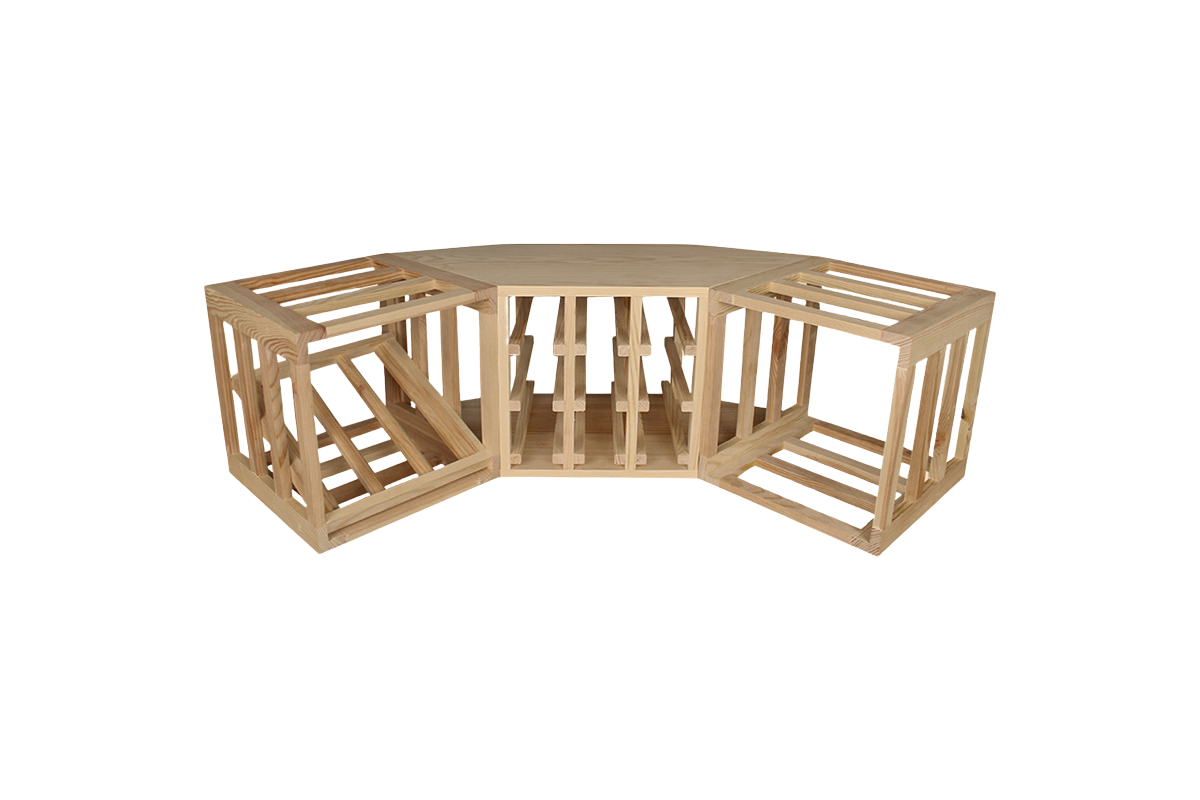
Corner configurations prove particularly valuable in small-space wine storage scenarios, where every centimetre counts. The triangular or curved profile fits naturally into room layouts without disrupting traffic flow or reducing usable floor area.
Aesthetic Integration and Visual Appeal
Beyond functionality, these installations create stunning focal points that draw the eye and add architectural interest. The geometric complexity of corner placement provides visual depth, transforming flat walls into three-dimensional displays that enhance interior design schemes.
Premium materials such as solid oak, smoked oak, and sustainably sourced pine contribute natural warmth and texture. The grain patterns, colour variations, and handcrafted details create organic visual interest that complements Scandinavian minimalism, contemporary industrial aesthetics, and traditional European design philosophies alike.
Design Element | Visual Impact | Practical Benefit |
|---|---|---|
Natural wood grain | Organic texture and warmth | Timeless appeal across design trends |
Modular composition | Dynamic geometric patterns | Adaptable to collection growth |
Open framework | Spatial transparency | Maintains room openness |
Custom finishes | Personalised aesthetics | Integration with existing interiors |
Material Selection for Durability and Sustainability
Choosing appropriate materials determines both the longevity of your investment and its environmental footprint. In 2026, sustainability considerations weigh heavily in purchasing decisions, with discerning consumers prioritising FSC-certified timbers and ethical manufacturing practices.
Solid Wood Versus Alternative Materials
Solid wood remains the gold standard for wine rack construction, offering unparalleled durability, stability, and aesthetic quality. Oak, pine, and specialist finishes like burnt pine each bring distinct characteristics to corner installations.
Oak characteristics:
Exceptional structural strength supporting substantial bottle weight
Natural tannins providing inherent moisture resistance
Dense grain structure ensuring decades of service life
Refined appearance suitable for premium residential and commercial settings
Pine attributes:
Lighter weight facilitating wall-mounted configurations
Softer grain creating rustic, approachable aesthetics
Sustainable growth cycles reducing environmental impact
Excellent value proposition for budget-conscious projects
Smoked oak and burnt pine finishes add contemporary sophistication whilst enhancing wood’s natural protective properties. These treatments penetrate deeply into the timber, creating rich colour variations and improved resistance to environmental factors without relying on synthetic coatings.
Environmental Considerations in Material Choice
Sustainable furniture manufacturing addresses climate concerns whilst delivering superior quality. FSC certification ensures timber originates from responsibly managed forests where harvesting rates don’t exceed regrowth, biodiversity receives protection, and local communities benefit from ethical employment practices.
European manufacturers increasingly prioritise local sourcing, reducing transportation emissions whilst supporting regional forestry economies. Solid wood products also sequester carbon throughout their lifespan, creating a net environmental benefit when compared to energy-intensive materials like aluminium or plastic composites.
Design Configurations and Structural Options
Corner wine racks manifest in numerous configurations, each suited to specific spatial constraints, collection sizes, and aesthetic preferences. Understanding these variations helps identify the optimal solution for your particular requirements.
Curved Versus Angular Designs
Curved corner wine racks offer distinctive advantages in both functionality and visual appeal. The rounded profile creates smooth transitions between adjoining walls, softening architectural lines whilst maximising bottle capacity along the arc.
Angular designs, conversely, embrace the geometric precision of right-angle corners. These configurations often feature modular components that stack and expand systematically, allowing collectors to build capacity incrementally as their wine inventory grows.
Freestanding Versus Mounted Solutions
Freestanding units offer flexibility and portability. These self-supporting structures require no wall attachment, making them ideal for rental properties, temporary installations, or spaces where drilling isn’t permitted. The trade-off comes in footprint size, as freestanding designs need broader bases to ensure stability when fully loaded.
Wall-mounted corner racks maximise floor space by suspending storage entirely off the ground. This approach creates visual lightness and facilitates cleaning underneath. However, installation requires secure fixing into wall studs or masonry, necessitating professional installation in some cases.
Comparison of mounting approaches:
Feature | Freestanding | Wall-Mounted |
|---|---|---|
Installation complexity | Minimal | Moderate to high |
Spatial efficiency | Moderate | Excellent |
Portability | High | None |
Load capacity | Limited by base size | Limited by wall strength |
Visual impact | Substantial presence | Floating appearance |
Modular Systems and Expandability
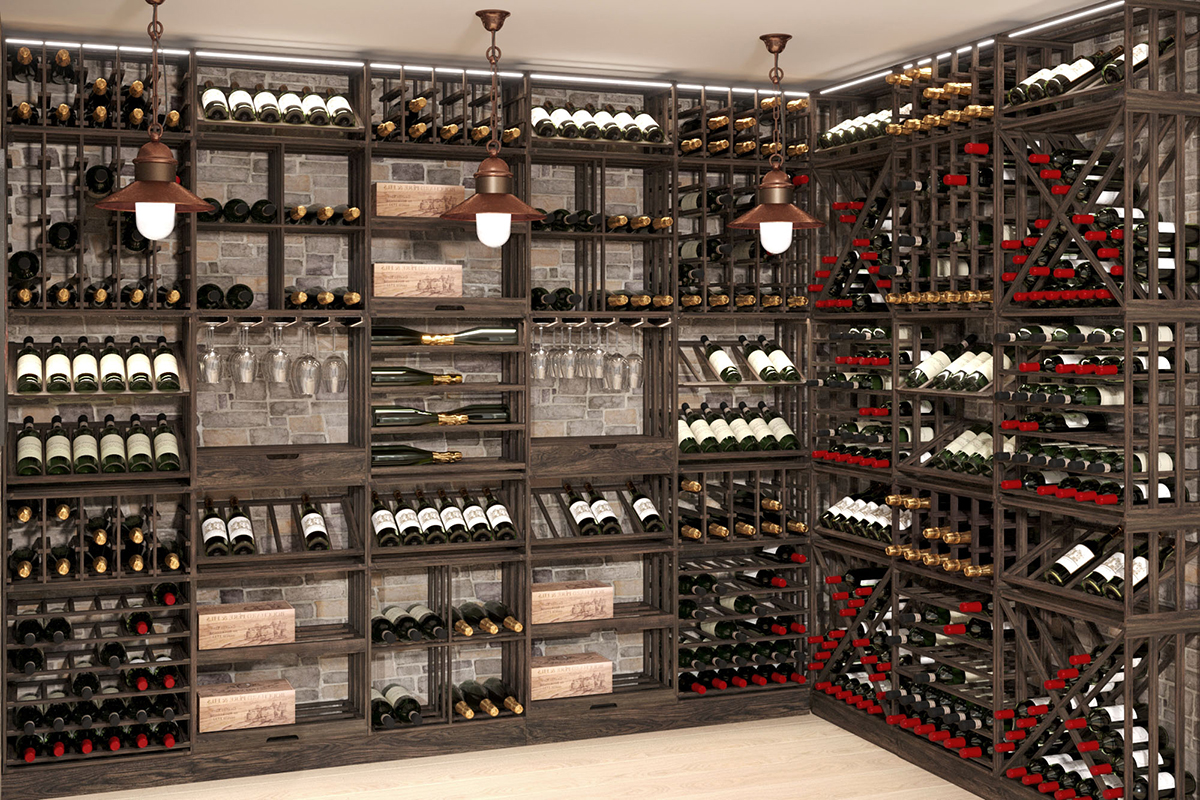
Modular corner wine storage systems provide exceptional adaptability for evolving collections. Individual components connect vertically and horizontally, allowing initial installations to expand as wine inventories grow. This approach proves particularly valuable for commercial establishments where storage requirements fluctuate seasonally.
Premium modular designs incorporate standardised dimensions that ensure compatibility across product ranges. This foresight allows purchases made years apart to integrate seamlessly, protecting your long-term investment whilst accommodating changing needs.
Installation Considerations and Spatial Planning
Successful corner wine rack installation requires careful planning that accounts for structural requirements, environmental conditions, and practical access considerations. Neglecting these factors compromises both functionality and wine preservation quality.
Structural Load
A fully stocked wine rack generates substantial weight. Standard 750ml bottles weigh approximately 1.2 kilograms each, meaning a fifty-bottle corner installation creates loads exceeding sixty kilograms before accounting for the rack’s own mass.
Environmental Factors Affecting Wine Storage
Whilst aesthetics drive initial placement decisions, environmental conditions determine preservation quality. Corners near exterior walls may experience temperature fluctuations as outdoor conditions penetrate building envelopes. Similarly, proximity to heating sources, direct sunlight, or high-traffic areas creates suboptimal storage environments.
Optimal placement criteria:
Stable temperatures between 10-15°C
Relative humidity maintained at 60-70%
Protection from direct sunlight and UV exposure
Minimal vibration from appliances or foot traffic
Adequate ventilation preventing musty odours
Interior corners typically offer superior environmental stability compared to exterior wall placements. Basement and cellar locations naturally provide cooler, more consistent conditions ideal for long-term wine maturation.
Accessibility and Practical Usage
Design choices must balance storage capacity against practical retrieval. Deep corner configurations maximise bottle count but may render rear positions difficult to access. Angled or rotating elements improve reach whilst maintaining compact footprints.
Consider the typical usage pattern when planning layout. Daily-drinking wines benefit from front-position accessibility, whilst investment bottles destined for extended cellaring can occupy less convenient rear locations. Some enthusiasts implement rotation systems ensuring older vintages migrate forward as they approach optimal drinking windows.
Integration with Home Bar and Dining Spaces
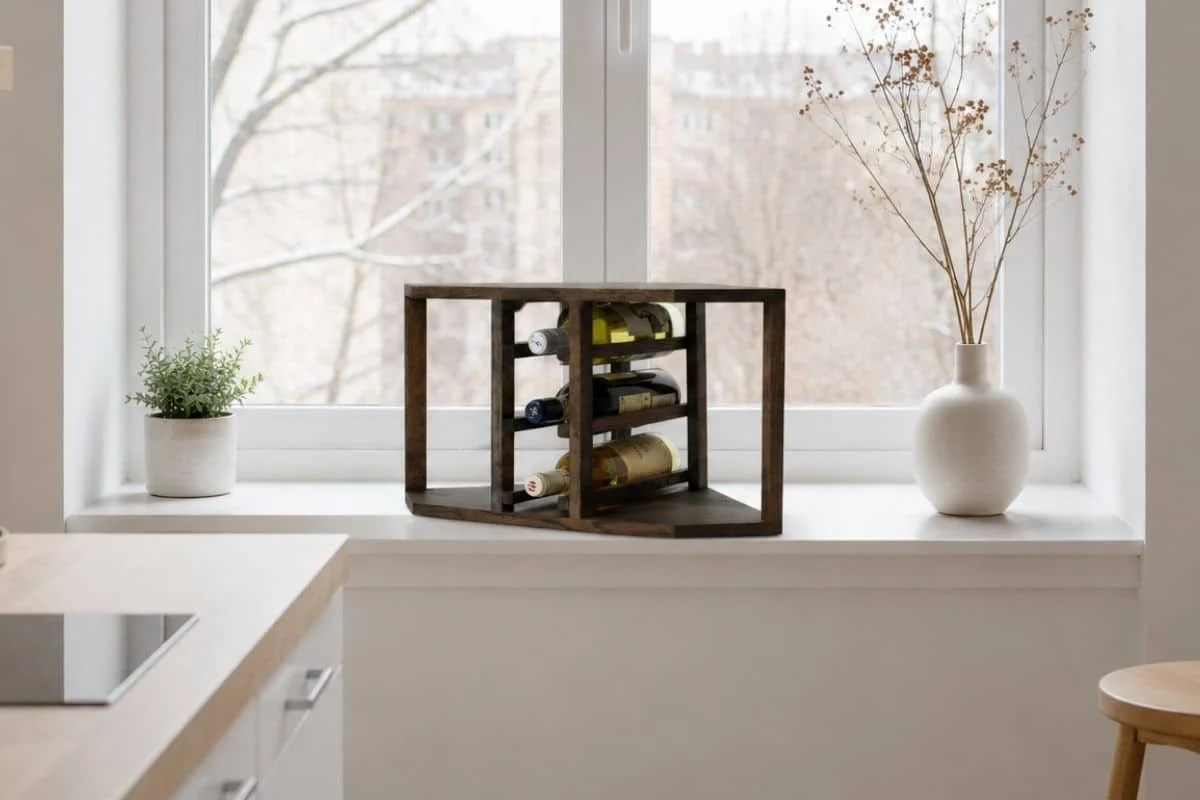
Corner wine racks enhance home bar aesthetics whilst providing functional storage that keeps favourite bottles within easy reach during entertaining. The strategic placement creates conversation pieces that showcase collections without dominating living spaces.
Commercial Applications in Restaurants and Hotels
Professional hospitality environments leverage corner installations to maximise floor plan efficiency. Restaurant dining rooms benefit from decorative wine displays that reinforce premium positioning whilst keeping inventory accessible for service staff. Hotel lounges and reception areas utilise corner racks as architectural features that communicate sophistication and attention to detail.
Commercial installations typically require larger capacities and more robust construction than residential applications. Solid wood systems crafted from oak or smoked oak deliver the durability necessary for high-traffic environments whilst maintaining the refined aesthetics expected in premium establishments. For businesses seeking quality wine storage solutions that combine functionality with Scandinavian design principles, Wine raсks manufactured from sustainably sourced timber offer both immediate visual impact and long-term value.
Coordination with Existing Furniture and Design Schemes
Successful integration requires considering material finishes, colour palettes, and design languages present in surrounding furnishings. Oak wine racks harmonise naturally with traditional dining furniture, whilst burnt pine creates striking contrasts in contemporary minimalist settings.
The modular nature of quality systems allows staged implementation that evolves alongside broader interior updates. Initial corner installations can later expand into comprehensive wine cellar systems as space and budget permit, maintaining design continuity throughout the process.
Benefits of Professional Craftsmanship
Whilst DIY projects offer creative satisfaction and potential cost savings, professionally manufactured systems deliver advantages that justify their investment. Premium craftspeople bring decades of experience optimising joint construction, weight distribution, and finishing techniques that ensure longevity.
Professional manufacturing advantages include:
Precision engineering ensuring accurate bottle angles and spacing
Advanced joinery techniques providing superior structural integrity
Professional finishing protecting wood whilst enhancing natural beauty
Quality assurance processes guaranteeing consistent results
Custom sizing accommodating unique spatial constraints
Made-to-order production accommodates specific dimensional requirements that off-the-shelf products cannot address. Unusual ceiling heights, non-standard corner angles, or integration with existing architectural features benefit from bespoke manufacturing approaches.
Sustainable Production Practices
European furniture manufacturers increasingly prioritise environmental responsibility throughout production processes. Waste minimisation, renewable energy usage, and low-VOC finishing products reduce ecological footprints whilst maintaining premium quality standards.
Local manufacturing further enhances sustainability by reducing transportation distances and supporting regional economies. Furniture crafted in European workshops and delivered across Europe generates substantially lower emissions compared to products shipped from distant continents.
Maintenance and Long-Term Care
Quality solid wood wine racks require minimal maintenance whilst delivering generations of service. Understanding proper care techniques preserves both functional performance and aesthetic appeal.
Routine Cleaning and Inspection
Dust accumulation on wine bottles and rack surfaces proves inevitable over time. Monthly dusting using soft, dry cloths prevents buildup whilst allowing inspection for potential issues. Avoid harsh chemical cleaners that might damage natural wood finishes or leave residues affecting wine labels.
Annual inspections should verify:
Joint integrity and structural stability
Finish condition and protective coating effectiveness
Environmental suitability of installation location
Bottle positioning and organisation efficiency
Wood Treatment and Finish Preservation
Natural wood develops patina over years of service, deepening colour tones and enhancing character. Some owners embrace this evolution as part of solid wood’s living quality, whilst others prefer maintaining original appearance through periodic treatment.
Oil-finished woods benefit from annual re-oiling using food-safe products that penetrate grain structure whilst enhancing moisture resistance. This simple maintenance process requires only clean cloths and modest time investment, rewarding effort with renewed lustre and protection.
Lacquered or sealed finishes generally require less intervention. Occasional cleaning with slightly damp cloths removes surface residue whilst preserving protective coatings. Avoid excessive moisture that might penetrate seams or cause dimensional changes in timber components.
Sizing and Capacity Planning
Determining appropriate corner wine rack dimensions requires balancing current collection size against anticipated growth. Conservative planning risks premature capacity limitations, whilst excessive sizing wastes resources and appears disproportionate to actual usage.
Assessing Current and Future Needs
Begin by cataloguing existing inventory across categories: everyday drinking wines, special occasion bottles, and investment vintages destined for extended cellaring. This analysis reveals actual storage requirements rather than aspirational numbers disconnected from consumption patterns.
Project growth trajectories based on purchasing habits. Casual enthusiasts accumulating bottles for weekend enjoyment require different capacities than serious collectors building vertical vintages of premium producers. Commercial establishments must account for inventory turnover rates and seasonal variations in stock levels.
User Type | Typical Capacity | Growth Rate | Recommended Sizing |
|---|---|---|---|
Casual enthusiast | 12-24 bottles | 6-12 bottles/year | 30-40 bottle capacity |
Serious collector | 50-150 bottles | 24-48 bottles/year | 100+ bottle capacity |
Small restaurant | 100-300 bottles | Variable by season | Modular expandable system |
Wine bar/hotel | 300-1000+ bottles | Continuous turnover | Custom cellar installation |
Modular Expansion Strategies
Modular systems accommodate uncertainty through incremental growth. Initial corner installations establish foundational capacity whilst allowing vertical or horizontal expansion as collections develop. This approach distributes investment over time whilst ensuring design continuity across additions.
Standard module dimensions of 30cm, 60cm, 120cm, and 180cm widths provide flexible configuration options. Corner-specific modules integrate seamlessly with linear sections, creating comprehensive storage solutions that adapt to available space.
Aesthetic Finishing Options and Customisation
Premium solid wood wine racks offer extensive customisation possibilities that align storage solutions with personal taste and interior design schemes. Understanding available finishing options helps specify systems perfectly suited to individual requirements.
Natural Wood Finishes
Untreated or minimally processed wood showcases timber’s inherent beauty through pronounced grain patterns, natural colour variations, and organic texture. Oak displays distinctive medullary ray figuring, whilst pine reveals growth ring patterns and occasional knot features that create rustic character.
Natural finishes require appropriate protective treatments balancing preservation against maintaining authentic appearance. Food-safe oils penetrate wood fibres whilst enhancing grain visibility. These treatments deepen colour tones slightly whilst providing moisture resistance and dimensional stability.
Specialised Treatments and Contemporary Aesthetics
Smoked oak achieves rich, sophisticated colouration through controlled heat treatment processes. This technique creates deep brown hues ranging from subtle bronze to intense chocolate tones whilst hardening wood surfaces for enhanced durability. The process proves entirely natural, avoiding chemical stains or synthetic pigments.
Burnt pine employs Japanese yakisugi principles, charring surface layers to create striking black finishes with preserved wood texture visible beneath. This ancient technique enhances weather resistance and pest deterrence whilst delivering dramatic contemporary aesthetics.
Oil finishes provide satin sheens that emphasise natural beauty without creating glossy artificial appearances. These treatments penetrate deeply into timber, nourishing wood whilst protecting against moisture and minor impacts. Regular maintenance proves straightforward, requiring only additional oil application every twelve to eighteen months.
Commercial-Grade Solutions for Professional Environments
Hospitality venues, wine merchants, and corporate offices require storage solutions exceeding residential specifications in capacity, durability, and visual impact. Commercial-grade corner wine racks address these heightened demands through robust construction and scalable design.
Restaurant and Hotel Applications
Fine dining establishments utilise wine displays as marketing tools that communicate quality positioning and oenological expertise. Strategic placement in dining rooms, private function spaces, or reception areas creates memorable impressions whilst providing practical inventory access for sommelier staff.
Hotels and boutique accommodation providers leverage wine storage as lifestyle amenities that enhance guest experiences. Well-appointed wine libraries in lounges or suites suggest sophistication and attention to detail that justifies premium positioning and rates.
Office and Corporate Settings
Progressive workplaces incorporate wine facilities within executive lounges, client entertainment areas, or staff amenity spaces. These installations signal company culture and values whilst providing functional benefits for business development and employee engagement activities.
Corporate applications typically favour refined aesthetics over rustic charm. Smoked oak and contemporary finishing techniques deliver professional appearances consistent with modern office design languages whilst maintaining the warmth and sustainability benefits inherent in solid wood construction.
A corner wine rack delivers intelligent space utilisation, aesthetic enhancement, and practical functionality that transforms overlooked areas into valuable storage showcasing your collection with pride. Whether you’re a casual enthusiast seeking elegant home storage or a commercial operator requiring robust hospitality solutions, quality matters in materials, craftsmanship, and design. Museliving specialises in premium handcrafted wine storage systems manufactured from sustainably sourced European timber, combining Scandinavian design principles with modular flexibility and made-to-order customisation. Explore our collection to discover how thoughtfully engineered solid wood furniture can elevate your interior whilst providing generations of reliable service.