



Wood acoustic panels have emerged as one of the most sought-after solutions for managing sound quality in contemporary interiors. Combining the natural warmth and beauty of timber with measurable acoustic performance, these panels address the growing demand for spaces that are both aesthetically refined and acoustically comfortable. Whether installed in bustling restaurants, focused office environments, or residential living areas, wood acoustic panels deliver tangible reverberation control whilst maintaining the organic elegance that only natural materials can provide. As architects, designers, and property owners increasingly prioritise wellness, sustainability, and multi-sensory design in 2026, understanding the technical capabilities and environmental credentials of these panels becomes essential for creating truly exceptional spaces.
The Science Behind Wood Acoustic Panel Performance
Sound absorption in wood acoustic panels relies on converting acoustic energy into minute amounts of heat through friction and resonance. Unlike purely reflective surfaces that bounce sound waves back into a room, properly engineered wood panels trap and dissipate energy, reducing echo and improving speech intelligibility.
How Wood Absorbs Sound
Natural wood exhibits porous characteristics at a microscopic level, with cell structures that provide inherent damping properties. When sound waves encounter a wood surface, several mechanisms activate simultaneously:
Porous absorption: Air moves through micro-cavities within the wood grain, creating friction that converts acoustic energy to heat
Panel resonance: Thin wood veneers or slats vibrate sympathetically with specific frequencies, particularly effective in mid-to-low ranges
Helmholtz resonance: Perforated or slotted patterns create cavity resonators that target narrow frequency bands with exceptional efficiency
The effectiveness of these mechanisms is quantified using the Noise Reduction Coefficient (NRC), measured according to standardised laboratory protocols that evaluate absorption across speech-critical frequencies. Quality wood acoustic panels typically achieve NRC values between 0.60 and 0.95, with optimised designs exceeding 0.80.
Frequency Response Characteristics
Different wood panel configurations excel at different frequency ranges:
Panel Type | Low Freq (125-250 Hz) | Mid Freq (500-1000 Hz) | High Freq (2000-4000 Hz) | Best Application |
|---|---|---|---|---|
Solid slats with air gap | Excellent | Good | Moderate | Music venues, broadcast studios |
Perforated veneer + backing | Moderate | Excellent | Excellent | Offices, meeting rooms |
Grooved panels | Good | Excellent | Good | Restaurants, retail spaces |
Resonant micro-perforated | Variable (tunable) | Excellent | Good | Specialised acoustics |
Research into metamaterial designs using Helmholtz resonators demonstrates how precisely engineered wood patterns can target problematic frequencies with surgical precision, offering designers unprecedented control over acoustic environments.
Material Selection and Environmental Impact
The sustainability credentials of wood acoustic panels extend far beyond their renewable origin. When manufactured responsibly, these panels represent one of the lowest-carbon acoustic treatments available in 2026.
FSC-Certified Wood Species
Premium manufacturers select timber species based on acoustic performance, durability, and certified sustainable forestry:
Oak: Dense grain structure provides excellent mid-frequency absorption; naturally resistant to wear in high-traffic applications
Smoked oak: Heat-treated variants offer enhanced dimensional stability alongside rich, darkened aesthetics
Pine: Lighter softwood with naturally higher porosity, particularly effective for broader-spectrum absorption
Walnut: Premium hardwood combining superior acoustic damping with luxurious visual appeal
Each species brings distinct tonal warmth and grain patterns, allowing acoustic treatments to function as architectural features rather than purely functional additions. Responsible sourcing through FSC certification ensures forests regenerate sustainably, maintaining biodiversity and carbon sequestration capacity for future generations.
Life-Cycle Environmental Performance
Comprehensive environmental product declarations for wood acoustic panels reveal their environmental advantages across the entire life cycle. From raw material extraction through manufacturing, installation, use, and eventual end-of-life, wood consistently demonstrates lower embodied carbon than mineral wool, foam, or synthetic alternatives.
Manufacturing solid wood panels requires minimal processing compared to composite materials. Traditional joinery techniques, oil finishes, and modular installation systems avoid adhesives, volatile organic compounds, and complex chemical treatments. During decades of service, wood continues sequestering the carbon absorbed during tree growth, effectively functioning as a long-term carbon store within the building envelope.
Studies on end-of-life scenarios for engineered wood confirm that responsible disposal through recycling, upcycling, or energy recovery maintains environmental benefits. Wood acoustic panels can be reclaimed for secondary applications, processed into biomass fuel, or composted, avoiding landfill whilst returning nutrients or energy to useful cycles.
Design Integration in Modern Interiors
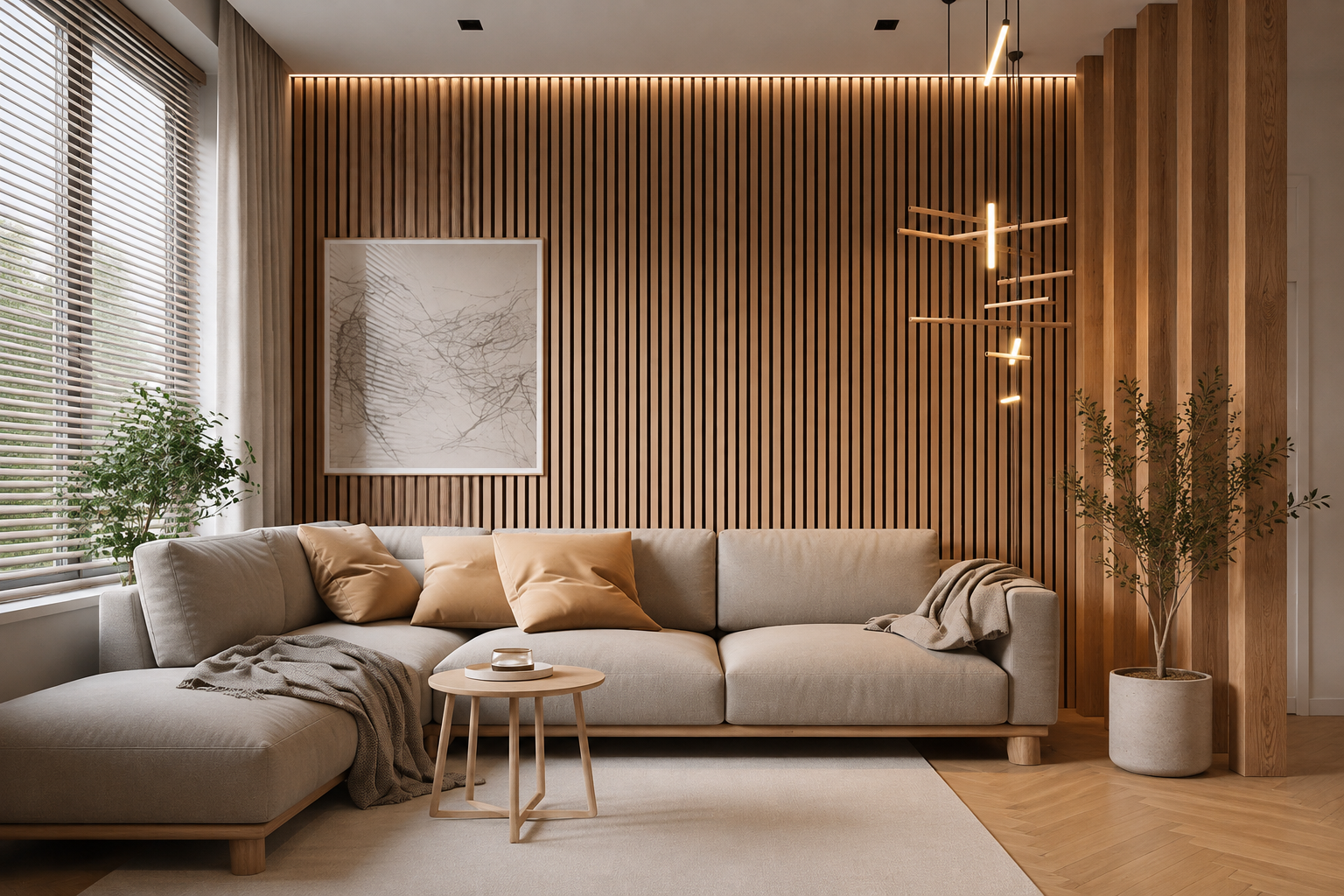
The visual versatility of wood acoustic panels makes them uniquely suited to Scandinavian-inspired interiors where minimalism, natural materials, and functional beauty converge.
Pattern and Configuration Options
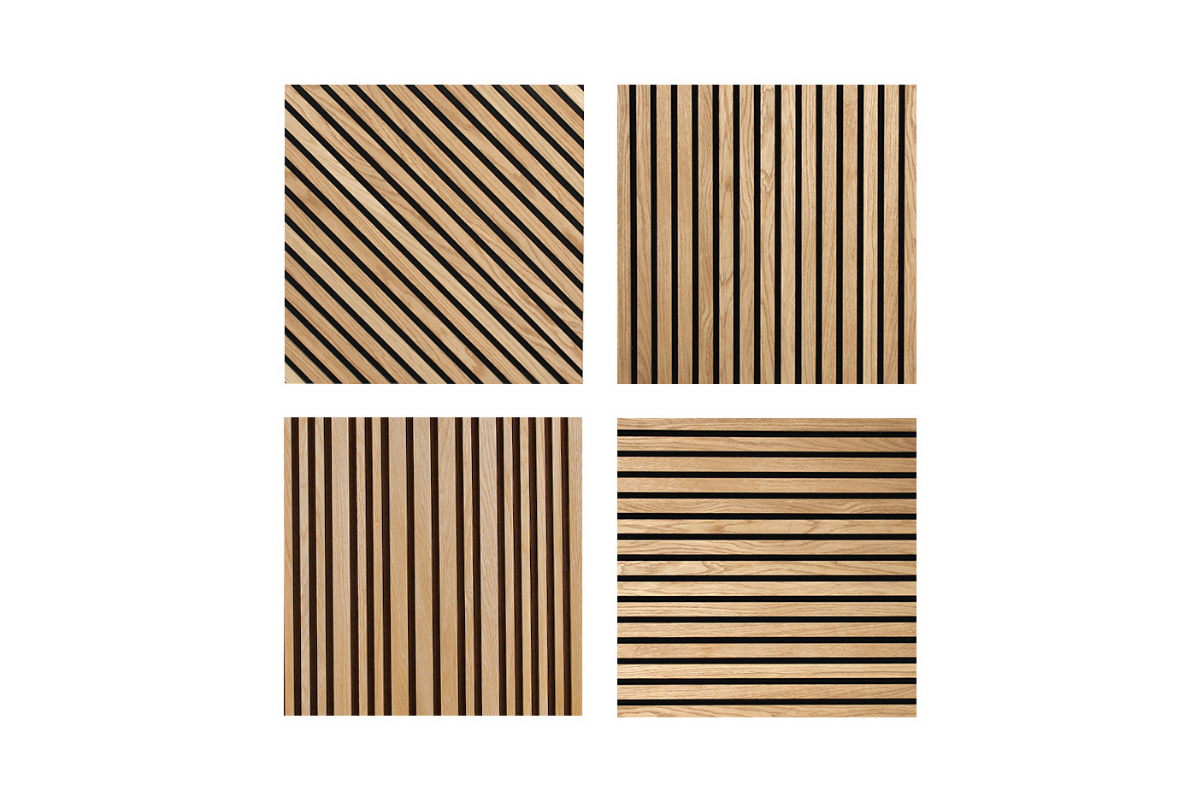
Contemporary wood acoustic panels employ diverse geometric arrangements to balance acoustic performance with visual interest:
Vertical slat systems: Create rhythm and height emphasis whilst maintaining excellent sound diffusion
Horizontal battens: Elongate spaces visually and provide consistent absorption across wall expanses
Grid patterns: Combine structured geometry with predictable acoustic behaviour for corporate environments
Organic arrangements: Irregular spacing and varied slat widths introduce visual texture whilst maintaining performance
3D relief panels: Add sculptural depth and enhanced diffusion characteristics for premium installations
Each configuration can be tailored to specific room dimensions and acoustic objectives. Research on wood cross-section absorbing systems demonstrates how cavity depth, panel thickness, and perforation patterns can be optimised for target frequency ranges, enabling designers to specify solutions that address measured acoustic deficiencies rather than applying generic treatments.
For projects requiring both acoustic control and spatial division, innovative partition solutions combine sound absorption with flexible room configuration, particularly valuable in adaptive commercial environments.
Finish Options and Maintenance
Wood acoustic panels accept various finish treatments that protect the timber whilst preserving acoustic transparency:
Natural oil finishes: Penetrate wood fibres to enhance grain definition and moisture resistance without forming surface films that impede absorption
Matte lacquers: Provide durable protection in high-traffic areas when applied thinly to maintain porosity
Unfinished: Raw wood develops natural patina over time, ideal for spaces emphasising organic materiality
Stained: Colour-matched options coordinate with existing joinery whilst maintaining wood texture
Maintenance requirements remain minimal. Regular dusting with soft cloths and occasional conditioning with appropriate wood treatments preserve appearance and performance for decades. Unlike fabric-wrapped panels that trap dust and allergens, wood surfaces resist particulate accumulation and support healthier indoor air quality.
Application-Specific Considerations
Different environments demand tailored approaches to acoustic treatment with wood panels.
Hospitality and Restaurant Acoustics
Dining venues face unique acoustic challenges: the clatter of tableware, animated conversation, background music, and hard reflective surfaces from tables, floors, and windows all contribute to excessive reverberation. Wood acoustic panels installed on ceilings and upper wall sections reduce ambient noise levels by 8-12 decibels, transforming chaotic cacophony into comfortable ambience.
Strategic placement focuses treatment where it delivers maximum impact. Ceiling coverage of 40-60% typically achieves target reverberation times of 0.8-1.2 seconds, the sweet spot for speech intelligibility in dining contexts. Wall panels behind banquette seating or above service areas supplement ceiling treatments whilst reinforcing design narratives around natural materials and crafted quality.
Office and Commercial Spaces
Open-plan offices suffer from acoustic deficiencies that measurably reduce productivity, increase stress, and degrade speech privacy. Wood acoustic panels address these issues whilst supporting biophilic design principles that connect occupants with natural materials.
Installation strategies prioritise areas of highest activity:
Meeting rooms: 60-80% wall coverage ensures confidential conversations remain private and videoconference audio remains clear
Collaboration zones: Distributed ceiling panels reduce cross-talk between adjacent teams
Reception areas: Feature walls combining acoustic performance with brand identity
Circulation spaces: Corridor panels control sound transmission between functional zones
The warm, natural aesthetic of wood panels contributes to workplace wellness initiatives, with research consistently demonstrating that natural materials reduce cortisol levels and improve occupant satisfaction compared to synthetic alternatives.
Residential Applications
Homeowners increasingly recognise the quality-of-life improvements delivered by thoughtful acoustic design. Wood acoustic panels find natural homes in:
Living areas: Open-plan layouts with hard flooring benefit from ceiling or feature wall treatments that preserve conversational clarity whilst maintaining architectural openness.
Home cinemas: Controlled reflections and absorption create immersive audio experiences without electronic correction.
Music rooms: Balanced reverberation supports practice and recording without acoustic fatigue.
Bedrooms: Subtle ceiling treatments reduce external noise intrusion and create restful environments.
Residential installations often emphasise aesthetic integration, with panels selected to complement existing joinery, furniture collections, and architectural detailing rather than appearing as afterthought additions.
Technical Installation and Performance Optimisation
Proper installation maximises the acoustic performance of wood panels whilst ensuring long-term durability.
Mounting Methods and Air Gaps
The space between panel and substrate critically influences absorption characteristics. Air gaps of 30-100mm create quarter-wavelength resonant cavities that enhance low-frequency absorption. This principle explains why spaced slat systems outperform directly-adhered panels across broader frequency ranges.
Common mounting approaches include:
Batten systems: Horizontal battens fixed to walls provide consistent air gaps and adjustable panel alignment
French cleat mounting: Allows panels to be hung, removed, and repositioned without damage to substrates
Suspended ceiling integration: Acoustic wood panels replace standard tiles in grid systems
Frameless adhesive: Direct bonding for thin veneer panels in weight-sensitive applications (sacrifices low-frequency performance)
Professional acoustic consultants often specify backing materials (mineral wool, open-cell foam) within air gaps to further enhance absorption, particularly where space constraints limit cavity depth.
Performance Verification
Quality manufacturers provide third-party acoustic testing documentation showing measured absorption coefficients across the frequency spectrum. Published EPD data for wood acoustic panels demonstrates the transparency expected from premium products, allowing designers to specify with confidence based on verified performance rather than marketing claims.
Post-installation acoustic measurements confirm that theoretical performance translates to real-world conditions. Simple smartphone-based reverberation time measurements provide baseline verification, whilst professional consultants employ calibrated equipment for detailed analysis in critical applications.
Customisation and Made-to-Order Solutions
The modular nature of wood acoustic panels enables precise tailoring to project-specific requirements. Premium European manufacturers offer extensive customisation options that standard off-the-shelf products cannot match.
Dimension flexibility accommodates irregular room geometries and specific coverage requirements. Rather than compromising design intent to fit standard panel sizes, bespoke manufacturing ensures optimal visual rhythm and complete acoustic coverage. Custom slat spacing, perforation patterns, and relief depths address measured acoustic deficiencies in particular frequency ranges.
Finish coordination allows panels to integrate seamlessly with existing architectural elements. Matching wood species, stain colours, and surface treatments to dining tables, bookshelves, and other joinery creates visual continuity that reinforces design narratives around craftsmanship and natural materials.
For commercial projects requiring acoustic wall treatments that deliver measurable performance alongside Scandinavian design principles, Museliving acoustic panels combine FSC-certified wood in finishes including Oak, Smoked Oak, Oak Oil, and Walnut with effective sound absorption for homes, offices, restaurants, hotels, and commercial spaces. Each panel is manufactured to order using premium materials, ensuring exceptional quality and seamless integration with interior aesthetics.
Comparative Analysis: Wood Versus Alternative Materials
Wood acoustic panels compete with various synthetic and mineral alternatives in the acoustic treatment marketplace. Understanding comparative advantages helps designers make informed material selections.
Material | NRC Range | Aesthetics | Sustainability | Durability | Cost (Relative) |
|---|---|---|---|---|---|
Wood panels | 0.60-0.95 | Excellent natural warmth | High (renewable, low carbon) | Excellent longevity | Medium-High |
Mineral wool tiles | 0.55-0.85 | Utilitarian appearance | Moderate (energy-intensive manufacturing) | Good (can sag over time) | Low |
Fabric-wrapped panels | 0.70-1.00 | Customisable colours/textures | Low (synthetic fabrics, adhesives) | Moderate (stains, dust accumulation) | Medium |
Foam treatments | 0.80-1.00 | Limited aesthetic appeal | Very low (petroleum-based, poor end-of-life) | Poor (degrades, fire concerns) | Low-Medium |
Perforated metal + backing | 0.60-0.90 | Industrial/modern aesthetic | Moderate (recyclable but energy-intensive) | Excellent | High |
Wood panels distinguish themselves through the combination of high performance, natural aesthetics, environmental responsibility, and decades-long service life. Whilst initial costs may exceed basic mineral wool tiles, life-cycle value accounting for longevity, maintenance, and end-of-life disposal consistently favours quality wood solutions.
Integration with Broader Acoustic Strategies
Wood acoustic panels function most effectively as components within comprehensive acoustic design strategies rather than standalone solutions.
Complementary Treatments
Balanced acoustic environments typically combine absorptive, diffusive, and reflective surfaces in proportions tailored to room function:
Absorption (wood panels, textile furnishings, carpeting): Controls reverberation time and reduces ambient noise levels
Diffusion (irregular surfaces, quadratic residue diffusers): Scatters reflections to avoid flutter echoes whilst maintaining sonic liveliness
Reflection (controlled hard surfaces): Preserves early reflections that support speech intelligibility and musical clarity
Furniture selection contributes significantly to overall acoustic character. Upholstered seating, solid wood bookshelves filled with books, and textile window treatments all provide supplementary absorption that reduces the required wall coverage of dedicated acoustic panels.
Room Geometry and Volume
Acoustic treatment requirements scale with room volume and geometry. Large volumes with high ceilings demand greater absorption surface area to achieve equivalent reverberation control compared to smaller spaces. Parallel surfaces create flutter echoes that geometric diffusion or asymmetric panel placement can mitigate.
Professional acoustic consultants employ predictive modelling software to optimise treatment placement before construction begins. These tools account for room geometry, surface materials, occupancy patterns, and sound source characteristics to recommend treatment areas, panel densities, and mounting strategies that achieve target acoustic parameters efficiently.
Future Developments in Wood Acoustic Technology
Innovation continues advancing wood acoustic panel capabilities in 2026, with several emerging trends reshaping the category.
Parametric Design and Digital Manufacturing
Computer-aided design enables complex three-dimensional relief patterns that would be prohibitively expensive using traditional manufacturing. CNC machining creates intricate geometries optimised through acoustic simulation software, delivering precisely tuned absorption characteristics whilst producing distinctive visual signatures.
Digital manufacturing also enables mass customisation at scale. Cloud-based configurators allow designers and end-users to specify dimensions, patterns, finishes, and mounting details, with orders transmitted directly to manufacturing systems that produce bespoke panels at near-standard-product pricing.
Hybrid Material Systems
Advanced panels combine wood with other sustainable materials to enhance performance envelopes. Wood-wool composites blend wood fibres with mineral binders to improve fire resistance whilst maintaining natural aesthetics. Cork-backed wood veneers add low-frequency absorption and thermal insulation properties. Bio-based backing materials derived from recycled textiles, hemp, or mycelium offer sustainable alternatives to petroleum-based foams.
Smart Integration
Emerging concepts embed sensors within acoustic panels to monitor environmental conditions, occupancy patterns, and actual acoustic performance. This data enables adaptive building management systems to optimise ventilation, lighting, and even active acoustic systems in response to measured conditions rather than static assumptions.
Wood acoustic panels represent the convergence of measurable performance, sustainable materiality, and timeless design, making them essential elements in contemporary interiors that prioritise both functionality and wellness. Understanding their acoustic mechanisms, environmental credentials, and installation best practices enables designers and property owners to create spaces where sound quality enhances rather than detracts from occupant experience. At Museliving, we craft premium wood acoustic panels alongside complementary furniture collections using FSC-certified materials and traditional Scandinavian craftsmanship, delivering made-to-order solutions that transform residential and commercial spaces across Europe.